
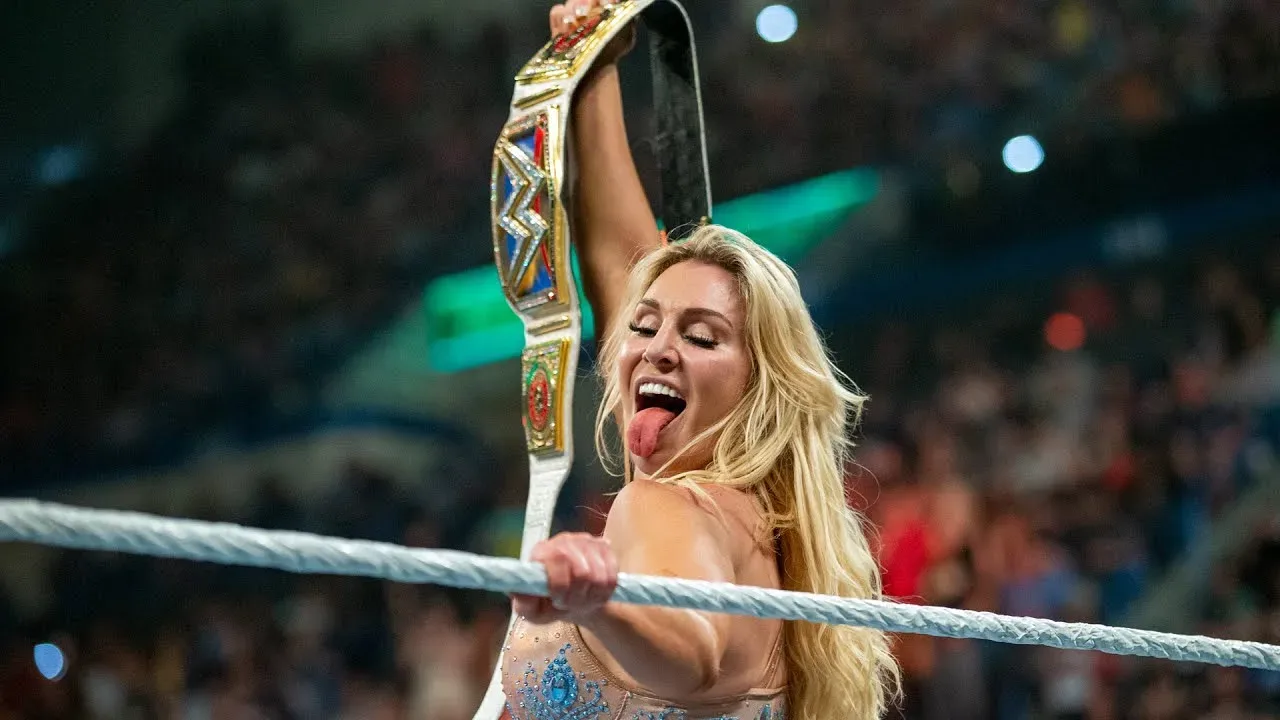
Charlotte Flair believes the past year has marked a significant change in the way WWE audiences see her.
Since returning at the 2025 Royal Rumble, Flair has spent more than a year working as a babyface, a role that has contrasted with much of the championship-filled career she built as one of WWE’s most prominent antagonists. Her alignment with Alexa Bliss over the summer further placed Flair in a fan-supported position, and she now feels that connection has grown beyond anything she experienced previously.
Speaking on Insight, Flair said she can recognize both the success of her current run and the accomplishments that came from the heel persona that defined much of her time in WWE. While she remains emphatic about her standing as a villain in the women’s division, she said this past year has been especially meaningful because it has allowed fans to see more of the person behind the “Charlotte” character.
“So, I think two things can be true at once,” Flair said. “Professionally, has this been the best year with connecting with the audience, fan interactions, meet-and-greets, fighting for new merch, fighting to evolve the brand, bringing the colors and the inspiration? Yes, I think I couldn’t ask for a better [time].”
For more background on this topic, read Lee England Jr. Recalls Shinsuke Nakamura’s Encouragement Before Pro Wrestling NOAH Entrance.
Flair’s remarks put an emphasis on the work outside of matches as much as the in-ring reactions. She pointed to fan interactions, appearances, merchandise, and efforts to develop the presentation of her brand as major elements of the year. That broader engagement has been part of what made the babyface role feel distinct from her past success.
For years, Flair was frequently positioned as a dominant, confident, and often ruthless presence. Her heel work was built around status, superiority, and an imposing presentation that could create a strong emotional contrast with the babyfaces opposing her. She said that, in her view, helping make audiences rally behind those opponents was among her greatest strengths.
Flair remains confident in her heel legacy
Although she has embraced the positive reactions she has received recently, Flair did not downplay the work that established her reputation as a top WWE villain. She said she has never traditionally been a fan favorite and maintained that her body of work places her at the top of the women’s division’s heel hierarchy.
“I’ve never been a fan favorite,” Flair said. “Do I think I’ve been a top heel and the best heel in the women’s division ever? 100%.”
Flair added that one of her best qualities over the last decade has been her ability to make fans emotionally invest in the babyfaces across from her. A successful heel does not simply draw boos; the role depends on making the audience want to see the opponent succeed. Flair said that has been a central piece of her approach throughout her career.
“I think coming up in the last 10 years, one of my best attributes was making people love the babyface,” she said. “I’m good at that.”
That confidence remains part of Flair’s identity even as her current role asks for a different type of emotional exchange with the audience. Instead of being the performer who fuels support for someone else, Flair has been receiving that support directly. Her comments suggest she sees the transition not as a rejection of her previous character work, but as an evolution that has expanded what she can offer WWE viewers.
Letting down the “Ice Queen” guard
Flair said she does not believe her increased popularity simply comes from being removed from the title picture. Some observers may connect a babyface’s improved reception to the absence of championship contention, but Flair identified a more personal reason for the shift.
She said the key has been allowing her guard to come down and giving audiences an opportunity to know her in a different way. For much of her WWE career, Flair felt she played the “Ice Queen” character so effectively that it kept the audience at a distance. The current run has given her an opening to show that she is not trying to present herself as perfect.
“But for me, for this year, this was like next level, and I don’t think it had anything to do with not being in the title picture,” Flair said. “Sure, some may say that, but I think it had to do with me letting down my guard and being like yeah, I’m not perfect, and giving the fans a chance to know me, because I think I played Charlotte that well, like the Ice Queen.”
The distinction is important for Flair’s current presentation. Her past persona thrived on emotional distance and a polished sense of control. The response she is describing now has come from showing more vulnerability and accepting the unpredictability that comes with an audience reacting to her as a relatable figure rather than an untouchable star.
That does not mean Flair has lost the traits that made her a leading WWE presence. Her confidence remains clear, including in her assessment of her own heel credentials. But her comments indicate that the present version of Charlotte Flair is designed to include a more open relationship with fans, whether through in-arena moments, meet-and-greets, or the details she has pursued in merchandise and branding.
A different reaction from the WWE audience
Flair admitted that the positive reception can still surprise her. After spending so much of her career drawing hostility or using crowd reactions to elevate a babyface opponent, she said receiving signs and direct support can leave her unsure of how to respond in the moment.
“I’m like, oh, this is amazing,” Flair said of the babyface reactions. “Sometimes I don’t know how to react.”
She recalled seeing multiple signs for her recently and described becoming excited by the show of support. Flair also shared a lighthearted story from interacting with a young fan, saying she was holding a little boy and momentarily took him toward the back before being reminded by Tatum Paxley that she needed to return him to his parents.
“Tatum was like, ‘You’re stealing someone’s child,’” Flair said. “I was like, ‘I’m taking him back!’”
Flair said she did bring the child back to his parents, but the story underscored how energized she has been by the direct connection she is experiencing. Those moments can be very different from simply hearing cheers during an entrance or a match. They are personal reminders that the audience’s response has changed in a way she did not often encounter during her longest stretches as a heel.
For Flair, the year appears to have offered a new kind of validation. Championships and major-match positioning have long been associated with her WWE career, but she spoke most enthusiastically about fan interactions and the ability to build a relationship with the audience. The reaction has made this babyface chapter feel like a substantial professional breakthrough rather than merely a temporary shift in alignment.
WarGames awaits at Survivor Series
Flair will soon take that connection into one of WWE’s most demanding team environments. She is set to compete in the Women’s WarGames match at WWE Survivor Series.
Flair will team with Stephanie Vaquer, Bayley, Alexa Bliss, and Tatum Paxley. Their opponents will be Jade Cargill, Michin, Fallon Henley, Lainey Reid, and Jacy Jayne.
The match brings together an array of established WWE names and creates another high-profile platform for Flair’s current babyface role. Her partnership with Bliss is part of the lineup, while Paxley is also on Flair’s side after featuring in the fan-interaction anecdote that Flair shared.
WarGames demands cohesion as well as resilience, with two teams entering a match built around the enclosed double-ring structure. Flair’s history as an accomplished, highly competitive performer will be tested alongside the newer emotional dynamic she has described over the past year. The crowd reaction may be especially notable given how openly she has discussed the importance of fan support during this stage of her career.
Flair’s message ahead of Survivor Series is not that she has abandoned the character traits or competitive belief that made her one of WWE’s defining women’s heels. Instead, she sees this year as proof that she can maintain that self-assurance while connecting with the audience in a more candid way. In her estimation, the “Ice Queen” was effective for its time. The current chapter has shown her another side of what a Charlotte Flair performance can be.

Darryl Polo
Darryl Polo is a passionate wrestling fan covering WWE, AEW, TNA and beyond. He loves great rivalries, breakout stars and the moments that keep fans talking long after the bell. How we work.