Cody Rhodes remains one of WWE’s most prominent stars, but Bully Ray believes the crowd reaction heard during a recent episode of WWE SmackDown should give “The American Nightmare” reason for concern.
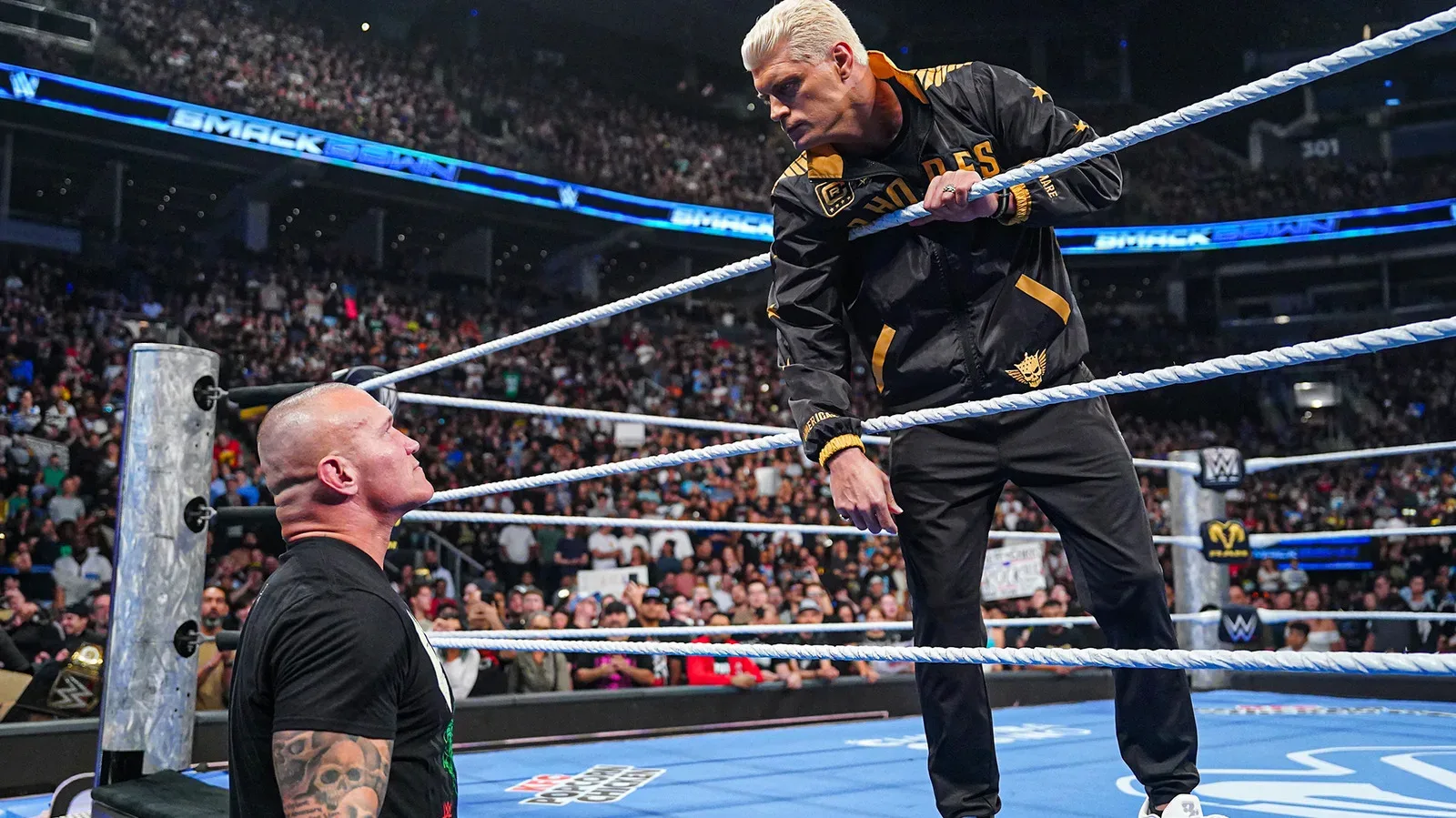
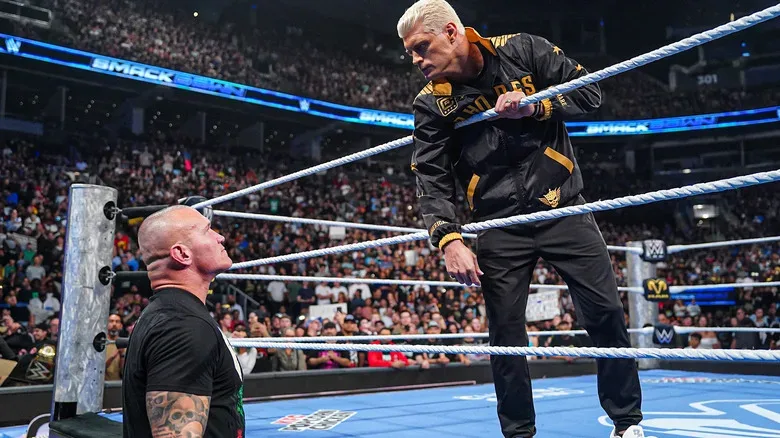
Speaking on Busted Open, Bully Ray focused on a segment involving Randy Orton and Rhodes. Rather than concentrating on an overtly hostile reaction toward Rhodes, Bully Ray pointed to the audience groans that followed Orton describing him in glowing personal terms. To Bully Ray, that distinction matters: the audience was not delivering unmistakable boos, but it also was not responding with enthusiasm to the virtues being presented as reasons to support Rhodes.
“You didn’t hear definitive boos; you heard groans,” Bully Ray said. He specifically referenced Orton calling Rhodes “a good husband,” “a good father,” and “a good friend,” with the crowd reacting negatively to that praise.
For Bully Ray, the message from the audience was less about rejecting Rhodes as a performer and more about rejecting the framing of his character. He argued that fans do not necessarily want to hear about Rhodes as an admirable person when the on-screen story calls for him to be driven, forceful, and singularly focused on winning a championship.
For more background on this topic, read Lex Luger Reflects on Short-Lived WWE Run as The Narcissist.
“The people are at the point where they’re like, ‘Who gives a sh*t,’” Bully Ray said. “They’re groaning at all of the positive things that Randy Orton is saying about Cody Rhodes because they don’t want to hear about a good friend or a good father, about a good husband. They want to hear about a guy on a mission to kick people in the head and win a championship and will stop at absolutely nothing to go there.”
The criticism is rooted in the way Bully Ray sees Rhodes’ current presentation. In his view, Rhodes has not been portrayed with the level of urgency that a top babyface needs when pursuing the biggest prize or confronting a defining decision. Bully Ray said Rhodes “stopped” and “hesitated at the moment of truth,” using a battlefield comparison to underline his belief that a protagonist cannot waver when the stakes are highest.
Groans Are Not Boos, but Bully Ray Sees a Potential Warning
There is an important difference between a crowd turning fully against a wrestler and a crowd showing impatience with a specific promo direction. Bully Ray acknowledged that Rhodes was not met with clear boos. Still, he believes the groans are meaningful because they can signal that the audience is no longer emotionally engaging with the qualities WWE is emphasizing.
A popular babyface generally needs a clear connection with viewers: fans should understand what the wrestler wants, why that goal matters, and what the wrestler is willing to sacrifice to achieve it. Positive traits such as loyalty, family values, and friendship can be part of that connection. However, Bully Ray’s argument is that those traits are not enough on their own when the character is positioned in a high-stakes WWE storyline.
In that setting, he believes fans want conviction. They want Rhodes to come across as someone who will push forward, take decisive action, and refuse to be distracted from his championship pursuit. If the audience perceives hesitation or inconsistency, even a wrestler who remains widely supported can begin to receive reactions that complicate the intended story.
That does not mean Rhodes has suddenly become a villain in the eyes of the WWE audience. Nor does it establish that every audience will react the same way. Bully Ray’s point was narrower: the reaction on SmackDown was not the response WWE would ideally want when Orton was highlighting Rhodes’ good qualities. Instead of amplifying the babyface message, the crowd groans risked undermining it.
A Michael Cole Sit-Down Could Be a Key Moment
Bully Ray also addressed WWE’s advertised sit-down involving Rhodes and Michael Cole for the following week’s SmackDown. He suggested that the segment could offer Rhodes and WWE an opportunity to strengthen the character’s direction and give fans a more compelling reason to rally behind him.
“If I’m Cody Rhodes, I’m concerned right now,” Bully Ray said.
He noted that the planned conversation with Cole could be pre-taped or could take place live in the ring, but stressed that it needs to contain “verbal ammunition” capable of restoring audience investment in Rhodes. The format itself is significant because a sit-down interview can give a performer time to explain his mindset without the immediate chaos of a match, brawl, or multi-person confrontation.
For Rhodes, the challenge would be to make the audience feel the intensity behind his goals. Bully Ray’s comments indicate that simply restating Rhodes’ positive personal qualities may not be sufficient. The response he wants to see is a sharper articulation of purpose: why Rhodes is pursuing the championship, what stands in his way, and why he will not hesitate again.
Bully Ray was not certain that it would be easy to shift the reaction after what he heard from the crowd on the most recent SmackDown. “After what I heard from the fans this past week at SmackDown, I’m not quite sure it’s possible,” he said.
That skepticism speaks to the difficult balance facing WWE whenever a long-running babyface story begins to show signs of audience fatigue. Crowds can be patient with a hero who endures setbacks, but they also expect progress and clarity. If they feel a character is circling the same emotional ground or avoiding the action needed to resolve a conflict, their reaction can change quickly.
Bully Ray Identifies Indecision as the Central Issue
The central criticism from Bully Ray was that Rhodes has appeared “wishy-washy.” That is a particularly damaging perception for a wrestler presented as a major leading figure. WWE’s top heroic characters often work best when their motivations are uncomplicated, even when their circumstances are not. They can show vulnerability, but their audience should not doubt that they will fight through it.
Bully Ray’s concern is that Rhodes’ hesitation has left viewers unsure what version of the character they are meant to invest in. Is Rhodes the determined competitor who will do whatever is necessary within the rules to reach the top? Is he a conflicted friend unwilling to make the difficult choice? Or is he being presented as a wholesome figure whose personal character is supposed to outweigh the immediate competitive stakes?
Those elements do not have to be mutually exclusive. A layered babyface can be a devoted family man, a loyal friend, and a ruthless competitor when the bell rings. But Bully Ray believes the recent crowd response showed that the audience presently wants the competitive edge to take priority. In his assessment, fans are not asking for a different person; they are asking for Rhodes to act with greater certainty.
Rhodes’ ability to address that perception will be important going forward. The Michael Cole sit-down, if it unfolds as advertised, gives WWE a focused platform to do exactly that. A successful segment would not require Rhodes to abandon the traits that have defined him. It would require him to connect those traits to a more urgent mission and make clear that his ambition will not be softened by indecision.
Not a Problem Unique to Cody Rhodes
Bully Ray added an important caveat to his critique: Rhodes is not alone in being vulnerable to this kind of response. He said any babyface placed in a similar position could receive groans from an audience. That qualification places the issue in a broader WWE storytelling context rather than treating it as a problem exclusive to Rhodes.
Fans often respond differently to praise depending on where a story is headed. If a wrestler is on the verge of a major confrontation, viewers may be less interested in hearing about personal virtues than in seeing a firm declaration of intent. The more intense the stakes, the more likely the crowd is to demand intensity in return.
Still, Bully Ray’s takeaway was unmistakable. Rhodes should pay attention to the reaction, WWE should recognize what it may be communicating, and the next promo needs to meet the audience’s desire for a more decisive “American Nightmare.” The crowd did not offer definitive boos, but in Bully Ray’s view, the groans were enough to make this a situation worth watching closely on SmackDown.
In pictures
Darryl Polo
Darryl Polo is a passionate wrestling fan covering WWE, AEW, TNA and beyond. He loves great rivalries, breakout stars and the moments that keep fans talking long after the bell. How we work.