
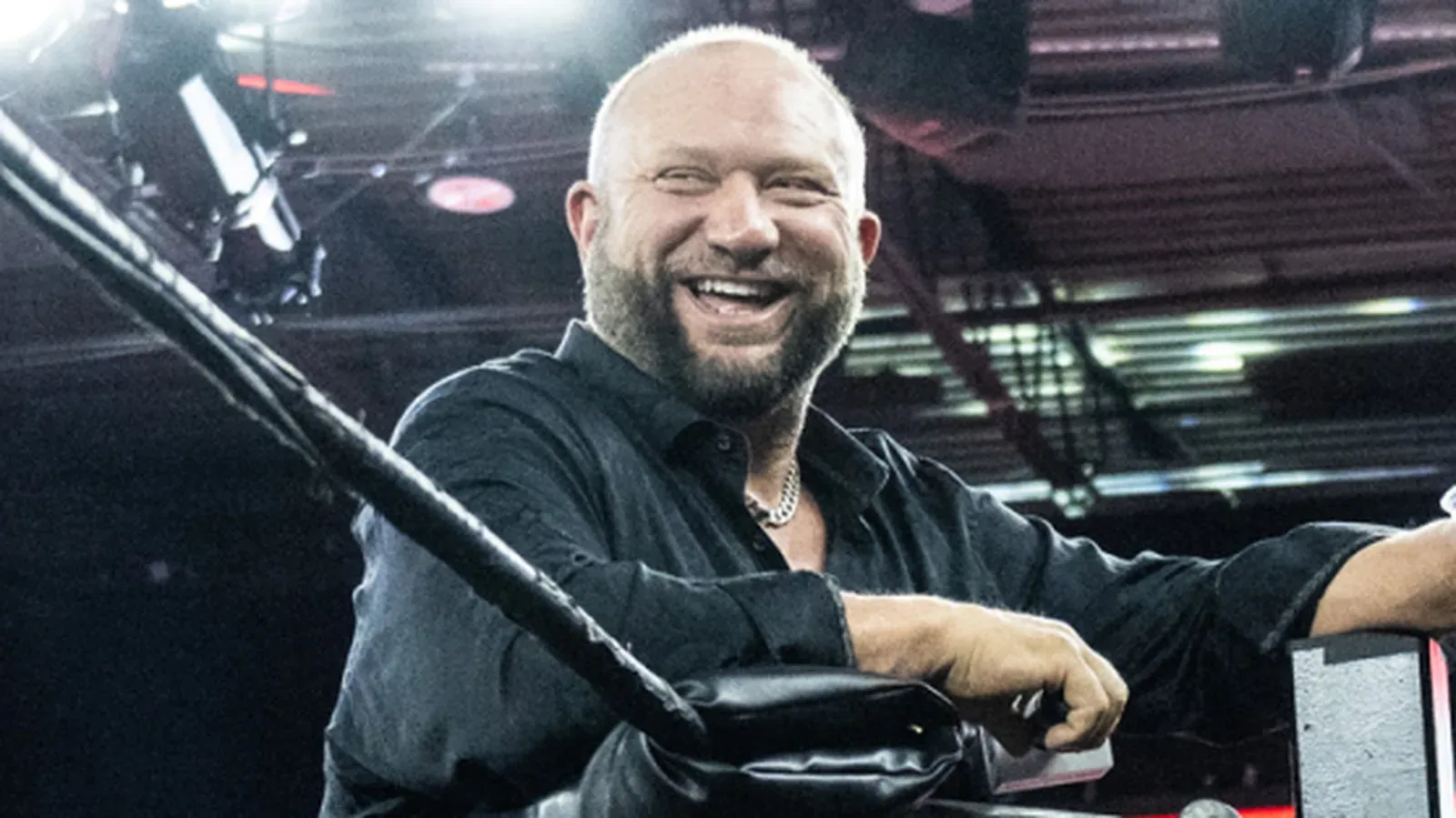
Bully Ray has worked under a number of names, in a number of locker rooms, and alongside some of the most influential performers in modern professional wrestling. But when asked to identify the people from whom he learned the most, the WWE Hall of Famer gave a concise answer: Paul Heyman, Vince McMahon, and Pat Patterson.
During a recent appearance on Busted Open Radio, Ray named the three figures he views as his defining teachers in the industry. The answer carries considerable weight given the length and breadth of his career. As Bubba Ray Dudley, he became one half of one of wrestling’s most recognizable and decorated tag teams with D-Von Dudley, while his later work as Bully Ray further established him as a major singles presence.
Ray’s choices also reflect three distinctly important roles in his development. Heyman was a central creative influence during the Dudley Boyz’ rise in ECW. McMahon led WWE through the period in which the team reached a vastly larger audience and became a fixture of the company’s tag team scene. Patterson, meanwhile, was renowned throughout the industry for his match-making mind and his ability to turn broad concepts into compelling in-ring storytelling.
“Whenever people ask me who I learned from in this business, I have three names: Paul Heyman, Vince McMahon, and Pat Patterson,” Ray said on Busted Open Radio.
For more background on this topic, read Brett Lauderdale Questions Value of MLW Contracts, Citing Reported GCW Restriction.
Three different influences on a Hall of Fame career
The Dudley Boyz’ success was never built around a single ingredient. The team possessed a highly recognizable presentation, an intense physical style, crowd-commanding promos, and a deep understanding of how to make chaotic multi-team matches feel meaningful. Ray’s comments point to the different kinds of education a performer can receive over a career: creative guidance, large-scale sports-entertainment experience, and detailed match construction.
Heyman’s association with the Dudley Boyz is especially significant because ECW was where the act became a major force. The promotion gave Bubba Ray and D-Von a setting in which their personalities, their connection with the audience, and their violent edge could all become defining pieces of the act. By the time the team moved on to WWE, the Dudleys had already developed an identity that was immediately clear to viewers.
McMahon’s influence came in a different environment. WWE presented a larger platform, more extensive television exposure, and a style that demanded performers adapt their work to broad audiences. The Dudley Boyz did not merely arrive in WWE as established names; they became part of one of the promotion’s most memorable tag team eras, sharing the ring with teams including Edge and Christian and The Hardy Boyz in matches that helped define the division for a generation of fans.
Patterson represented another kind of wrestling education altogether. Widely respected as an agent and producer, Patterson was known for understanding pacing, crowd reactions, character motivation, and the small structural choices that can elevate a match. Ray’s story about working with Patterson illustrates why performers held that reputation in such high regard.
Pat Patterson saw what four wrestlers missed
Ray recalled a specific occasion when he and D-Von were preparing for a tag team match against Chris Jericho and Christian. The four wrestlers had spent considerable time putting together their plan. Ray described their idea as an attempt to create a “Mona Lisa” of a match pitch before presenting it to Patterson, who was serving as the agent that night.
In Ray’s telling, the meeting took place in the arena at roughly four o’clock in the afternoon. Patterson was sitting in the stands, and the wrestlers approached him ready to explain the extensive match they had mapped out. Rather than rejecting their work, Patterson listened to it, considered it, and then immediately identified another possibility.
“We laid the whole thing out to him,” Ray recalled. “He nods his head, he takes a drag of his cigarette, he blows out the smoke, and he goes, ‘That’s good. But what if you did it like this?’”
What stood out to Ray was not simply that Patterson offered a suggestion. It was the speed with which he saw an element that the four men had not recognized despite discussing the bout at length. Ray said Patterson found a new aspect of the match within seconds, leaving everyone involved stunned by the clarity of his perspective.
“And within seconds, he saw an aspect of the match that we didn’t see, talking about it for hours,” Ray said. “And we just looked at each other like, ‘Holy s***.’ The guy is unbelievable.”
That anecdote captures a familiar reality of professional wrestling: a match may be carefully planned by talented wrestlers, yet an experienced agent can still identify a sharper route to the same destination. A change does not necessarily need to be elaborate to matter. It can be a different sequence, a revised moment of escalation, a stronger placement for a key spot, or a clearer emotional turn. Ray did not detail Patterson’s specific suggestion, but the lesson he took from the exchange was unmistakable.
The value of veteran match agents
Wrestling fans frequently focus on what happens in the ring, but the process leading to a televised match is often shaped by conversations like the one Ray described. Agents and producers can help talent refine ideas, account for timing, maintain character consistency, and ensure a match serves the larger show. In the strongest cases, they bring a fresh set of eyes without stripping performers of their own creativity.
Patterson’s ability to see a solution quickly is precisely the kind of skill that earns enduring respect from wrestlers. The performers involved in a match naturally become immersed in its details. That investment can produce excellent ideas, but it can also make it difficult to step back and recognize an alternate path. Someone with Patterson’s experience could assess the larger picture immediately: what the audience needed, what the match needed, and what would make the result more effective.
For Ray, the moment clearly remained memorable enough to retell years later. It was not framed as a story of Patterson taking control away from the wrestlers. Instead, Ray described a veteran who listened to a detailed pitch, appreciated the work already done, and then supplied an insight that made everyone reconsider the possibilities.
That distinction matters. In an industry built on collaboration, the most valuable feedback does not always erase an existing plan. Often, it clarifies it. Patterson’s response, as Ray remembered it, began with acknowledgment that the proposed match was good before he offered an alternative. The wrestlers were then confronted with an option they had not seen themselves.
Bully Ray’s perspective comes from experience
Ray’s comments are also notable because of the position from which he is speaking. He is not recalling a brief or isolated run in wrestling. His career included high-profile work in ECW, WWE, and TNA, as well as enough major matches and prominent programs to give him extensive firsthand experience with the creative side of the business.
His work with D-Von created a tag team legacy that is inseparable from the late 1990s and early 2000s wrestling boom. The Dudley Boyz were a central part of memorable multi-team rivalries, and their style helped make tag team bouts feel volatile and consequential. Ray later showed another dimension in singles competition, demonstrating the value of adaptability over the course of a long career.
That background makes his selection of Heyman, McMahon, and Patterson particularly telling. Each figure worked with Ray in a different capacity and at a different stage of his professional evolution. Together, they represent creative vision, exposure at the highest level, and technical understanding of match construction.
- Paul Heyman was a key creative force during the Dudley Boyz’ ECW rise.
- Vince McMahon led WWE during the period when the team became a major mainstream attraction.
- Pat Patterson provided the kind of match-planning insight Ray described as extraordinary.
There is no indication in Ray’s comments that he intended to reduce his career to the work of three people. Professional wrestling careers are shaped by partners, opponents, trainers, agents, writers, producers, and countless other colleagues. Still, when asked for the names that taught him the most, Ray did not hesitate.
The Patterson story explains much of why. Four accomplished wrestlers could spend hours building what they believed was a carefully crafted match, only for Patterson to look at it briefly and find an even more compelling direction. For Ray, that was not merely an impressive moment. It was a lasting example of the instinct and knowledge that separate a respected veteran from a true master of the craft.
In pictures

Darryl Polo
Darryl Polo is a passionate wrestling fan covering WWE, AEW, TNA and beyond. He loves great rivalries, breakout stars and the moments that keep fans talking long after the bell. How we work.