
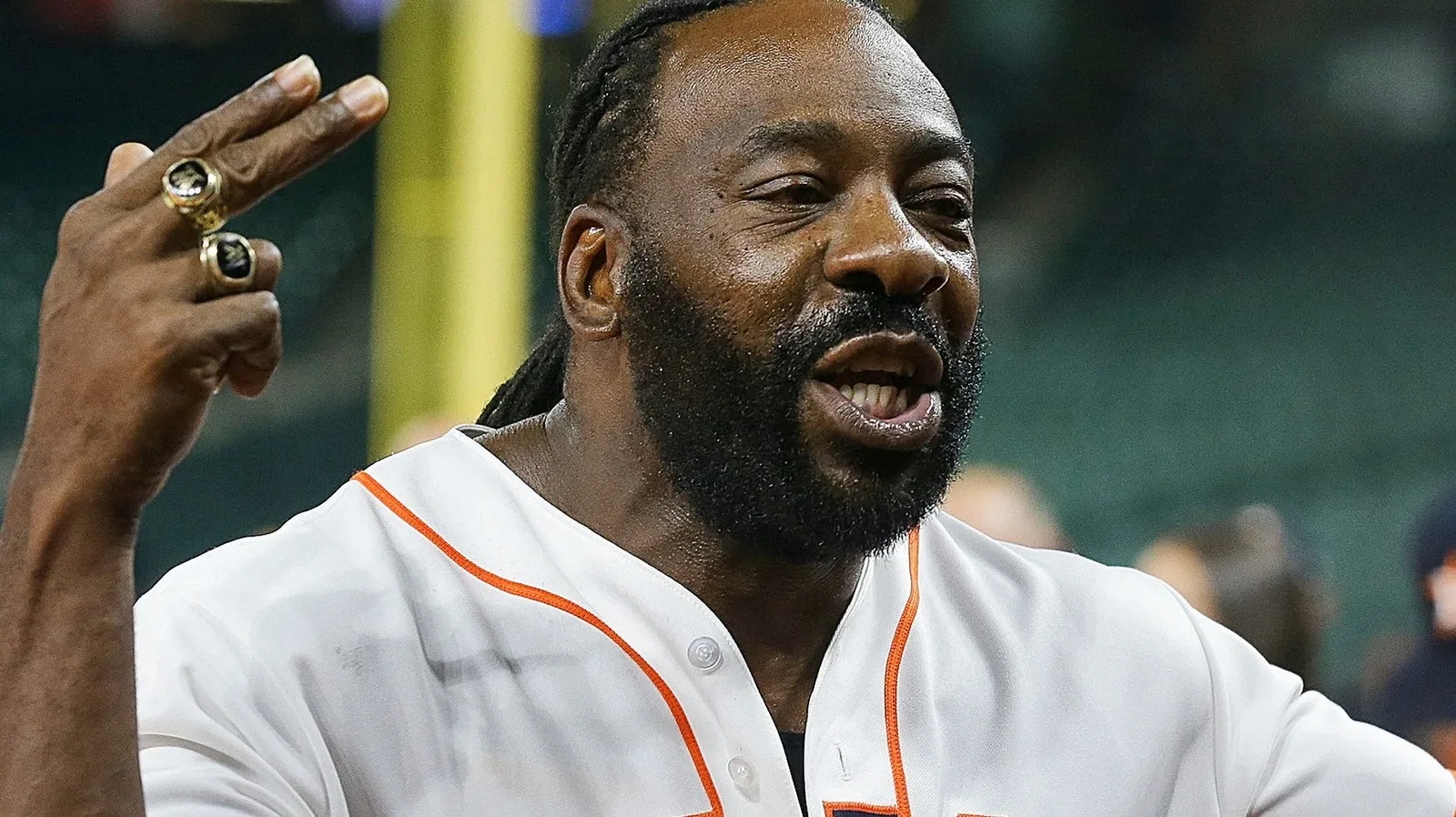
Booker T believes the challenge for some wrestlers entering AEW is not simply about talent, popularity or the momentum they carried before arriving. In his view, it can come down to whether a performer fits the promotion’s preferred presentation of professional wrestling.
Speaking on his Hall of Fame podcast, the WWE Hall of Famer reflected on several prominent names whose careers have intersected with AEW. Booker’s central argument was that the company appears committed to a particular wrestling identity, and that identity may not always be the natural environment for performers he sees as especially strong in the entertainment-driven side of the business.
He pointed to CM Punk’s AEW tenure following Punk’s lengthy absence from professional wrestling as an example of a veteran entering an environment filled with younger talent who may approach the industry differently. Booker did not frame the issue as a question of one style being inherently superior to another. Instead, he suggested that differing views of what wrestling should be can make it harder for certain acts to click within a particular promotion.
“That’s why, you know, certain guys have gone to AEW, and they just didn’t fit in,” Booker said on Hall of Fame.
For more background on this topic, read Queen Aminata Reflects on Emotional AEW TBS Championship Victory.
AEW has positioned itself as a major national alternative in the wrestling landscape since launching in 2019. Its television product has frequently embraced a match-heavy approach, with an emphasis on in-ring performance, athleticism and a broad mix of wrestling styles. That approach has given the company a clear identity, while also creating a continual discussion among fans and industry figures about how established stars from other environments fit into its roster.
Booker’s comments focused on that question of fit. A wrestler can arrive with name recognition, an existing audience and a strong sense of who they are as a character, yet still encounter difficulties if the booking, presentation and overall tone are not aligned with those strengths. Conversely, a performer who is highly compatible with a company’s format can thrive even without the same level of prior national exposure.
Matt Cardona and Cody Rhodes raised in the discussion
Among the names Booker mentioned was Matt Cardona. Cardona became one of wrestling’s most visible independent names after leaving WWE, building a reputation through self-promotion, character work and appearances across numerous promotions. He later appeared in AEW, but Booker cited him as someone who did not seem to fully settle into the promotion’s structure.
“You look at, you know, Matt Cardona, the guy who was a free agent, went to AEW, and boom, just, you know, didn’t fit in,” Booker said.
Booker also included Cody Rhodes in his broader point. Rhodes was an essential figure during AEW’s formation and served as one of the company’s leading on-screen personalities in its early years. His eventual return to WWE became one of the defining wrestling stories of the modern era, and he subsequently reached the top of that company’s presentation.
For Booker, Rhodes’ accomplishments after returning to WWE support the notion that some wrestlers are particularly equipped for a more entertainment-centered framework. He described those performers as more than wrestlers who are simply tasked with delivering matches; they are acts designed to carry stories, characters and major-event atmospheres.
“Those guys are entertainment wrestlers, you know? They’re not just going out there and doing matches,” Booker said.
That distinction is ultimately the heart of Booker’s assessment. Professional wrestling has always included varying priorities: the quality of the match itself, the emotional stakes of a feud, character development, spectacle, realism, comedy and the long-term construction of stars. Different promotions distribute that emphasis differently. Booker sees AEW as a place where the balance may not always favor wrestlers whose biggest strengths come in the broader entertainment presentation around the match.
It is also worth stressing that Booker’s remarks were an interpretation of individual career paths rather than a claim that the wrestlers he named lacked ability or importance. His point was that a mismatch of styles can happen, even when the performer and promotion are both successful in their own right. In a roster as deep and varied as AEW’s, finding consistent space, the right opponents and a presentation that maximizes an act’s strengths is an ongoing task.
Booker T says The Hurt Syndicate have cooled from a hot start
Booker also turned his attention to The Hurt Syndicate. He said the group arrived in AEW with substantial momentum, but he feels that momentum has cooled over time. The discussion again returned to presentation and whether the group’s aura and established identity are receiving the type of spotlight that best serves them.
The Hurt Syndicate bring a polished, assertive group dynamic that is built around credibility, physical presence and personality. Those qualities can make a faction immediately stand out, particularly when its members enter with clear histories and established chemistry. Booker’s concern was not that the group lacked the tools to connect; rather, he suggested that their current trajectory reflects the wider difficulty some established entertainment-oriented acts can face in AEW.
That observation speaks to a familiar issue for every major promotion. A debut can create a major initial reaction, but sustaining that reaction requires stories, rivalries and meaningful follow-through. Groups especially need a clear reason to exist beyond their arrival, along with opponents who give their identity sharper definition. Momentum is difficult to create and just as difficult to maintain when a weekly program has many wrestlers competing for attention.
A debate over wrestling’s identity, not a rejection of change
While Booker questioned whether AEW’s style is ideal for every incoming name, he did not present the company’s approach as illegitimate. He acknowledged that AEW has the right to pursue the type of product it wants to make and the type of audience it wants to reach.
“It seems that [AEW is] looking to change wrestling; the way people watch it, and look, there’s nothing wrong with that, it’s your prerogative,” Booker said. “It’s your flavor and your cup of tea, more than anything.”
That framing matters. Booker’s criticism is rooted in creative compatibility, not an argument that wrestling must look only one way. AEW’s growth helped ensure that fans have access to a nationally visible alternative with a different philosophy from WWE. For many viewers, that variety is the point. A wrestling audience is not a single bloc, and promotions can succeed by serving different tastes.
At the same time, Booker’s comments underline the pressure placed on high-profile arrivals. When a known name joins AEW, expectations are immediate. Fans evaluate whether the wrestler is being used prominently, whether their character feels intact and whether their matches and feuds feel important. If the answer is unclear, debate quickly follows, particularly when that talent had visible success elsewhere.
There is no universal formula for making that transition work. Some wrestlers benefit from adapting their style to a new setting. Others may be most effective when a promotion adapts the presentation around what made them special in the first place. The strongest outcome is often a middle ground: a performer retains the qualities that earned fan interest while finding a role that makes sense within the company’s existing creative ecosystem.
Booker T’s viewpoint on Hall of Fame adds another prominent voice to the ongoing conversation about AEW’s identity. His examples—Punk, Cardona, Rhodes and The Hurt Syndicate—illustrate how differently wrestlers can be received depending on context. AEW’s commitment to its own flavor has been central to its place in the industry. Booker’s argument is that the same commitment can also mean that not every major name will find an immediate or lasting fit.
In pictures

Darryl Polo
Darryl Polo is a passionate wrestling fan covering WWE, AEW, TNA and beyond. He loves great rivalries, breakout stars and the moments that keep fans talking long after the bell. How we work.