
Booker T entered WWE in 2001 carrying the reputation of one of WCW’s biggest stars, but he understood that reputation alone would not guarantee success after the company landscape changed. The WWE Hall of Famer recently reflected on the transition, explaining why he viewed every early opportunity as a chance to prove himself to a new locker room.
In his first stretch with WWE, Booker was placed opposite some of the company’s defining names, including Stone Cold Steve Austin, The Rock and Kurt Angle. For a performer arriving from WCW at a time when many former WCW wrestlers struggled to establish themselves on WWE television, those assignments were substantial. Booker said his focus was not on expecting special treatment because of what he had accomplished elsewhere. Instead, he wanted to demonstrate that he could work within the WWE system, follow direction, and become somebody his new peers could trust.
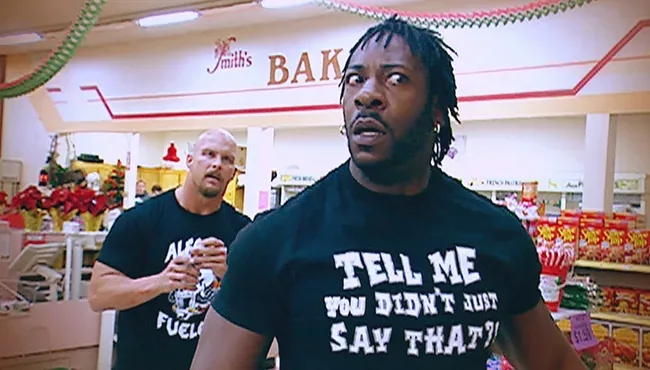
That mindset helped shape one of the most memorable chapters of his career. Booker’s program with Austin mixed physical confrontation with deliberately absurd comedy, producing scenes that are still remembered by fans, including the famous supermarket brawl on WWE SmackDown in December 2001 and the pair’s bingo-themed segments.
Booker T Saw the Locker Room as the First Test
Booker described the challenge of arriving in WWE in direct terms: success began before the bell rang. In his view, a wrestler needs to establish credibility with the people behind the scenes before expecting to thrive in front of the audience.
For more background on this topic, read Cassie Lee Says Jessie McKay Is the Only Tag Partner She Would Want.
“I always say you got to know how to make it in the locker room before you have a chance at making it in the ring,” Booker said.
That assessment carries particular weight given the environment in 2001. Booker came from WCW as a decorated champion, yet WWE was operating with an established hierarchy and a roster full of performers who had built their own standing within the company. Booker recognized that working with the top names was not simply a reward. It was also an evaluation of whether he could adapt, communicate and earn confidence in a new setting.
He said he kept his head down and tried to show both that he was capable in the ring and that he could be a positive presence around the locker room. Booker believed his placement with Austin, The Rock and Angle gave WWE’s established stars a chance to form their own opinion of him. Their feedback, he suggested, could have had a major influence on what came next.
Booker’s perspective was that nothing in wrestling should be treated casually. He framed virtually every assignment as a test, particularly during a period in which a former WCW wrestler could not assume that past accolades would transfer into a prominent WWE role. Booker said he was prepared for whatever was asked of him because he was determined to pass those tests.
That approach offers a straightforward explanation for why he was able to remain relevant after the immediate WCW invasion period. The issue was not only having a recognizable name or a championship history. It was being able to make the material work, establish chemistry with WWE’s core talent and meet the expectations of the producers and officials guiding the show.
Learning WWE’s Creative Language
Booker also recalled working with the late Pat Patterson, a hugely influential WWE figure whose instincts for match structure and entertainment had a lasting impact on generations of wrestlers. Booker remembered Patterson giving him direct, shorthand instructions for how a match should unfold, using expressive sounds and gestures to illustrate the desired flow and finish.
Rather than being frustrated by the unconventional method of communication, Booker said he enjoyed it. His response was simple: give him the instructions, and he would deliver the match as it had been explained. The point was not to insist on doing things exactly as he had done in WCW. It was to understand the assignment and make it succeed on WWE television.
“I wanted to be able to fit in and fit in properly and gain those guys’ respect,” Booker said.
That willingness to adapt is central to Booker’s recollection of the period. He was not describing a passive role in which he merely accepted whatever was presented. He was describing a professional approach built around execution. He wanted to prove that he could take creative direction, bring his own personality to it and make the segment or match land with the audience.
It is also notable that Booker did not portray working with the company’s top stars as an intimidating burden. He saw it as an opportunity to show what he could do. The early programs gave him exposure opposite major attractions, but they also required him to complement their styles. Austin’s unpredictable intensity, The Rock’s verbal charisma and Angle’s combination of athleticism and comedy each demanded different things from an opponent.
An Invitation From The Undertaker
One moment Booker recalled stood out as a personal sign that he had made progress in WWE. He said that, perhaps around six months into his run—or possibly even sooner—The Undertaker invited him to dress in the locker room area used by the company’s leading veterans.
For Booker, the invitation had significance beyond a change of room. He viewed it as evidence that he had been accepted by a group he called “the big guns.” In an industry where trust is often developed over time through travel, matches, conduct and consistency, Booker took the gesture as confirmation that his efforts to fit into the locker room had been noticed.
The moment also reinforces the larger theme of his reflection. Booker’s WWE arrival was not defined only by storylines. It was defined by his attempt to earn a place inside a culture that had already existed long before he arrived. By his own account, acceptance from respected veterans was an important milestone.
Why the Steve Austin Comedy Still Stands Out
While Booker’s WWE transition involved serious professional stakes, his rivalry with Austin also created some of the most intentionally silly material of the era. Booker said he remembers the details of the bingo segments vividly, including the brown suit he wore. He recalled buying the outfit through his Jam Zone store, which sold CDs and clothing items sourced from New York.
What remains most striking to him is the freedom to embrace a different performance mode. Booker remembered looking back at some of the older material and being surprised by sketches he had forgotten, including a bit involving an audition connected to The Rock. His takeaway was not that the material was sophisticated. Quite the opposite: it was ridiculous, and that was part of why it worked.
Booker specifically pointed to the bingo material, the elderly woman involved in the segment and the bait-and-switch elements as examples of WWE leaning into broad comedy. He described it as “stupid” but funny, a combination that helped make the rivalry distinct from a conventional grudge feud.
The supermarket fight remains the clearest illustration of that approach. In December 2001, Austin and Booker took their conflict out of the arena and into a grocery store on SmackDown. The scene turned an ordinary setting into a wrestling battleground, with the clash relying on the visual novelty of two major stars fighting among the aisles and store displays. It became one of the lasting images associated with their program.
A Defining Early WWE Chapter
Booker T’s recollection of his first months in WWE is ultimately a story about adaptation. He arrived with undeniable credentials, but he believed that succeeding in the new environment required more than reminding people of his WCW accomplishments. He had to establish trust, take direction, work effectively with the company’s biggest names and prove that he could handle everything from high-level competition to intentionally over-the-top comedy.
The Austin rivalry encapsulated all of that. It put Booker in prominent segments with one of wrestling’s most influential stars, let him show a comedic side that audiences had not always seen in the same way before, and produced moments that remain associated with WWE’s 2001 programming. His interactions with The Rock, Angle, Patterson and The Undertaker, meanwhile, reflect the wider process of becoming part of a new locker room.
For Booker, the lesson remains applicable to wrestlers trying to break through today: every interaction, match and assignment can matter. His early WWE experience showed that the ability to meet the moment—whether it calls for a major feud, a carefully structured match or a bizarre bingo sketch—can make the difference in earning lasting respect.

Darryl Polo
Darryl Polo is a passionate wrestling fan covering WWE, AEW, TNA and beyond. He loves great rivalries, breakout stars and the moments that keep fans talking long after the bell. How we work.