
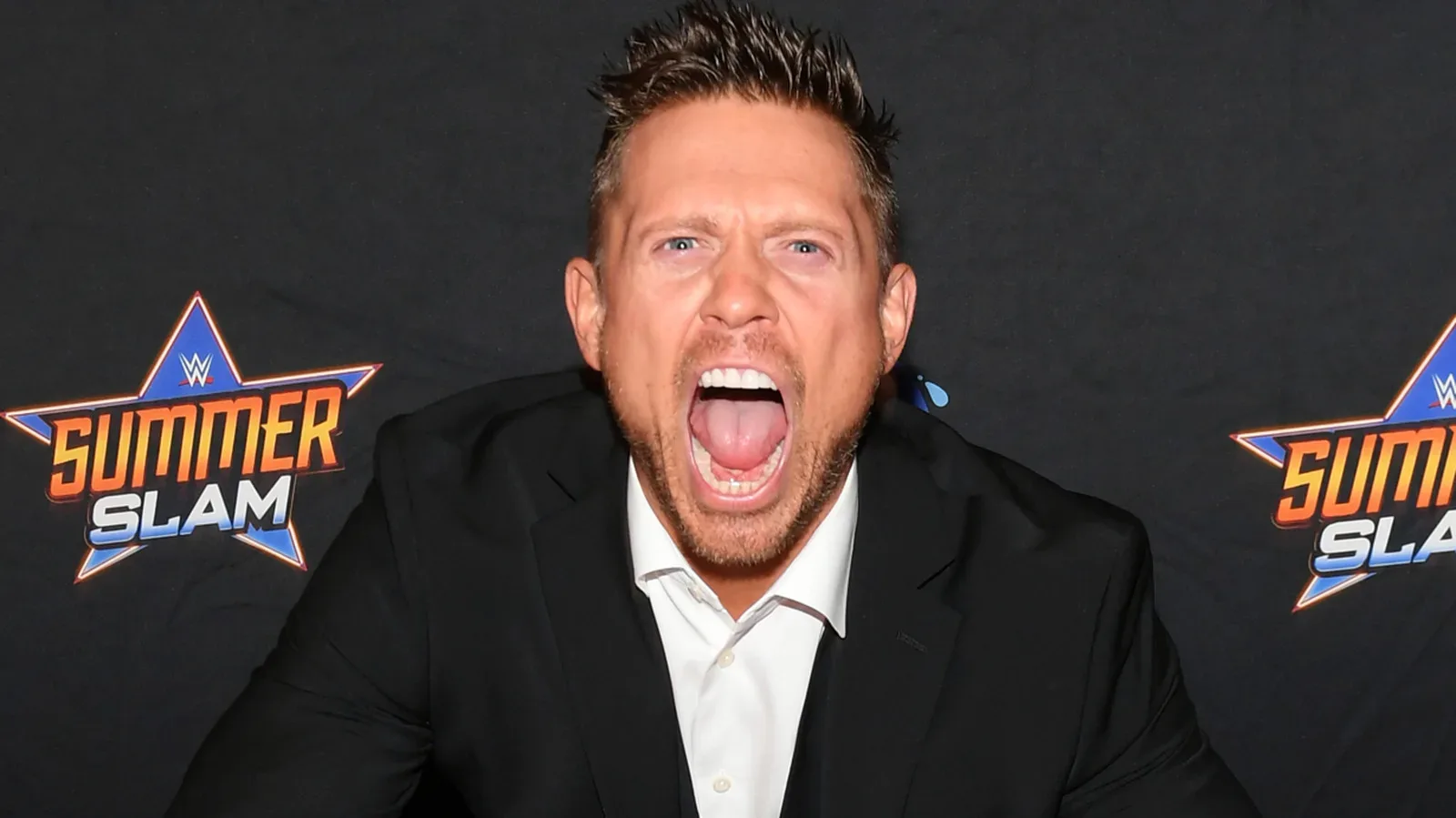
Few post-show WWE segments have remained as vivid in fans’ memories as The Miz’s confrontation with Daniel Bryan on Talking Smack in August 2016. What began as a debate over the Intercontinental Championship and Miz’s wrestling style became a blistering exchange that reshaped the momentum of Miz’s title reign. Nearly a decade later, Miz has revealed that, in the seconds after delivering the promo’s most controversial line, he genuinely wondered whether he had just cost himself his WWE job.
Speaking in a WWE Vault video chronicling his greatest moments, Miz looked back on the segment and the immediate anxiety that followed it. The former WWE Champion explained that he was replaying the confrontation in his mind and feared the intensity of the moment may have crossed a line that would bring serious consequences. Instead, he soon learned that WWE leadership viewed the exchange as a major success.
That reaction mattered because the segment did more than create a viral piece of WWE television. It gave Miz and the Intercontinental Championship a sharper central role on SmackDown at a time when both were entering a crucial period. Miz said he was positioned at the beginning of the following week’s program, and he felt the championship was subsequently treated with a level of importance closer to a main-event prize.
A Tense Night Set the Stage
The famous confrontation occurred shortly after the 2016 WWE Draft, when the company had divided its roster between Raw and SmackDown. Miz arrived on the blue brand as Intercontinental Champion, but he was not in a particularly positive mood before Talking Smack even began.
For more background on this topic, read Drew McIntyre Recalls Awkward Robert Downey Jr. Encounter and Meeting Flash Gordon’s Sam Jones.
He recalled learning that he would be working a dark match that evening. For a performer who had spent years fighting to be recognized as more than a reality television personality and a dependable supporting act, the situation added to his frustration. Miz had long made his ambition part of his on-screen identity, and that sense of being overlooked helped fuel the emotional edge he brought to the desk with Bryan.
Talking Smack was a weekly WWE Network series that ran for less than a year in its original form, but its looser interview setting allowed performers to show a different side of their characters. The program was often more spontaneous than the heavily structured presentation of Raw or SmackDown. It created an environment where feuds could be explored in greater detail, champions could state their cases, and wrestlers could occasionally speak with a level of directness that felt unusual for WWE programming.
Miz and Bryan were ideal figures for that format. Their history extended well beyond that night. Bryan had become one of WWE’s most beloved wrestlers through a journey that included substantial independent-scene acclaim before he broke through on the company’s biggest stage. Miz, by contrast, entered WWE with a background in reality television and spent years combating assumptions about his toughness, credibility, and in-ring ability.
Those different paths became central to the confrontation.
Bryan’s Criticism Hit a Nerve
At the time, Bryan was retired from active competition due to medical issues, though he remained a key on-screen authority figure on SmackDown. During the Talking Smack exchange, Bryan criticized Miz for what he saw as a cowardly approach to defending the Intercontinental Championship. He also made clear that he did not respect the way Miz wrestled.
For Miz, the remarks did not land as routine storyline criticism. He interpreted Bryan’s comments as reflecting a deeper judgment: that Bryan, with his independent wrestling background and reputation among hard-core fans, saw Miz as less worthy because he had not followed the same route into WWE.
That perception unlocked the promo. Miz forcefully defended the value of his career, his work as a champion, and the demands placed on him as a WWE performer. He argued that his approach was built around succeeding in the environment in which he worked, rather than trying to satisfy an outside standard of what wrestling was supposed to be.
The moment escalated when Miz turned Bryan’s accusation back toward him and invoked Bryan’s inability to return to the ring at that time. The remark was shocking precisely because Bryan’s retirement was a deeply personal reality, not merely an ordinary talking point in a wrestling rivalry. Bryan walked away from the set, while Miz later recalled believing in the moment that Bryan might react physically.
It was one of those rare wrestling segments where the emotions appeared immediate even as the performers remained within a televised WWE setting. Fans debated how much was planned, how much was improvised, and where the boundary between character work and personal frustration sat. The uncertainty only made the scene more memorable.
From Fear of Discipline to Validation
Miz’s recollection of the aftermath underscores just how uncertain he felt. He did not leave the desk believing he had created a career-defining scene. He left wondering if the reference to Bryan’s retirement had put him in danger with the company.
That concern quickly gave way to relief. Miz said he received messages from Kevin Dunn and Vince McMahon indicating that they were enthusiastic about what had happened. Rather than being reprimanded, Miz saw the segment become a springboard for a stronger presentation on SmackDown.
The response also validated a quality that had become one of Miz’s greatest professional strengths: his ability to turn criticism into material. Throughout his WWE career, Miz has repeatedly incorporated the skepticism surrounding him into his persona. Doubts about his background, his ring style, his celebrity ambitions, and his standing among other wrestlers have all been used to intensify his work as a villain.
In this case, the criticism came from a uniquely credible opponent. Bryan represented a style and a fan culture that many observers had contrasted with Miz for years. Their exchange was effective because neither man’s perspective felt arbitrary. Bryan’s objections to Miz’s tactics fit his established character, while Miz’s angry defense of his own career reflected a real and longstanding chip on his shoulder.
The Intercontinental Championship Benefited
The immediate beneficiary of the segment was the Intercontinental Championship. Miz’s 2016 reign became defined by a more aggressive and self-assured presentation, with the title positioned as a major point of pride rather than simply another prop in a mid-card rivalry.
That distinction was significant. The Intercontinental Championship has historically carried enormous prestige in WWE, with champions such as Randy Savage, Bret Hart, Shawn Michaels, The Ultimate Warrior, The Rock, Chris Jericho, Edge, and many others using it as a platform for larger accomplishments. Its perceived importance has shifted across different eras, however, depending heavily on the stories and performers surrounding it.
Miz understood that a championship’s value is tied to how passionately its holder fights for it. The Talking Smack promo made clear that he viewed the Intercontinental Title as evidence of his standing. He was not presenting himself as a champion content to occupy a secondary spot. He was presenting himself as someone who believed he deserved the same respect as anyone who had built a reputation through a different kind of wrestling journey.
The ensuing attention reinforced that message. Miz’s title programs became a larger feature of SmackDown, and the championship’s role in his character became inseparable from his demand for recognition.
Why the Segment Still Resonates
The Miz-Bryan exchange remains a landmark Talking Smack moment because it captured multiple WWE narratives at once. It was about the Intercontinental Championship. It was about Bryan’s forced retirement. It was about Miz’s resentment over being underestimated. And it was about an evolving WWE landscape in which performers from radically different backgrounds were expected to compete for the same opportunities and respect.
It also demonstrated the usefulness of programming that gives wrestlers room to speak. A short, unscripted-feeling conversation can sometimes create as much momentum as a conventional match or a carefully choreographed in-ring angle. Miz did not need a victory bell, a surprise attack, or an elaborate production device that night. He needed a direct challenge, a personal grievance, and the conviction to answer it.
For Miz, the lasting memory includes the fear that came immediately after the outburst. But the eventual outcome was far different from the one he anticipated. Instead of ending in punishment, the confrontation became one of the most important moments of his career and helped elevate his championship run into a defining chapter of the 2016 SmackDown era.
That is why the segment continues to stand apart. It was not simply a heated argument. It was The Miz making a case for his own legitimacy in real time—and discovering that WWE was ready to place even greater weight behind it.
In pictures

Darryl Polo
Darryl Polo is a passionate wrestling fan covering WWE, AEW, TNA and beyond. He loves great rivalries, breakout stars and the moments that keep fans talking long after the bell. How we work.