
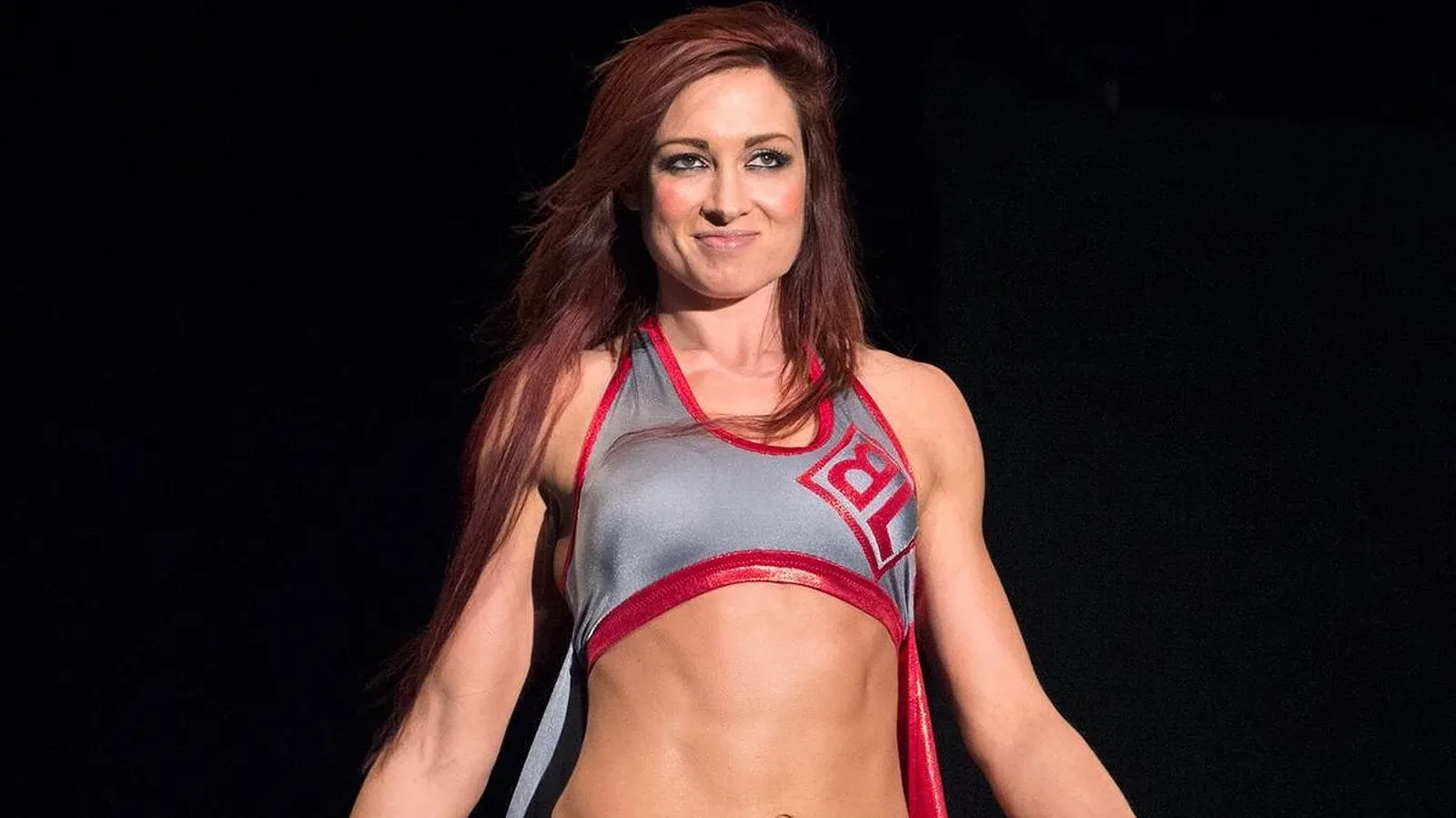
Becky Lynch has reflected on the WWE NXT environment that helped shape a generation of performers, describing the brand’s old promo classes as an unusually free-form space where wrestlers could take creative risks without the pressure of needing every idea to be television-ready.
Speaking on The Rich Eisen Show, Lynch revisited the period before she became one of WWE’s defining main-roster stars. Long before “The Man” emerged as the character that propelled her into WrestleMania main-event territory, Lynch was among the many developing talents trying to find the right voice, presentation and confidence in NXT.
For Lynch, one of the most valuable parts of that process was promo class. Rather than treating it as a rigid exercise in memorization or a simple rehearsal for weekly programming, she remembered it as a setting that encouraged performers to bring forward strange, unfinished and sometimes deliberately over-the-top ideas.
“Promo class back then was incredible; it was a variety show,” Lynch said on The Rich Eisen Show. “It was like a talent show, just: ‘What can you do? Bring it up! Try out a character.’”
For more background on this topic, read JBL Recalls Commentary Being Kept in the Dark on Brock Lesnar Ending The Undertaker’s Streak.
That description captures an important element of developmental wrestling: a performer often needs room to be imperfect before discovering what feels authentic. A character does not always arrive fully formed. Promos can be awkward, accents and mannerisms can feel exaggerated, and an idea that looks unconvincing in its first attempt may contain a small element worth developing further.
Lynch said the point was not that every persona introduced during those sessions would be used on NXT television. The opportunity came from trying things in front of others and learning from the result.
“None of these characters were going to make it to TV, but it was just throwing s**t at the wall and seeing what stuck,” Lynch said.
A Place to Take Chances
Lynch’s comments underline how much professional wrestling depends on the willingness to make bold choices. In-ring ability is central to a wrestler’s career, but performers are also tasked with communicating emotion, establishing a point of view and giving audiences a reason to invest in their victories and setbacks. Promo class gave NXT talent a place to explore those skills in an environment where failure could be instructive rather than fatal.
She specifically framed the experience as a lesson in creativity and in overcoming the fear of looking foolish. That is a significant hurdle for any performer, especially in a format where a wrestler may be asked to stand alone and reveal a character idea before peers, coaches and decision-makers.
Lynch connected that lesson to a Paul Heyman comment that had stayed with her since she saw the Rise and Fall of ECW documentary. She recalled Heyman’s message as follows: “Because if you’re not afraid to fail, then my God, the possibilities are endless.”
In Lynch’s view, the NXT promo sessions represented a smaller-scale version of that philosophy. Wrestlers were afforded the chance to make a choice, see whether it connected and move on to another approach if it did not. That process can be especially useful for talent who have not yet found the presentation that best translates their personality to a wrestling audience.
It is also a reminder that polished television characters frequently begin with trial and error. The final version seen by viewers may appear effortless, but it can be the result of numerous attempts that were never meant to be shown on a major broadcast. Lynch’s recollection paints those sessions as a workshop rather than a finished production.
Future Standouts in the Same Room
Lynch named several wrestlers she believes developed their personas through those NXT promo classes: LA Knight, Enzo Amore, Big Cass, Sasha Banks and Bayley. The group reflects a range of styles, from larger-than-life verbal performers to wrestlers whose connection with fans was rooted in a distinctive emotional identity.
Each name also speaks to the broader value of a developmental system that does more than teach match structure. Wrestling personalities must be recognizable. They must be capable of sustaining interest over time, whether through charisma, relatability, intensity, humor or a clear sense of character. Promo work is where many of those elements become visible.
LA Knight’s eventual rise as a prominent talker, for example, illustrates the importance of having a defined verbal presence. Sasha Banks and Bayley became central figures in the NXT women’s division with sharply contrasting personas and performances that encouraged audiences to emotionally pick a side. Enzo Amore and Big Cass developed as a highly recognizable pairing whose presentation leaned heavily on cadence, catchphrases and crowd interaction.
Lynch did not suggest that everyone’s path through promo class was identical. Instead, she remembered a divide between those who had already found their footing and those still searching for it.
“There was these people that had their act together, and then there was the rest of us that were just trying to figure it out, and it was just awesome,” Lynch said.
That assessment is revealing because Lynch is now widely associated with one of WWE’s most successful modern character transformations. Her career has included extensive accomplishments on the main roster and a dramatic reinvention that established “The Man” as a defining persona. Looking back, however, she placed herself among the wrestlers who were still working through the process of discovery.
That perspective gives added weight to her praise for the old NXT environment. Development is not always linear, and early uncertainty does not determine a wrestler’s ceiling. The ability to keep experimenting can matter as much as having an immediately obvious gimmick or a polished first promo.
Why the Memory Still Matters
NXT has changed considerably over the years, with different classes of talent, shifting leadership structures and evolving priorities. Yet Lynch’s memory of promo class highlights a principle that remains relevant across WWE: performers need opportunities to develop a point of view before they are expected to carry it in front of a massive live and television audience.
A wrestler can learn technique in the ring, but character confidence is often harder to teach. It has to be practiced. Promo exercises can help a talent identify the kind of language they naturally use, how they react under pressure and which emotions they communicate most effectively. Even unsuccessful attempts can clarify what does not fit.
The freedom to experiment is especially meaningful in a business where audiences are quick to form opinions. Once a character reaches television, a performer’s choices are scrutinized in real time. A developmental setting offers a rare degree of protection: wrestlers can test an impulse, receive feedback and refine it before the stakes are at their highest.
Lynch’s recollection also suggests that camaraderie was part of the appeal. Watching peers take risks can normalize the process of failing in public. If one wrestler presents an unusual idea and survives the experience, others may be more willing to do the same. That collective willingness to try is what can turn a standard training session into a genuinely creative environment.
For a performer who has experienced the highest levels of WWE success, Lynch’s affection for that earlier stage is notable. She did not describe promo class merely as a required part of NXT training. She remembered it as a period of possibility, when the next idea could emerge from a performer taking a chance without knowing whether it would work.
“God, them was the good old days,” Lynch said.
Those “good old days,” as Lynch described them, were not necessarily about getting every answer right. They were about gaining the confidence to search for the answer at all. Her comments offer a look at the unpolished work behind wrestling’s finished characters and at the creative risks that can eventually lead to the personas fans remember most.
In pictures
Darryl Polo
Darryl Polo is a passionate wrestling fan covering WWE, AEW, TNA and beyond. He loves great rivalries, breakout stars and the moments that keep fans talking long after the bell. How we work.