
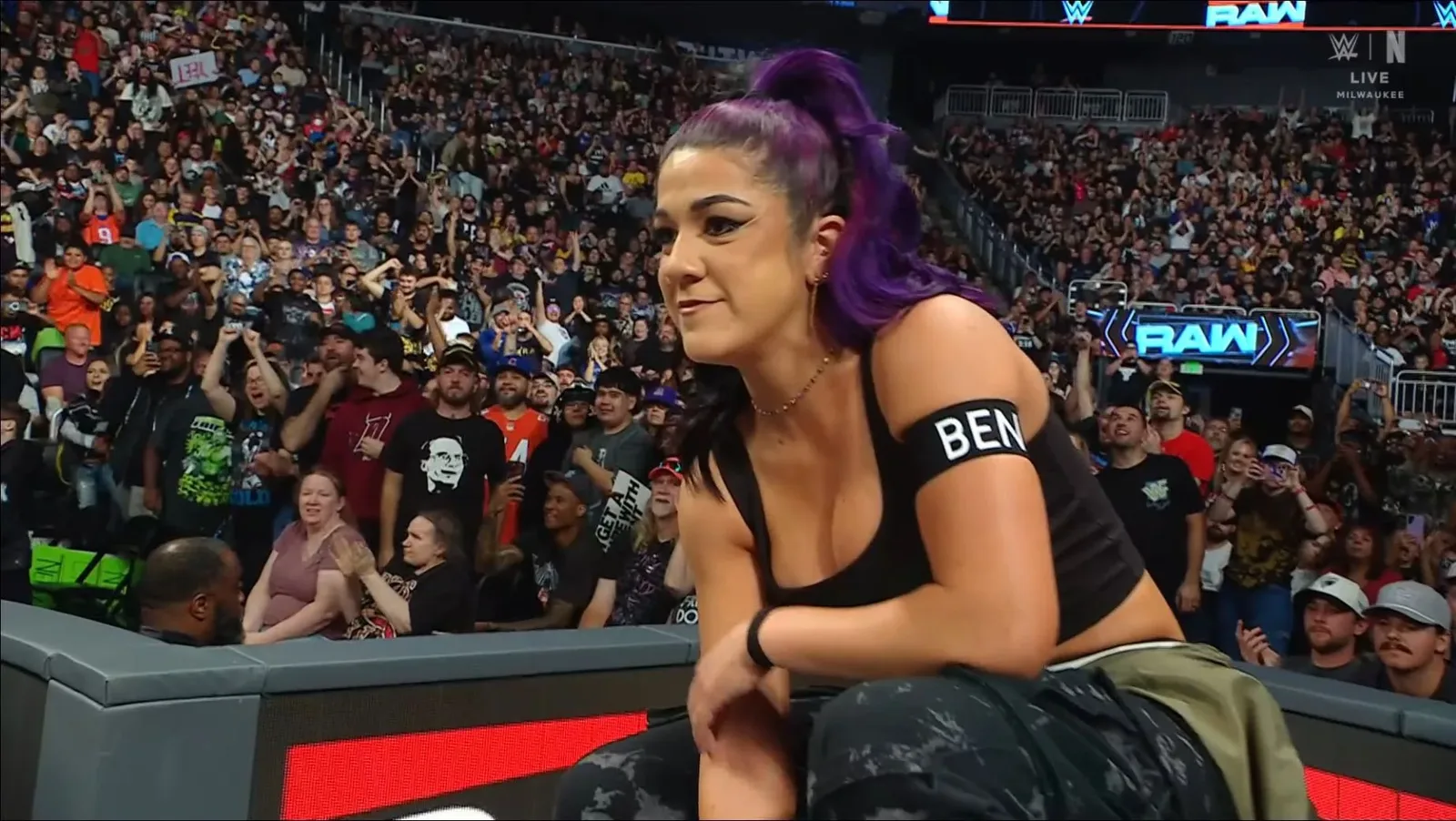
Bayley has shared a heartfelt reflection on the emotional power of professional wrestling following AEW Dynamite’s celebration of the life of Benjamin Satterley, the wrestler widely known to audiences as PAC.
The WWE star’s comments focused on the uncommon space wrestling can occupy for performers and fans alike. It can provide spectacle, drama and a welcome escape from everyday life, Bayley wrote, while also giving people a way to collectively acknowledge grief and honor someone important to them.
“Pro wrestling is so special. The way you can get lost in a match or a character can be so fun. There’s nothing like it. But experiencing that magic and escape, while at the same time honoring a loved one, is truly powerful.”
View the referenced post on X
Her message arrived after AEW Dynamite recognized Satterley’s life. The tribute carried particular personal meaning for Bayley, who spent multiple years of her WWE career alongside Satterley. On the September 28 edition of Monday Night Raw, she also wore an armband bearing the name “Ben,” a quiet but visible gesture of remembrance.
For more background on this topic, read Netflix Version of WWE RAW Blacks Out Jacob Fatu Car Attack Segment.
A Message About What Wrestling Can Hold
Bayley’s statement was concise, but it captured an idea that sits at the center of wrestling’s lasting appeal. The medium is built around characters, rivalries, athletic performance and audience investment. A fan can become immersed in a match’s momentum, react to a comeback, fear a near fall or celebrate a victory as if the outcome matters directly to them. For many people, that immersion is an important part of why wrestling remains meaningful across generations.
At the same time, wrestling is not isolated from the real lives of the people involved in it. Wrestlers travel together, train together, perform in front of the same audiences and share career milestones that can span years. When a member of that community is being remembered, the familiar format of a wrestling show can take on a different weight. The ring, arena and broadcast become places not only for competition but also for communal reflection.
That contrast is what Bayley emphasized. Wrestling can be fun because it offers an escape, but it can also become powerful when that escape exists alongside an honest recognition of loss. Those two elements do not cancel each other out. In moments of tribute, they can strengthen one another.
The ability to blend performance with sincerity has long been one of wrestling’s defining traits. A program may ask audiences to suspend disbelief for a storyline, then pause to recognize an event that reaches beyond the show. The audience’s emotional connection to the people in the ring gives those moments their impact. Fans are not simply watching a presentation; they are often responding to performers they have followed for years and, in some cases, feel they have grown alongside.
Bayley’s Connection To Benjamin Satterley
Bayley’s remembrance is rooted in a professional relationship that extended across several years in WWE. Her decision to wear the “Ben” armband on Raw made that personal connection clear without taking attention away from the program itself. It was a subtle acknowledgment, but one that carried significance for viewers who noticed it and understood whom it represented.
In an industry where wrestlers can be recognized most immediately by ring names and on-screen personas, the use of Satterley’s given name is especially notable. Bayley’s comments centered on “a loved one,” while her armband used “Ben,” reinforcing that the moment was about the person behind the character as much as it was about the performer fans knew as PAC.
That distinction often matters deeply in wrestling tributes. Characters and ring identities may be the public face of a career, but colleagues share locker rooms, travel schedules, professional challenges and personal experiences with the individual behind them. A tribute can therefore mean one thing to viewers who know a wrestler through television and another, more intimate thing to those who worked beside that person.
Bayley’s message did not attempt to speak for everyone who knew Satterley. Instead, it expressed her own reaction to seeing wrestling serve as a place of both entertainment and remembrance. The result was a statement that connected a personal loss to the broader emotional language of the business.
AEW And WWE Connected By A Moment Of Remembrance
The circumstances also underline how moments of loss can transcend promotional boundaries. AEW Dynamite’s celebration of Satterley’s life was the immediate catalyst for Bayley’s post, while her armband appeared on WWE television. The companies compete for audiences and feature distinct rosters, but the people working within professional wrestling remain part of a wider community shaped by shared history and personal relationships.
Bayley’s response did not frame the moment in terms of rivalry or brand identity. It was simply an acknowledgment of the tribute and of what it represented. That is often the clearest reminder that the industry’s on-screen divisions do not define every human connection within it.
For fans, cross-promotional moments of respect can be striking precisely because they strip away the usual framework of competition. There is no need for a storyline explanation, no championship at stake and no debate over which company benefits. The focus becomes the person being honored and the colleagues, friends and fans affected by their passing.
Professional wrestling has a particular capacity for this kind of shared response because it is both highly public and deeply personal. Its biggest emotions are presented in front of live crowds and cameras, yet much of its foundation is built on long-term trust between people who work an unusually demanding schedule. When those worlds overlap in a tribute, the authenticity is often immediately apparent.
The Role Of Escape In Difficult Times
Bayley’s choice to mention “magic and escape” is also important. Wrestling’s escapism is not necessarily an attempt to ignore real life. In many cases, it is a way of finding room to process real life. A match can offer temporary relief, a familiar character can provide comfort and a live crowd can create a sense of collective energy at a time when people might otherwise feel isolated.
That is part of why memorial moments can resonate so strongly within wrestling. The show continues, the athletes perform and the fans participate in the event, but there is space for everyone to recognize something more serious. The normal rhythm of a program becomes a setting for memory rather than a distraction from it.
Bayley’s words suggest that the strength of wrestling lies not solely in its ability to make audiences forget their troubles. Its strength can also be found in the way it allows people to carry those feelings together. The same emotional investment that makes a fictional rivalry work can make a real tribute feel immediate and meaningful.
For performers, that experience can be especially profound. They are asked to deliver physical, live entertainment under intense pressure, often while managing the same joys and hardships that exist in any workplace or personal life. A gesture such as Bayley’s armband can communicate remembrance while respecting the responsibility of appearing on a weekly television program.
A Simple Tribute With Lasting Meaning
There was no elaborate presentation attached to Bayley’s message. Her reflection was direct, and the “Ben” armband was a restrained sign of respect. Yet both gestures spoke to the lasting connections that develop over years in wrestling.
The response also served as a reminder that the emotions around wrestling are not confined to what happens between the ropes. The stories fans follow may be scripted, but the bonds among colleagues, the grief felt after a loss and the desire to honor someone’s life are real. When wrestling makes room for those truths, it can show a different kind of power.
Following AEW Dynamite’s celebration of Benjamin Satterley’s life, Bayley put that feeling into words. Wrestling can be exciting, imaginative and transporting. It can bring people together through characters and matches. But when it becomes a vehicle for honoring someone who mattered, Bayley believes it can be something even more profound.
Her tribute on social media, together with the armband worn on the September 28 edition of Raw, offered a personal acknowledgment of Ben Satterley and a wider reflection on why professional wrestling continues to matter to so many people inside and outside the ring.

Darryl Polo
Darryl Polo is a passionate wrestling fan covering WWE, AEW, TNA and beyond. He loves great rivalries, breakout stars and the moments that keep fans talking long after the bell. How we work.