
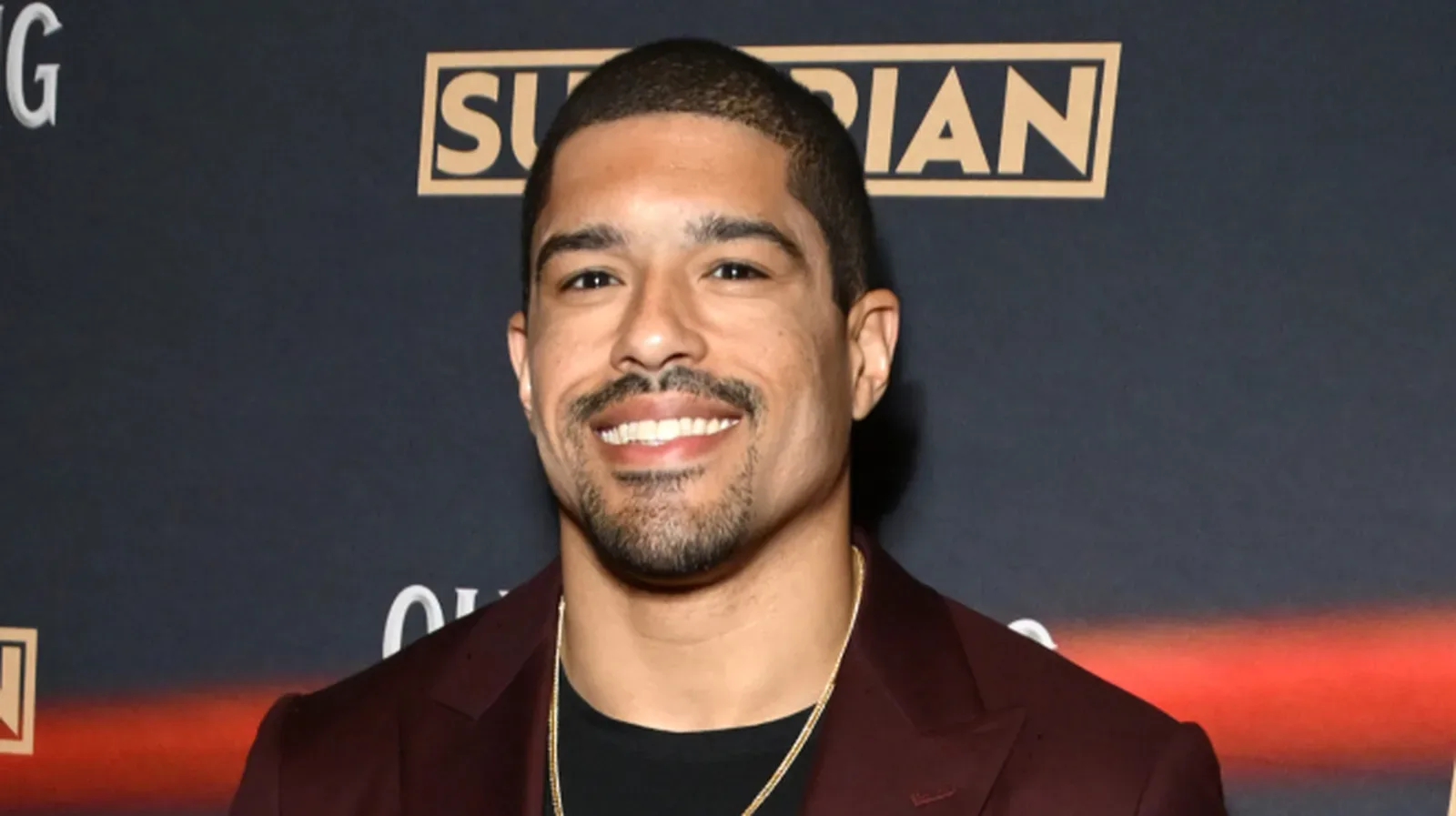
Anthony Bowens has looked back on one of the defining moments of his AEW run: the June 23, 2023 edition of AEW Rampage, when he responded to Harley Cameron’s on-screen advances with the simple declaration, “I’m gay.”
The segment, which took place during Pride Month, earned a major reaction from the Chicago audience and became an especially visible moment of LGBTQ+ representation on AEW programming. Bowens, a former AEW World Tag Team Champion and AEW World Trios Champion alongside The Acclaimed and Billy Gunn, explained that the scene was designed to be playful while still allowing him to be openly and unmistakably himself on national wrestling television.
Speaking with the Michael Fairman Channel, Bowens said AEW had previously discussed doing a Pride-related piece with him. However, the specific scenario with Cameron was pitched by QT Marshall.
“He was like ‘It’s Pride month, and we should be doing stuff with you,’” Bowens recalled. “‘Why don’t we do a fun segment? I have this idea where, you know, Harley’s character is this kind of not so smart blonde woman. She’s just like really flirty into you and just not catching the hint that I’m gay. We’ll have this big in-ring segment where she throws herself at you, she serenades you, and you just drop the bomb on her.’”
For more background on this topic, read Mercedes Moné Names Aja Kong as Her Ultimate Wrestling Dream Opponent.
For Bowens, the appeal was in the tone. Rather than presenting sexuality as a heavy issue-driven storyline, the concept put it within the kind of exaggerated character comedy that is familiar to wrestling viewers. Cameron’s character persistently flirted with Bowens, while Bowens’ eventual response served as the punchline and immediately changed the direction of the scene.
That distinction mattered. Wrestling has often relied on broad character archetypes and romantic angles, but LGBTQ+ performers have not always been given the same space to be openly represented without the story turning into ridicule, controversy, or a narrowly defined issue. The Rampage segment allowed Bowens to be the confident central figure in the exchange. He was not presented as the target of the joke; the humor came from Cameron missing an increasingly obvious reality.
A Segment Built Around Character and Celebration
Bowens said he embraced Marshall’s suggestion because it was lighthearted. The segment was not framed as a dramatic revelation or a forced statement detached from the rest of AEW television. Instead, it fit the personalities involved. Cameron leaned into her enthusiastic, oblivious pursuit, while Bowens, with Gunn and Max Caster nearby, got to deliver a line that was direct and authentic.
The response inside the building made clear that the audience understood the moment. Chicago crowds are known for making their feelings heard, and Bowens said the live reaction was so loud that it affected what those in the ring could hear.
“They booed that woman so loudly that when she was doing the rap...to me, I couldn’t hear what she was saying,” Bowens said. “I literally looked at Billy [Gunn], who’s standing next to me, and said ‘Can you hear her?’ And he’s like ‘Nope!’”
That reaction was not simply a routine villain response. It created an atmosphere in which the audience appeared ready to rally around Bowens before he even delivered the line that made the segment memorable. Cameron’s attempts to win him over were met with sustained boos, and the building grew louder once Bowens turned the situation around.
He described the aftermath as equally energetic, saying the crowd continued chanting after the reveal. Gunn, standing alongside him, was amused by the scale of the response, while Caster was visibly excited. For a group whose act has often thrived on crowd participation, the moment became another example of The Acclaimed and Gunn connecting with an audience in real time.
“There was just a consistent boo, and then when I flipped it around and dropped the bomb on her, everyone...same thing,” Bowens said. “They were chanting. Billy was laughing like ‘I can’t believe this is happening.’ Max [Caster] was jumping around. It was a really cool moment.”
Why the Moment Has Endured
Bowens had already established himself as one of AEW’s most prominent homegrown stars by the summer of 2023. Alongside Caster, he had helped turn The Acclaimed into one of the promotion’s most popular acts, and Gunn’s presence as “Daddy Ass” added another dimension to the group’s presentation. Championship success followed, including the AEW World Tag Team Championship and AEW World Trios Championship.
Yet championships are only one measure of a wrestler’s influence. For many fans, the Rampage segment remains a particularly important Bowens moment because of what it represented. It gave viewers a mainstream wrestling scene in which a gay wrestler identified himself plainly, received an enormous positive reaction, and remained the cool, assured babyface in the exchange.
Representation in pro wrestling can take many forms. Sometimes it arrives through a serious promo, an ongoing rivalry, or a major title story. At other times, it appears in smaller moments that make a familiar television world feel more inclusive. Bowens’ line was brief, but it was delivered in front of a loud live crowd and became a talking point well beyond the immediate episode.
Its staying power also reflects the importance of context. Bowens was not introduced to AEW audiences solely through his identity. He was already a fully developed performer: an athlete, a rapper, a champion, and one half of a high-profile tag team. The 2023 segment did not redefine him. It simply allowed a real aspect of who he is to be acknowledged on screen in a way that felt natural to his character and his place in the company.
That approach can be especially meaningful for fans who want to see LGBTQ+ people included in wrestling stories without being reduced to a single trait. Bowens’ career has shown that he can be presented as a top-level competitor and a crowd favorite while being openly gay. The Rampage scene distilled that broader point into one unforgettable television beat.
The Limits of a Taped Television Segment
Bowens’ main frustration was not with the idea, the execution, or the live response. It was that the segment was taped rather than airing live. Like much of Rampage during that period, the show was recorded in advance, meaning the final broadcast had to be edited to fit its allotted runtime.
According to Bowens, several minutes were removed, including portions of the audience reaction to both him and Cameron. That means viewers at home did not see every detail experienced by the people in the arena or by the performers standing in the ring.
In wrestling, edits are a practical necessity, especially on taped shows with fixed television windows. But the difference between a live reaction and a shortened broadcast can be significant. A crowd response can alter the rhythm of a segment, create space for performers to react, and make a moment feel larger than the words themselves. Bowens’ recollection suggests the response in Chicago lasted longer and was louder than the version ultimately available on television could fully convey.
Even so, the edited segment still made an impact. Fans remembered the line, the timing, and the crowd’s unmistakable support. Years later, it continues to be cited as a positive moment for LGBTQ+ visibility in a major wrestling promotion.
Bowens’ Place in AEW’s Broader Story
The discussion around the segment also underscores the unusual connection Bowens has developed with AEW audiences. The Acclaimed’s rise was powered by charisma, timing, in-ring improvement, and a willingness to evolve when crowds began responding to them in a major way. Bowens has been central to that journey, bringing intensity and athleticism to the team while helping establish its distinct voice.
His Rampage moment with Cameron added another layer to that connection. It was funny, spontaneous-feeling, and rooted in the audience’s willingness to participate. It also carried personal significance without requiring Bowens to abandon the entertainment-first style that has helped make The Acclaimed successful.
For Bowens, the Chicago crowd reaction remains the clearest memory: Cameron unable to be heard over the boos, Gunn sharing the moment beside him, Caster celebrating nearby, and an arena responding emphatically after one direct sentence. The scene may have been concise on television, but its significance has proven far more lasting.
As Bowens’ comments make clear, the segment was carefully conceived as a Pride Month feature, but its reception exceeded the limitations of a taped-and-edited broadcast. It became a reminder that representation can be powerful without losing humor, personality, or the communal energy that makes professional wrestling work at its best.
In pictures

Darryl Polo
Darryl Polo is a passionate wrestling fan covering WWE, AEW, TNA and beyond. He loves great rivalries, breakout stars and the moments that keep fans talking long after the bell. How we work.