
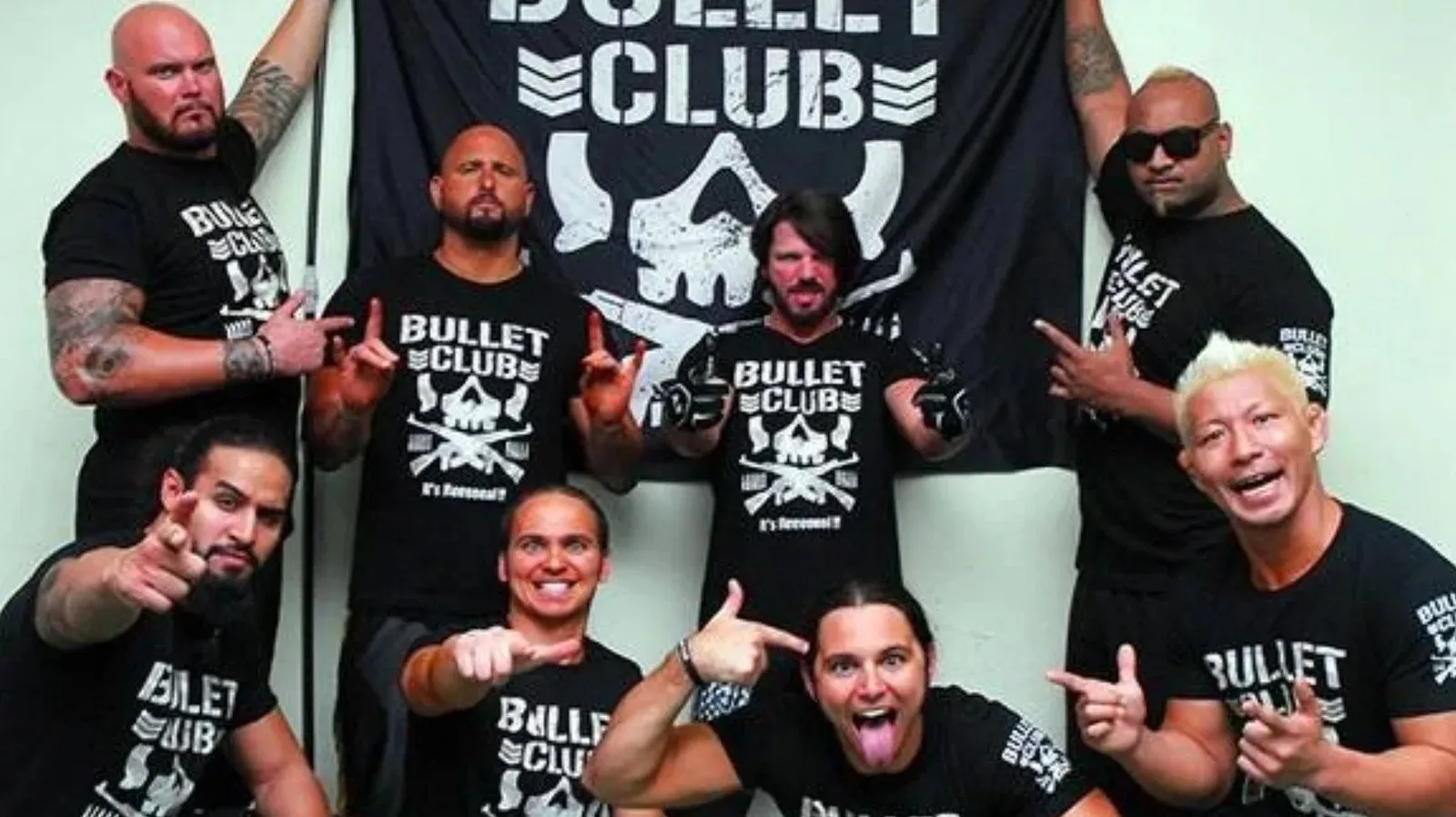
AJ Styles is widely remembered as one of the defining figures in Bullet Club history, but the former NJPW standout does not see his time with the faction through the same leadership lens often used by fans and historians.
Speaking with fellow former Bullet Club member Cody Rhodes on What Do You Wanna Talk About?, Styles addressed the long-standing description of him as the group’s second official leader following Prince Devitt’s departure from New Japan Pro Wrestling in 2014. Styles made clear that, while the label has become attached to his run, he did not personally embrace the idea that Bullet Club needed to be centered around one person.
“I never claimed to be the leader of the Bullet Club,” Styles said. “Our whole thing was, at least the way I presented it to the world, was we don't follow anybody, and so therefore that means you don't follow me. I'm not your leader, I'm just part of this group because we don't follow anybody, and that was a way for me to make sure that everybody stays important.”
That distinction says a great deal about why Styles’ version of Bullet Club connected so strongly. The faction had major personalities, championship-caliber wrestlers, and obvious stars, but its presentation was not supposed to reduce everyone else to supporting players. Styles wanted the name Bullet Club itself to carry weight, with every member contributing to the feeling that the unit was larger than any one individual.
For more background on this topic, read Will Ospreay Returns for Surprise Appearance on NJPW Road to King of Pro-Wrestling.
Styles Saw Strength in the Collective
Bullet Club became one of the most influential groups in the history of New Japan Pro Wrestling and professional wrestling more broadly during its 13-year existence. Its evolution featured several major eras and prominent names, including Prince Devitt, Styles, Kenny Omega, Karl Anderson and Doc Gallows. Yet Styles’ comments underline that his preferred approach was not to turn the faction into an AJ Styles vehicle.
“It wasn't just one guy, like we as a group were a big deal,” Styles said. “I didn't want it to be about AJ Styles, I didn't want it to be about [Doc] Gallows and [Karl] Anderson, I wanted it to be about all of us together, and I thought that's what made it special.”
In wrestling, a stable is often defined by a central leader who calls the shots, receives the most attention, and serves as the unquestioned face of the operation. That model can be highly effective, particularly when the group’s purpose is to elevate an established antagonist or create a powerful entourage around a champion. Styles’ explanation suggests Bullet Club’s internal image was intended to be different.
The idea was rebellion without a conventional hierarchy. Bullet Club’s identity rested on a refusal to follow the expected rules, whether those rules involved the customs of NJPW, the behavior expected of foreign wrestlers, or the traditional structure of a faction. Styles believed that saying no one followed anybody also meant that members were not being asked to follow him.
That philosophy did not mean Styles was not a central figure during his time in the group. He was undeniably one of the top stars associated with Bullet Club and one of the biggest names in New Japan during that period. His visibility, ring accomplishments, and connection with Anderson and Gallows made him an essential part of the stable’s presentation. But being a leading presence and declaring oneself the leader are not necessarily the same thing, and Styles drew that line clearly in his conversation with Rhodes.
A Culture Fans Wanted to Join
Styles also pointed to the atmosphere surrounding the group as a key part of its appeal. In his view, fans could recognize that Bullet Club’s members were enjoying themselves. That sense of camaraderie and confidence became part of the act, giving supporters something that felt distinct from a typical wrestling faction built only on intimidation or championship success.
Bullet Club had an attitude that audiences could identify with. It presented a cool, disruptive image, and its members projected the sense that they were having fun while doing things their own way. Styles said that this made the stable more popular in Japan because people could see that attitude and decide they wanted to support it or be part of it.
That is an important element in the lasting impact of any successful wrestling group. Fans may initially be drawn in by a performer’s ability, a memorable entrance, a catchphrase, or a title win. Sustained popularity, however, often comes from the audience feeling that the group represents a larger identity. Bullet Club gave viewers a name, a style, and an attitude to rally around.
Styles’ recollection places the emphasis on the people within the group rather than a formal chain of command. The collective energy mattered because it allowed each member to remain significant. Rather than presenting one wrestler as the entire attraction and everyone else as an accessory, the group could create multiple points of connection for the audience.
That approach also helped Bullet Club remain recognizable through changing lineups and different eras. The individuals involved were important, but the faction had developed a presence beyond any one member. The name continued to carry meaning because it was associated with a shared presentation, an anti-establishment spirit, and a group dynamic that fans understood.
The Debate Over Bullet Club Leadership
Fans will likely continue to describe Styles as a Bullet Club leader because of where his run sits in the faction’s history. Prince Devitt was the group’s founding figure, and Styles became a pivotal star after Devitt left NJPW in 2014. Later versions of Bullet Club would also be associated with major figures such as Kenny Omega.
But Styles’ own account provides a more nuanced way to view that period. He is not rejecting the importance of his role or pretending he was simply another name in the background. Instead, he is explaining how he wanted the group to be perceived. To Styles, Bullet Club’s appeal was diminished if it became solely about him, Anderson, Gallows, or any other individual.
His comments are especially notable given that Rhodes was on the other side of the conversation. Rhodes was himself a former Bullet Club member, making the discussion one between wrestlers who had experienced the faction’s significance firsthand. That shared background gives added context to Styles’ focus on the group’s chemistry and the value of making every participant feel meaningful.
There can be a difference between the way a faction is marketed, remembered, or categorized and the way the wrestlers involved understood its day-to-day identity. Styles’ remarks do not erase the common view of him as a leading force in Bullet Club. They clarify that he did not want the role to be framed as a traditional leadership position where the rest of the stable existed beneath him.
An Era That Has Now Ended
Bullet Club was quietly disbanded at the beginning of 2026. The remaining members either departed NJPW or joined the new Unbound Co. stable led by Yota Tsuji, bringing the long-running chapter to a close.
The end of the group naturally invites reflection on the different periods that defined it and the wrestlers who helped it become a major presence in the industry. Styles remains one of the most prominent figures from that history, but his latest comments offer a reminder that he views the Bullet Club legacy as a shared accomplishment.
For Styles, the special quality was not simply that the group had recognizable stars or a widely known name. It was that the members collectively made it feel important. The goal was to project a unit in which nobody was following anyone else, and where the audience could see a group enjoying the ride together.
That outlook helps explain why Styles believes Bullet Club resonated as strongly as it did. It was not meant to be about a single leader standing above the rest. It was meant to be about everyone involved, and the distinct atmosphere they created together.
In pictures

Darryl Polo
Darryl Polo is a passionate wrestling fan covering WWE, AEW, TNA and beyond. He loves great rivalries, breakout stars and the moments that keep fans talking long after the bell. How we work.