
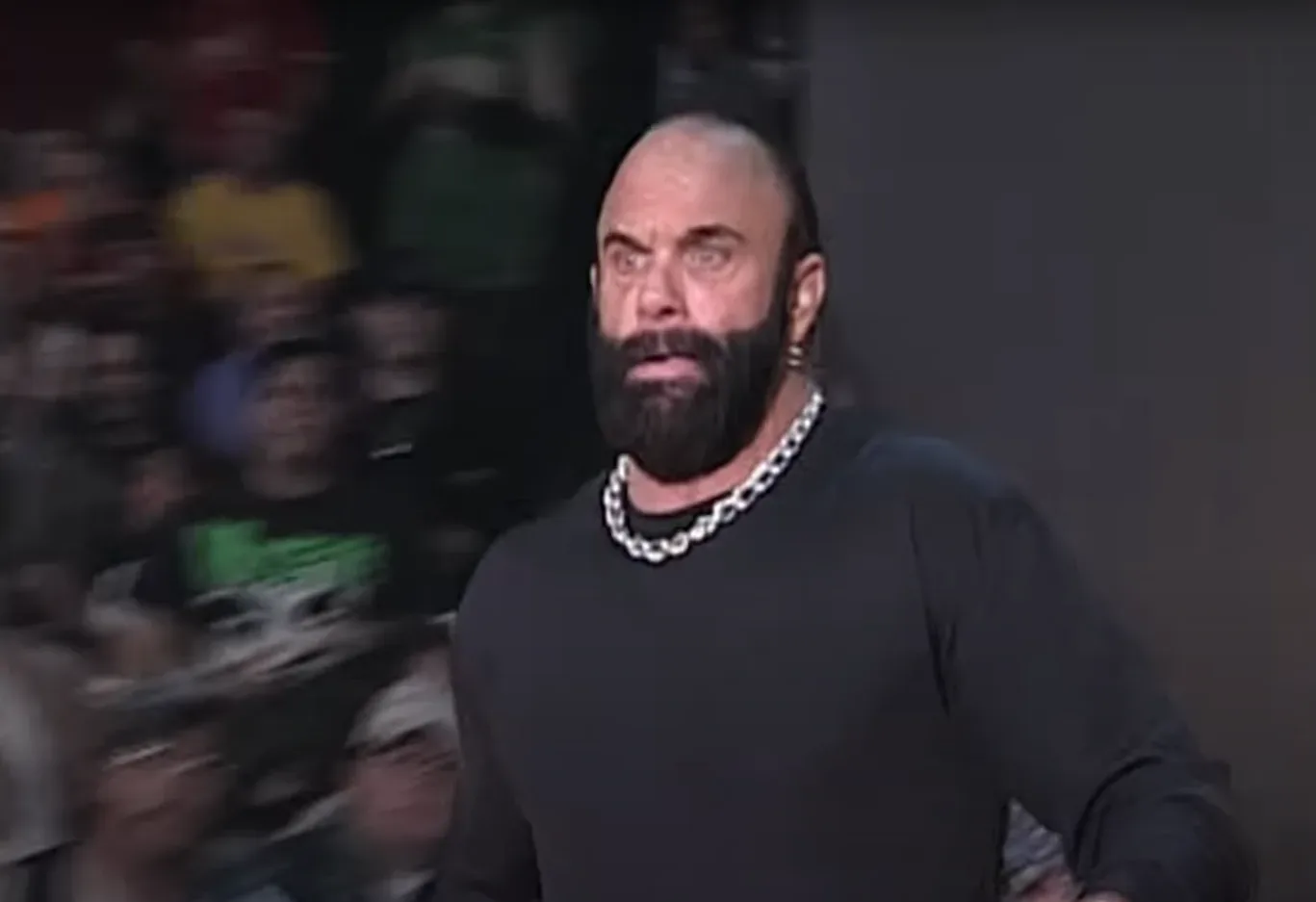
AJ Styles has looked back on one of the most unusual and meaningful matches of his TNA career: Randy Savage’s final bout at TNA Turning Point 2004.
Savage teamed with Styles and Jeff Hardy against Scott Hall, Kevin Nash and Jeff Jarrett at the event. The match was structured around Savage being taken out earlier in the night by Hall, Nash and Jarrett, leaving Styles and Hardy to contend with the opposing trio until the Macho Man made his return.
For Styles, however, Savage’s arrival was not simply a match cue. It was pure Randy Savage.
Speaking with Cody Rhodes on What Do You Want To Talk About?, Styles recalled that Savage had been expected to sprint to the ring for the save. Instead, the wrestling legend took his time and made the entrance in the unmistakable style that had made him one of the business’ most singular personalities.
For more background on this topic, read Taylor Wilde Was Planned for Knockouts Title Win During 2021 IMPACT Return.
“He was supposed to run down, but he did his whole Macho Man turn around, walking down, brother,” Styles said. “He was supposed to run down and save us, I think.”
That small change captured the appeal of Savage’s presence. The storyline called for urgency, but the man arriving to change the match was Randy Savage. His mannerisms, pacing and unmistakable command of attention were part of the attraction. Even in an angle built around the need for a rescue, the Macho Man made the moment his own.
A Locker Room Filled With Major Names
The six-man tag placed Styles in an environment that felt larger than a normal assignment, particularly at that stage of his career. Savage, Hall, Nash, Jarrett and Hardy all brought major-name recognition to the match. Styles was already a defining TNA performer, but he remembered the experience of sitting among those veteran stars and recognizing the scale of the occasion.
He recalled looking around while the match was being discussed and realizing he was sharing the match with wrestlers he had viewed as enormous figures.
“It was comical because I remember that we’re all sitting around and going over the match, and Macho Man is there,” Styles said. “I’m in there with these legends. I look at Scott Hall and Kevin Nash, and I’m like, ‘Woah, I’m in a match with these guys.’”
For a performer, that kind of setting can carry a unique pressure. A match is still a match: there are entrances, timing, sequences, finishes and responsibilities to sort out. But when the people involved have spent years as some of wrestling’s most recognizable stars, the ordinary process of putting a bout together can feel extraordinary to a younger talent sharing the room.
Styles’ story also offered a reminder that wrestling’s larger-than-life aura does not disappear once the cameras are off. It simply exists alongside the routine work required to build a match. The people whom fans see as untouchable icons still need to communicate, make their points and occasionally disagree about how a segment should unfold.
Scott Hall and Randy Savage’s Meeting Discussion
One of the strongest details in Styles’ recollection involved Hall attempting to explain the plan for the match to Savage. Styles said Hall would begin laying out what was happening, only for Savage to interject and shift his attention elsewhere.
“Scott is trying to tell Macho Man what’s going on and every time he starts to talk, [Macho] will go ‘Ay brother,’ and he’d start talking to somebody else,” Styles recalled.
Styles said Hall repeatedly tried to continue before eventually reaching a breaking point.
“Finally, Scott was like, ‘I’m not going to tell you this anymore,’” Styles said.
The story amused Styles because it cut through the intimidating mythology surrounding the names in the room. He was watching Savage, Hall and Nash — performers whose personas and accomplishments had made them feel larger than life — having what amounted to a familiar workplace exchange.
“I was like, ‘Damn, they argue just like regular people,’” Styles said. “But to me they were these huge stars. It was just so funny to me. ‘Oh, they’re regular people.’”
It is a revealing perspective from Styles because it does not diminish the stature of the veterans involved. If anything, it humanizes a moment that could otherwise be remembered only through the match’s star power. The Macho Man, Hall and Nash had all become enduring presences in wrestling culture, with distinct personas that reached far beyond individual matches. Yet behind the scene, they were still working through a live event, trying to make sure everyone understood the plan.
Styles’ response is also understandable given the point in time. He was in the ring with names who had defined different eras of mainstream professional wrestling, while simultaneously helping TNA present a match built around established stars and the promotion’s own leading talent. The contrast between being awed by the room and then seeing an ordinary disagreement play out clearly stayed with him.
The Significance of Savage’s Last Match
The Turning Point six-man tag holds a special place in Savage’s career because it was his final match. Savage worked alongside Styles and Hardy against Hall, Nash and Jarrett, creating a lineup packed with personalities who carried substantial history into the building.
The bout also gave Styles an unusual place in the final chapter of Savage’s in-ring record. He was not merely on the same card as the Macho Man; he was one of Savage’s partners in the final match. That distinction has understandably made the memory more vivid as Styles has reflected on it over the years.
There is an added resonance to the image Styles described: Savage, having been attacked earlier in the night, returning to the arena and declining to rush the entrance. Rather than racing immediately into the action, he leaned into the presentation associated with the Macho Man. It was a moment that appears entirely consistent with the performer fans knew — someone who understood the value of presence and spectacle.
That is why Styles’ account feels bigger than a simple anecdote about a missed cue or a delayed run-in. It is a snapshot of how personality can shape wrestling even in the smallest details. The entrance itself became part of the story, and Savage’s decision to walk rather than run gave Styles a memory that remains clear decades later.
A Reflection on Wrestling’s Generational Connections
The match also illustrates the generational nature of the industry. Savage, Hall and Nash entered the ring with immense reputations already established. Jarrett was a central figure in TNA. Hardy had a massive following. Styles represented the elite in-ring identity that TNA was building around during that period.
Bringing those names together created a bridge between wrestling eras, but Styles’ recollection focuses less on the historical label and more on the feeling of being there. He remembered being impressed, entertained and surprised. He saw legends acting like colleagues, and he saw one of the most recognizable personalities in wrestling remain completely committed to doing things his own way.
Savage died in 2011. His final match therefore carries an inevitable emotional weight, particularly for the wrestlers who shared the ring with him. Styles’ comments do not frame the night as a solemn occasion in the moment. Instead, he remembers its humor, its chaos and the overwhelming feeling of being surrounded by stars he had long admired.
That balance is what makes the recollection compelling. It is not a polished, ceremonial account of a legend’s farewell. It is a performer remembering the odd, funny and very human reality of preparing for a match with Randy Savage, Scott Hall and Kevin Nash — then watching Savage turn a supposed sprint to the ring into a full Macho Man entrance.
For Styles, the lesson was simple but lasting: even the biggest stars in wrestling are people working through the same practical challenges as anyone else. For fans, the story reinforces something equally familiar about Savage. When the time came to make an entrance, there was only one way for the Macho Man to do it: his way.

Darryl Polo
Darryl Polo is a passionate wrestling fan covering WWE, AEW, TNA and beyond. He loves great rivalries, breakout stars and the moments that keep fans talking long after the bell. How we work.