
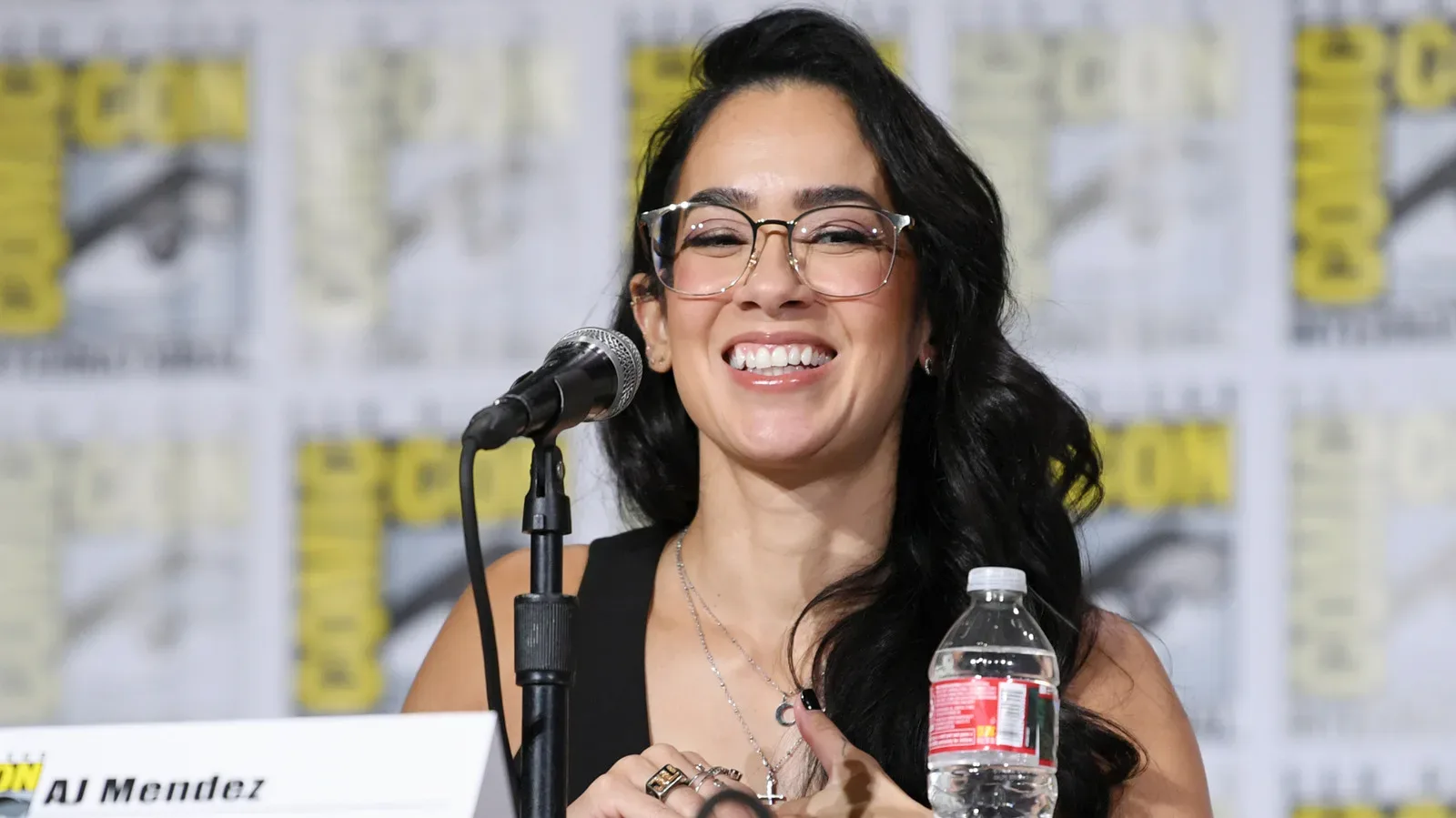
AJ Lee’s return to WWE did not come from a sense of unfinished business or a need to add more accomplishments to an already memorable career. Instead, Lee has explained that her first response to the idea of coming back was no.
Speaking with iHeart Women’s Sports, the former WWE Women’s Intercontinental Champion discussed the decision-making process behind returning to professional wrestling after a decade away. Lee retired following her WWE departure in 2015, ending a run that established her as one of the defining women’s stars of her era. While a comeback ultimately happened 10 years later, she said the prospect was not immediately appealing.
Lee’s hesitation was rooted partly in how satisfied she felt with what she had already done in wrestling. She did not feel she needed to revisit a chapter of her life that had already provided a fulfilling career, and she was wary of doing anything that could affect the legacy she had built during her original WWE run.
“I took a second, I took a minute [to decide]. It wasn't for me at first. I just felt like I didn't — I had such a wonderful career, and I didn't want to mess with that. And yeah, I just didn't think like they needed me. And it was kind of a no for a while,” Lee said.
For more background on this topic, read Rey Mysterio Wants Another Match With Dominik Mysterio, With Major Stakes Attached.
That perspective is important in understanding why her eventual return carried such significance. Comebacks in WWE are often framed around championship pursuits, rivalries that were never completed, or a performer’s desire to reclaim a spot at the top of the industry. Lee described something different. She was not approaching WWE with a list of career boxes still left unchecked. In her view, she had already reached a place where returning was not necessary for her to feel fulfilled.
For Lee, the decision required her to assess not just whether a WWE return would be beneficial professionally, but whether it would be healthy personally. The final year of her first WWE tenure had taken a major toll on her mental health, and that experience remained the central concern when the possibility of a comeback was raised.
Mental health concerns shaped AJ Lee’s decision
Lee recalled receiving a call about the potential return while she was recovering from dental surgery. The unexpected nature of it added to the surreal feeling of being approached after so much time away from WWE.
“And I do remember, like, I had had dental surgery and got a call, and I was like, 'How high am I? Who's calling me? It's been 10 years,'” Lee said.
Beneath the humor of that recollection was a serious concern. Lee said the biggest obstacle was fear that returning to the environment where she had previously struggled could cause her to regress. She had spent the decade after leaving WWE putting substantial work into her well-being, and she did not want to put that progress at risk simply because an opportunity in wrestling had become available.
“I think the biggest hesitation on my part was [that] my mental health was so bad that last year. I was really afraid of backsliding because I had done 10 years of work to get myself really healthy and just be so happy in life,” Lee said.
That distinction made the decision more complicated than a standard return negotiation. A performer can weigh scheduling, creative direction, travel and competition when considering a comeback. Lee also had to determine whether the personal foundation she had built away from wrestling was strong enough for her to revisit WWE without losing the stability she had worked to establish.
Her comments underline that the passage of time alone was not what changed her mind. Ten years away did not erase the difficult memories of her final year in the company. Rather, Lee came to view the prospect differently because she was entering the conversation from a healthier place in her life.
A return from a position of strength
Lee said that she eventually realized going back to WWE could be the right choice. Crucially, that realization did not come from desperation. She emphasized that she was already happy, complete and whole without needing another wrestling run to validate her. That emotional position gave her a different relationship with the decision than she may have had earlier in her life.
“But I think coming from the place of, I don't have a list of things to check off, and I wasn't desperate for it, and it was coming from a place of I am so complete and whole and happy, never having to do that again,” Lee said. “It was actually the perfect headspace to go in and feel healthy and feel safe.”
Those remarks provide a clear explanation for why Lee could initially reject a return and later embrace it. Her comeback was not presented as an attempt to rewrite the past or chase something she believed had been denied to her. It was an opportunity she could consider on her own terms because she no longer felt defined by whether or not she was an active WWE wrestler.
That sense of security matters in an industry where returning names can face enormous expectations. Lee’s original WWE tenure left a lasting impression on fans, and any comeback after a decade would naturally bring attention and scrutiny. Her comments suggest she was able to consider that pressure without allowing it to dictate her choice. She could return because she wanted to, not because she felt compelled to prove that she still belonged.
It also speaks to the difference between preserving a legacy and being trapped by it. Initially, Lee worried that returning could interfere with how people remembered her career. After reflection, she found a way to see a comeback as something that did not need to diminish what came before. Because she was not seeking to reproduce her previous run exactly, she could approach the next stage of her relationship with WWE with a more grounded outlook.
WWE’s assurances were a key factor
Lee stated that WWE gave her assurances that her mental health would be prioritized. That promise helped reassure her as she weighed whether returning was truly the right move.
The importance of that assurance cannot be separated from the concerns Lee described about her final year in WWE. She was not simply looking for a chance to perform again. She needed confidence that the circumstances surrounding a return would account for the experiences that made her step away in the first place.
Lee did not detail the exact measures discussed, and there is no indication in her comments of specific arrangements beyond WWE’s commitment to prioritize her mental health. Still, her explanation makes clear that the company’s approach was meaningful in helping her feel safe enough to move forward.
For WWE, Lee’s return represents the reintroduction of a major personality from a period that helped reshape the company’s women’s division. Her impact during her initial run was built on a distinctive character, strong audience connection and an ability to stand out in a landscape that looked very different from WWE’s current women’s roster. Now, as a former WWE Women’s Intercontinental Champion, she returns with the experience of someone who has lived outside the weekly demands of wrestling and chosen to re-enter only after careful consideration.
What AJ Lee’s comments mean for her comeback
Lee’s explanation does not frame her return as a simple nostalgia act. Her candidness about mental health, fear and personal growth gives the comeback a deeper context. She had reasons to remain retired. She valued her past work, feared the possibility of backsliding and did not believe WWE needed her in order to thrive.
Yet she also reached a point where returning no longer felt like a threat to the life she had built. The fact that she could walk away from wrestling without regret appears to have made it easier to come back with confidence. Rather than treating WWE as the source of her happiness or identity, Lee described entering the new chapter from a place where both were already intact.
That is why the assurances around mental health were so significant. They did not erase the difficult memories of her final year, but they gave Lee reassurance that she could pursue the opportunity while protecting the progress she made during her decade away.
As her WWE comeback continues, Lee’s comments establish the terms on which she chose to return. This was not an impulsive decision, nor was it one driven by an unmet need for achievements. It was a deliberate choice shaped by time, healing and the belief that she could take part in wrestling again while remaining healthy and safe.
In pictures

Darryl Polo
Darryl Polo is a passionate wrestling fan covering WWE, AEW, TNA and beyond. He loves great rivalries, breakout stars and the moments that keep fans talking long after the bell. How we work.