
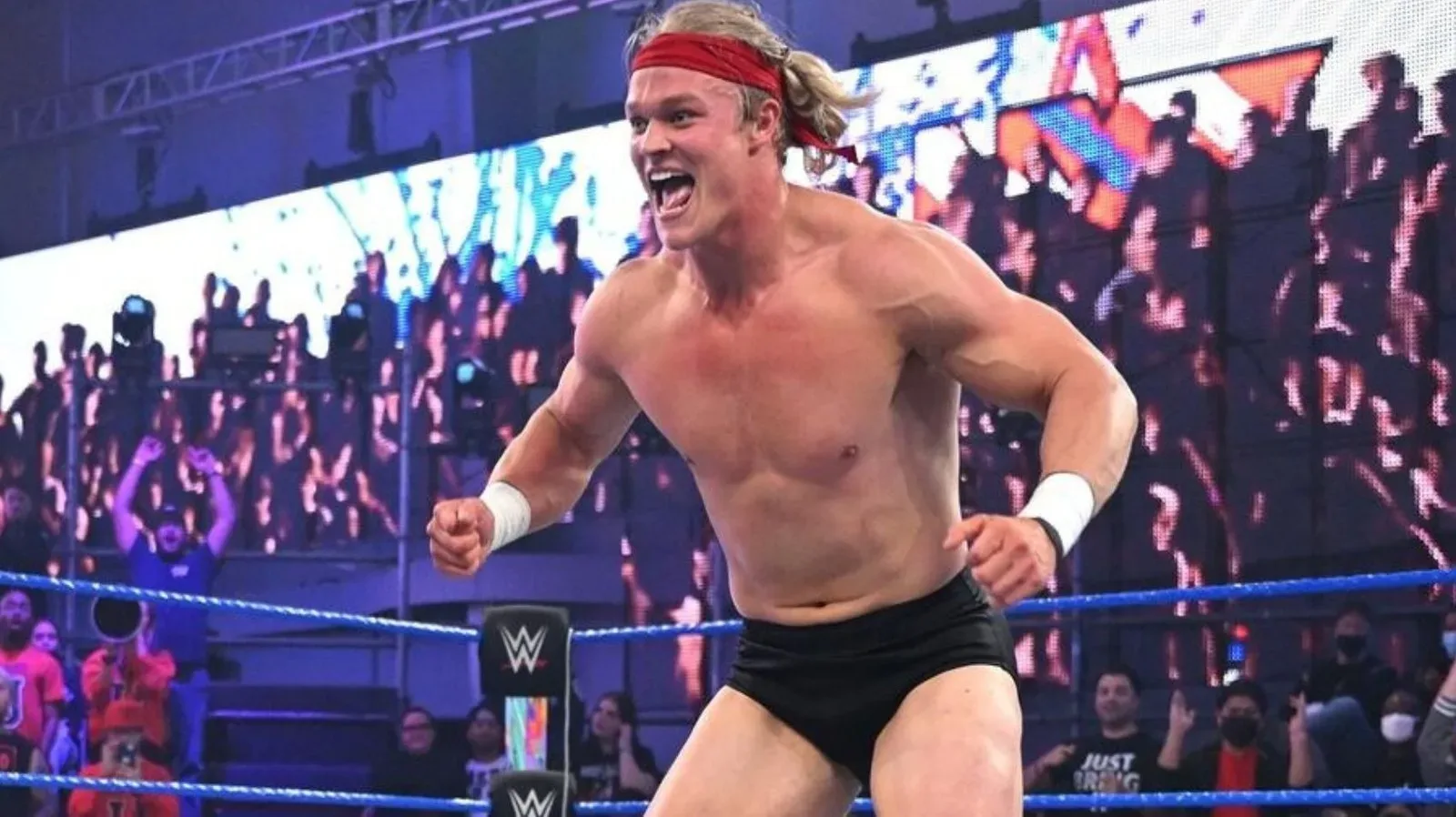
AEW Collision featured a notable promotional moment on Saturday when the company aired a video package for Ring of Honor wrestler Brady Booker, whose recent run on Survivor gave the segment a broader entertainment-industry angle than a standard wrestling introduction.
Booker, known to WWE NXT audiences as Bohdi Hayward, had recently been eliminated from the current season of Survivor after appearing in seven episodes. His package on Collision combined footage of his work in the ring with material from the reality competition series. Tony Schiavone narrated the presentation, which was subsequently shared through AEW’s social platforms.
The immediate wrestling implication is straightforward: Booker appears to be receiving increased visibility within the AEW and Ring of Honor ecosystem. The larger significance, however, is the use of footage connected to a Paramount property during AEW programming. That is an especially interesting development following the official merger between Warner Bros. Discovery and Paramount, which now operates as Skydance.
While a single video package does not establish a long-term programming strategy, it represents a clear example of AEW programming and a Paramount-owned entertainment property being presented together. The package also included a plug for Survivor, which airs Wednesdays at 8 p.m., alongside Booker’s wrestling promotion.
For more background on this topic, read Kyle Fletcher Says His Relationship With Skye Blue Is ‘Pretty Unique’ After Blood & Guts.
Brady Booker Gets a Wider Showcase
For Booker, the Collision appearance was a useful spotlight at a pivotal moment. Reality television can provide wrestlers with exposure beyond the audience that watches weekly wrestling programming, particularly when a competitor remains on a show for several episodes and becomes recognizable to viewers outside the industry.
Booker’s seven-episode run on Survivor gives AEW and ROH a simple, accessible way to introduce him to fans who may not know his wrestling background. Rather than requiring viewers to already understand his history, the video package framed him as someone who has competed in two very different environments: the wrestling ring and a highly visible reality competition.
That framing matters. Wrestling promotion often depends on giving audiences a quick reason to care about a performer. In Booker’s case, his reality-show experience is a ready-made part of his presentation. It can communicate resilience, competitive drive, adaptability, or personality depending on how AEW and ROH choose to build on the package in future appearances.
There is also an existing point of familiarity for a portion of the wrestling audience. Before working as Brady Booker in ROH, he appeared in WWE NXT as Bohdi Hayward. The use of his current name, paired with Survivor material and ROH footage, positions this as a new chapter rather than simply a reference to an earlier developmental run.
Nothing in the presentation confirmed a specific match, storyline, or full-time AEW assignment for Booker. Still, airing the package on Collision rather than limiting it to ROH channels gave him exposure before a national AEW television audience. That choice naturally raises expectations that he could be featured more prominently going forward.
The First Visible Paramount Connection
The central industry story is not merely that a wrestler who appeared on television received a highlight reel. It is that AEW was able to use footage from Survivor and openly promote the series as part of the segment.
On Wrestling Observer Radio, Dave Meltzer characterized the segment as the first tie-in between AEW and Paramount properties, emphasizing that it was the first example of CBS footage appearing on AEW television. The arrangement stood out because the Survivor clips were paired with an on-air mention encouraging viewers to watch the series.
That type of exchange is common across large media organizations, where television brands can promote related programming and share assets across a broader corporate structure. For AEW, though, it becomes more noteworthy because its television relationship has historically been associated with Warner Bros. Discovery networks, including TNT and TBS.
The Warner Bros. Discovery and Paramount merger has altered that landscape. The combined company is now Skydance, creating a corporate environment in which AEW’s network partners and Paramount-associated properties sit within the same larger business structure. The Booker package may be a small example, but it demonstrated that a crossover is possible in practice.
It is important not to overstate what one segment proves. The package does not confirm that AEW will regularly feature Paramount programming, that CBS content will become a standard part of AEW broadcasts, or that every wrestler with a connection to a Skydance-related property will receive similar treatment. It does, however, show a form of cooperation that had not previously appeared on AEW television.
What the Skydance Era Means for AEW Television
AEW’s current media agreement keeps AEW Dynamite and AEW Collision on TBS and TNT through at least 2028. That continuity is significant as the corporate merger moves from announcement to operational reality. For viewers, the practical result remains that Dynamite and Collision retain their established homes for the foreseeable future.
AEW President Tony Khan has expressed optimism throughout the merger process and has repeatedly spoken positively about Skydance CEO David Ellison. The Collision package provides a small, tangible example of why the new structure could create additional promotional possibilities beyond AEW’s normal wrestling coverage.
Cross-promotion can take many forms. A company may spotlight a wrestler’s outside project, integrate a television personality into a broadcast, use licensed clips to explain a performer’s background, or align a wrestling event with broader corporate marketing. None of those possibilities automatically follows from Booker’s segment, but the package illustrates how a shared media environment can make such efforts easier to explore.
For AEW, the strongest use of these opportunities would be one that serves the wrestling product first. Booker’s package largely did that: the Survivor material was not presented as unrelated advertising but as part of the explanation for why viewers should recognize him as a wrestler. It linked an outside television appearance to an in-ring performer who can now be followed within AEW and ROH.
That is a more organic approach than a disconnected corporate plug. The Survivor footage had value because Booker was genuinely part of that program, while the wrestling footage established where fans can see him next. The on-air Survivor mention also made the exchange mutually beneficial.
A Potential Boost for Ring of Honor Talent
The segment also highlights a continuing advantage of the relationship between AEW and ROH. Ring of Honor performers can be introduced or reintroduced on AEW programming when the company sees a reason to give them a larger platform. In Booker’s case, his recent visibility on Survivor supplied that reason.
ROH remains an important part of the wider talent structure around AEW. A wrestler who gains attention through ROH can potentially reach a much broader group of viewers through Dynamite or Collision, while an outside-media opportunity can give that wrestler additional momentum upon returning to the ring. Booker’s video package sat at the intersection of both ideas.
The next step will determine whether the segment becomes a memorable one-off or the beginning of a sustained push. A strong follow-up could involve regular ROH appearances, a more defined presence on AEW programming, or simply a clearer explanation of Booker’s competitive goals. Without that follow-through, the package will still stand as a notable corporate crossover, but its direct value to Booker’s wrestling career will be harder to measure.
For now, AEW has put Booker in front of Collision viewers with a presentation that few wrestlers can claim: one built around both his ring career and his time on one of television’s most recognizable competition series. More importantly, the segment offered an early indication that the Skydance merger may eventually create promotional lanes that were not previously available to AEW.
Whether that leads to more frequent integrations remains uncertain. What is clear is that Brady Booker’s Survivor-themed package was more than a routine talent video. It was a focused effort to elevate an ROH wrestler, a public acknowledgment of his reality-TV exposure, and the first visible sign of AEW drawing on Paramount-related footage in the new media landscape.
In pictures

Darryl Polo
Darryl Polo is a passionate wrestling fan covering WWE, AEW, TNA and beyond. He loves great rivalries, breakout stars and the moments that keep fans talking long after the bell. How we work.