
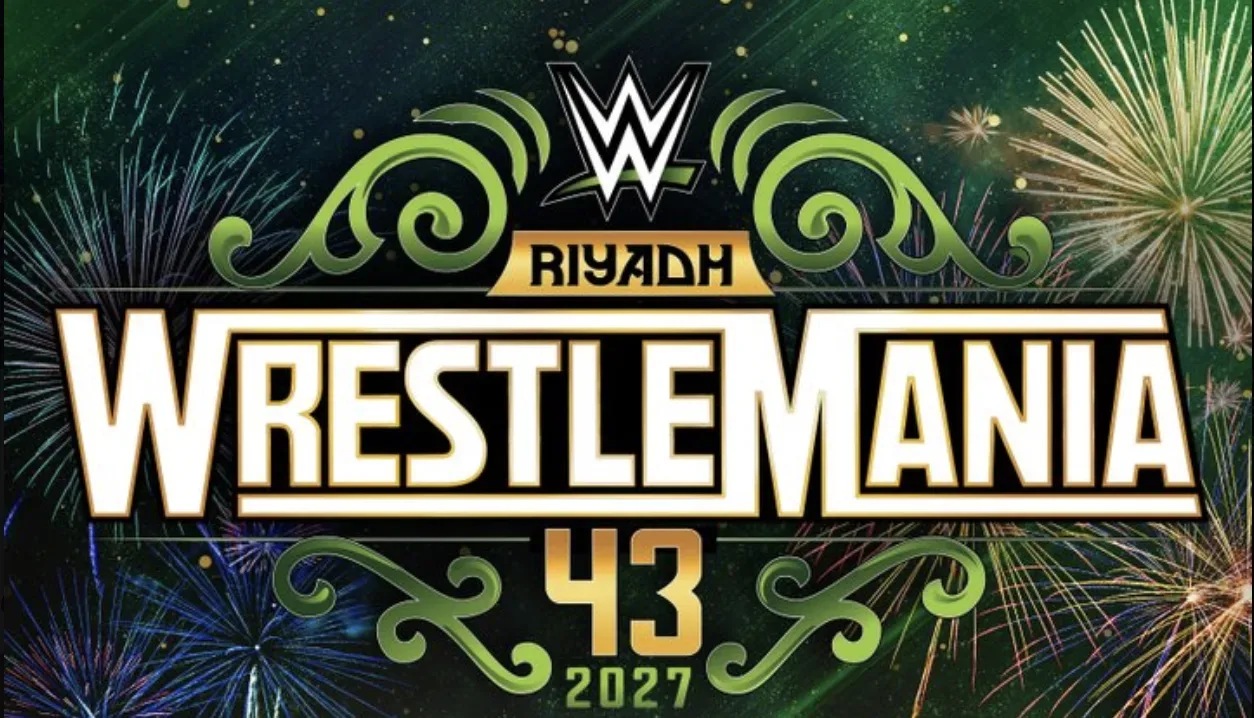
WWE plans to air WrestleMania 43 live in U.S. prime time. The prime-time requirement discussed on TKO’s quarterly investors call does not mean WWE intends to stage the event earlier and hold the broadcast until evening. The plan is for viewers to watch the show as it happens. WWE has not announced a date for WrestleMania 43, and the discussion of prime time did not establish an exact start time.
TKO Chief Financial Officer Andrew Schleimer said during the call that WWE’s deal with ESPN calls for WrestleMania to air in U.S. prime time. That explains the target broadcast window, but it is not a full schedule. Schleimer’s comments addressed when the show is supposed to air in the United States; the live broadcast plan addresses whether the action in the ring will be taking place at the same time.
Prime time is the broadcast window, not a tape delay
Live coverage and prime-time coverage are not competing options. A live broadcast can air in the afternoon or in the evening, depending on when an event begins. Likewise, a program in a prime-time slot can be live or prerecorded. In this case, the intent is to make both pieces work together: schedule the event so that the live broadcast reaches the U.S. audience in prime time.
That distinction matters because a delayed broadcast would create two different schedules: one for the people attending the event and another for viewers waiting to watch it in the United States. The results could already be public by the time the delayed broadcast began. Under the current plan for WrestleMania 43, there would be no such gap built into the U.S. television schedule. Viewers would be watching the matches unfold, rather than seeing a replay of a show that had already taken place.
For more background on this topic, read WWE’s Bayley Says Lodestone Helped Her Reconnect With Independent Wrestling.
The wording also matters when describing the status of the event. A live broadcast is the plan, but that does not make any specific start time official. There is a difference between knowing the intended window and having a listing that tells viewers when to tune in. The investors call offered the former, not the latter.
Why past Saudi events are part of the timing discussion
Previous WWE events in Saudi Arabia have aired live during the U.S. afternoon. Those broadcasts are a useful point of comparison because they show how an event’s local schedule can translate into a different viewing window for American fans. A show can be held in the evening locally and still be an afternoon event on the U.S. calendar of programming. In those cases, the afternoon slot was compatible with live coverage.
WrestleMania 43 presents a different scheduling question because the stated U.S. target is prime time. Instead of using the afternoon broadcasts as a template, WWE has to work back from the American viewing window it is expected to meet. With a live show, the start time at the venue and the start time of the broadcast are tied to the same moment, even if the clocks in the two places read very differently.
That is the practical consequence of keeping the event live: an evening slot in the United States does not automatically translate to an evening start at the venue. Nor does the schedule of a past WWE event establish what WrestleMania 43’s local start time will be. Until a date and time are announced, comparisons with previous shows explain the scheduling challenge, but they do not resolve it.
What the ESPN requirement does and does not establish
Schleimer’s remarks put the prime-time window in the context of WWE’s agreement with ESPN. It is not simply a guess based on when WrestleMania has aired before or an assumption about when a major wrestling event would ordinarily be scheduled. TKO described prime time as a requirement of the deal. The plan to go live means WWE is looking to meet that requirement through the timing of the event itself, rather than by recording it for later presentation.
The remarks do not, however, establish an hour for the main show or say how any coverage leading up to it might be scheduled. An announcement using the words “U.S. prime time” is not a substitute for a programming listing with a time zone attached. Viewers in different parts of the country will need the actual start time to know what the schedule means where they live. International viewers will need that same information to convert it to their own local time.
The discussion was also specifically about the U.S. broadcast window. It should not be read as an announcement of separate international broadcast arrangements. A live event takes place at one moment, but how it is listed for viewers in different markets is a separate matter from the U.S. scheduling requirement Schleimer described.
WrestleMania 43 still has no announced date
The missing date is the biggest piece of practical information for fans. An intended evening broadcast is enough to distinguish the plan from the U.S. afternoon airings of past Saudi events, but it is not enough to mark a calendar or make travel plans. Fans looking to attend need the local date and start time, while those watching from home need the broadcast schedule for their market. The live plan links those schedules without putting either one on the calendar yet.
A formal scheduling announcement would also clear up a point that can get lost when times are discussed across markets: the local calendar date and the date shown on a U.S. broadcast listing do not necessarily have to match. Whether that distinction matters for WrestleMania 43 depends on the final schedule. For now, there is no basis for assigning the event a particular day or translating the prime-time requirement into a precise local start.
The takeaway is that WWE is not treating a delayed broadcast as the way to get WrestleMania 43 into U.S. prime time. The stated requirement is an evening window for American viewers, and the plan is for the show to take place live within that window. The date and exact start time remain open, so the next meaningful update will be a schedule that tells fans when to watch.

Darryl Polo
Darryl Polo is a passionate wrestling fan covering WWE, AEW, TNA and beyond. He loves great rivalries, breakout stars and the moments that keep fans talking long after the bell. How we work.