
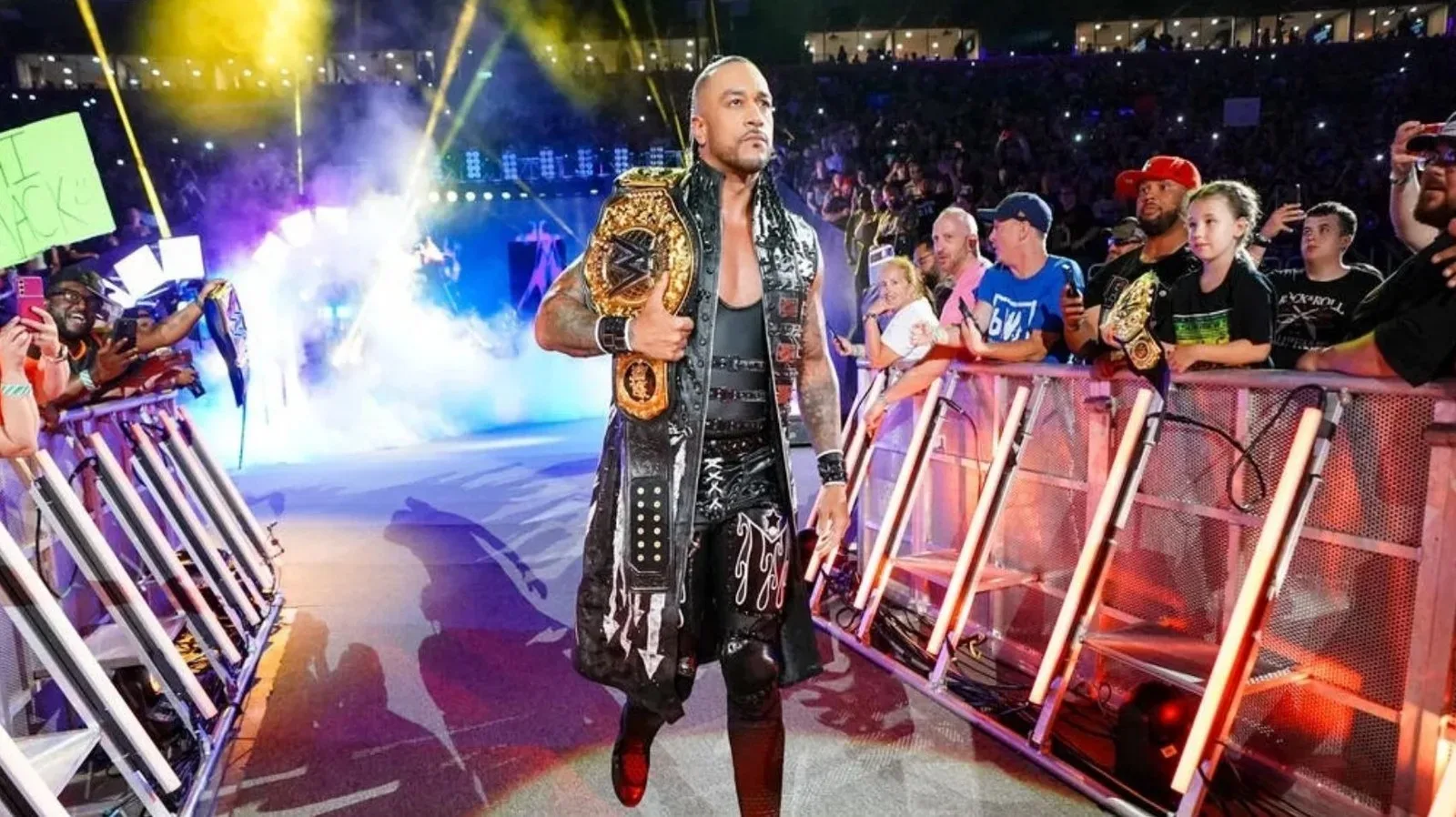
Damian Priest would not trade the way he won his first WWE World Heavyweight Championship. He would, however, change how he handled the job once he had it. Speaking on the Complex Graps Wrestling Podcast, the WWE SmackDown star said his Money in the Bank cash-in at WrestleMania 40 left him learning on the move. Looking back, he pointed to his approach to matches, his comfort in the spotlight and the people he kept around him as things he would handle differently in a second reign.
Priest did not frame the cash-in as something he needed to make up for. He said that winning the championship that way did not make his first reign any less his, and that no one could take it away from him. His criticism was directed at his work after the win rather than at the decision to use the briefcase. He is glad his first championship came the way it did, even if he can now see mistakes he would rather not repeat.
WrestleMania 40 gave Priest an opening, not a runway
Priest won the Money in the Bank briefcase the July before WrestleMania 40 and was still part of Judgment Day when he cashed it in. The opening came after Drew McIntyre dethroned Seth Rollins to become World Heavyweight Champion. CM Punk then left McIntyre down, and Priest used his contract to take the title from the newly crowned champion. McIntyre had beaten Rollins, but Priest was the wrestler who came out of that sequence with the championship.
The distinction Priest drew on the podcast was between having time to wait for a cash-in and having time to think through a scheduled championship match. He had held the contract for months, but the exact opportunity depended on what happened to the champion. Once Punk put McIntyre down, the time for waiting was over. Priest went from looking for an opening to holding WWE's World Heavyweight Championship in one stretch of the show.
For more background on this topic, read Bret Hart Reveals the Advice He’d Give His Younger Self About Wrestling.
“There are a lot of things I would have done differently,” Priest said on the Complex Graps Wrestling Podcast. “I would have approached matches differently. Doing the cash-in without having a planned match where I can really think about what I'm going to do, then just hit the road running. It was different.”
Priest was not arguing that he should have passed up McIntyre or arranged a title match on his own terms instead. The briefcase rewarded him for being ready to act when the chance appeared. What he found different was taking on the responsibilities of a champion without the kind of lead-in a planned match would have given him. He had spent months with a route to the title, but that was not the same as knowing when he would become champion and being able to prepare for what followed.
Priest would change how he approached matches and carried himself
Priest credited mistakes from that run with teaching him how he could do the job better. His comments about matches were broad: he did not single out a defense, identify a result he wished had gone another way or lay out a different in-ring strategy. Instead, he talked about being more mature in the business and more at ease with the attention that comes with the championship. In his view, that experience would affect both how he approached his matches and how he presented himself as champion.
“I'm glad it happened that way, because I learned a lot,” Priest said. “I learned a lot through mistakes and I think now, being a little bit more mature in the business and being more comfortable in that spotlight, I would definitely do it different. I would do it way better. I think I would carry myself better.”
That last point takes his assessment beyond the matches themselves. For Priest, being more comfortable in the spotlight is part of carrying the title, not just a byproduct of winning it. At WrestleMania, the immediate question was whether he would recognize the right moment and act on it. Once he had the belt, that moment was behind him. The first reign gave him a chance to find out how he responded to being the champion rather than the wrestler waiting to challenge one.
There is no contradiction in Priest defending the way he won the belt while saying he would be a better champion now. He regards the WrestleMania cash-in as a career landmark, and the experience that followed is what gives him a basis for judging his work. The mistakes he referred to were worth learning from precisely because the title reign counted. He did not need to argue that the run went perfectly to insist that it belonged to him.
Finn Balor and Judgment Day factor into what Priest would change
Priest also said he would be more selective about whom he trusted. He brought up people who might stab him in the back, referring to Finn Balor and his former Judgment Day stablemates. Judgment Day was still Priest's group when he won the championship at WrestleMania 40. In looking ahead to a possible second reign, he treated that history as a reason to be more careful about who gets close to him when he has the belt.
That lesson is distinct from anything he would change about a match. A challenger is an opponent Priest knows he has to prepare for; someone standing alongside him can pose a different problem if that trust turns out to be misplaced. Priest's reference to Balor put a name to that concern without turning his comments into a prediction about who would come after him next. His point was that preparation for another reign would include taking stock of the people around him, not just the contenders across the ring.
Priest spoke about what he would do the next time he holds the championship, not about a confirmed match or a timetable for getting there. The WrestleMania 40 cash-in remains an achievement he is proud of, and he did not suggest he needs to win the title by a different method to validate it. What he wants to prove, if he gets another run, is that he can handle the days after the win better than he did the first time: approach the matches with more experience, carry himself with more confidence and be harder to catch off guard by anyone, ally or opponent.
In pictures

Darryl Polo
Darryl Polo is a passionate wrestling fan covering WWE, AEW, TNA and beyond. He loves great rivalries, breakout stars and the moments that keep fans talking long after the bell. How we work.