
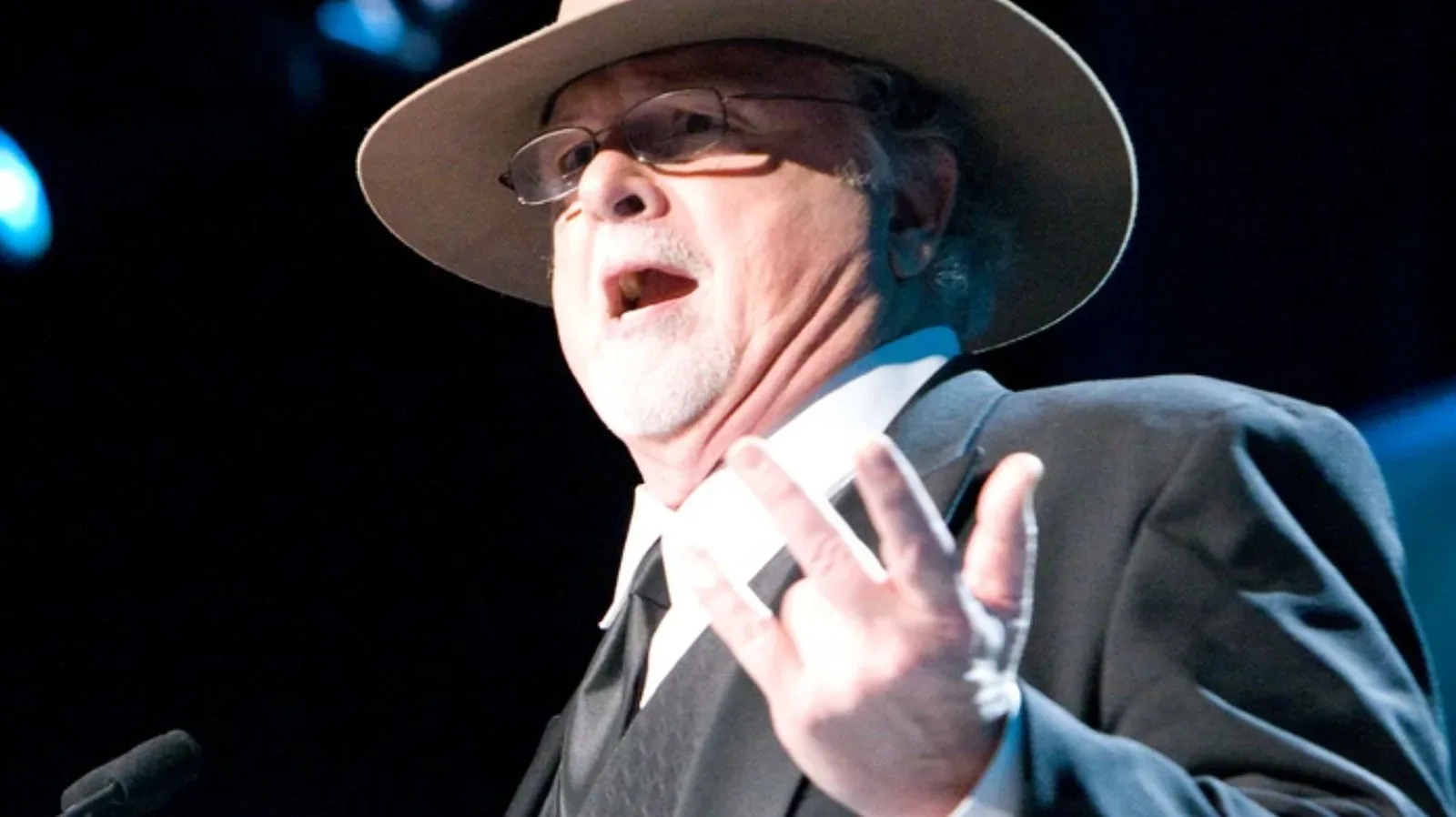
WWE Hall of Famer “Cowboy” Bill Watts has died at the age of 87.
The death of the former Mid-South Wrestling promoter and WCW Executive Vice President was announced Tuesday after wrestling journalist Bill Apter said he had received word from Watts’ son. WWE subsequently confirmed the news and paid tribute to Watts on social media.
Watts’ career covered several of professional wrestling’s most consequential eras. He was an active competitor beginning in 1962, a territory standout who held championships in multiple regions, an influential booker and promoter through Mid-South Wrestling, and later a short-tenured executive in World Championship Wrestling. In 2009, WWE recognized that broad legacy by inducting Watts into its Hall of Fame.
A Career That Began in the Ring
Before he became synonymous with promoting and booking, Watts was a wrestler who competed throughout the territory system. His in-ring career began in 1962, placing him in a business that was still organized around regional promotions, traveling talent and distinct championship lineages.
For more background on this topic, read Charlotte Flair Embraces WarGames Brutality Ahead Of Third Appearance.
Watts was involved in a notable rivalry with legendary WWWF Champion Bruno Sammartino. Although Watts challenged Sammartino, he never defeated him for the title. The matches nevertheless connected Watts with one of the defining champions of the era and reflected the level at which he worked as a performer.
Over the course of his wrestling career, Watts accumulated title success in several territories. His championship résumé included the NWA Florida Heavyweight Championship and the Mid-South North Championship. He also held the NWA Tri-State Tag Team Championship with more than one partner, including Buck Robley.
Those accomplishments came in an era when a wrestler’s standing was often shaped by success across multiple regional circuits rather than within a single national company. Watts’ time in the ring gave him firsthand experience with the practical side of the industry: how talent was positioned, how rivalries were sustained, and how audiences responded when a story was allowed to build from one event to the next.
Building Mid-South Wrestling
Watts moved into booking in 1979 with Mid-South Wrestling, a role that would become central to his legacy. As a promoter, he was widely credited with helping establish a more modern episodic approach to professional wrestling television.
Rather than treating wrestling programming primarily as a vehicle to advertise occasional major events, Watts built stories around weekly developments. Rivalries advanced regularly, characters changed over time, and television episodes created reasons for viewers to return the following week. That approach now feels fundamental to wrestling presentation, but it was a major part of what made Mid-South’s model so significant.
The structure of the promotion’s storytelling helped make its conflicts feel ongoing rather than isolated. Matches did not simply exist as standalone attractions. They could be steps in a larger issue, leading to further confrontations, championship pursuits or tag-team alliances and breakups. The weekly format gave audiences an incentive to follow the product closely, while also giving performers a platform to develop their identities over a sustained period.
Watts’ influence in Mid-South also extended to the talent who emerged in the promotion. The company helped develop several wrestlers who would become major names in the industry, including Ted DiBiase, The Fabulous Freebirds, Sting and “Hacksaw” Jim Duggan.
DiBiase, Duggan, Sting and the members of The Fabulous Freebirds each became associated with memorable moments well beyond their Mid-South work. Their later achievements occurred in different promotions and under different circumstances, but Mid-South was an important part of the environment in which they developed. Watts’ booking philosophy and the promotion’s television-driven format offered performers a setting in which they could establish themselves before larger audiences.
That is why Watts is regularly discussed not only as a promoter who ran a successful territory, but as a figure whose methods helped shape the direction of televised wrestling. His approach emphasized continuity. It valued the long-term payoff of a feud. And it treated weekly television as the core of a promotion’s relationship with its viewers.
WCW Executive Role
Watts later joined WCW as Executive Vice President in 1992. His time in that role was brief, lasting into 1993, but it placed him in a prominent leadership position during a changing period for the company and the larger wrestling landscape.
His departure from WCW was reportedly connected to controversy surrounding his views on the Civil Rights Act of 1964. Watts later said that he had left the company for his own reasons. The circumstances of that exit remain an important and complicated element of any account of his career.
Watts’ influence on wrestling therefore cannot be separated from the debates and controversies that followed him. His accomplishments as a promoter, particularly in establishing a template for week-to-week television storytelling and helping foster prominent talent, remain part of his professional record. So too does the controversy surrounding the end of his WCW tenure and his own differing explanation for leaving the company.
In 1995, Watts also spent a brief period working behind the scenes for the then-WWF as a booker. It was another short chapter in a career that had already included work as a wrestler, promoter and executive across several decades of the business.
Hall of Fame Recognition
WWE inducted Watts into the WWE Hall of Fame in April 2009. The honor acknowledged a career that had touched many areas of the industry: regional championship wrestling, major territorial promotion, talent development, television production and executive leadership.
For many fans and wrestling historians, the strongest part of Watts’ legacy is tied to Mid-South. The promotion’s style of television storytelling has continued relevance because wrestling remains rooted in the ability to make a weekly audience care about what happens next. Championships, interviews, confrontations and matches all take on greater weight when they are part of a continuing narrative. That was a principle Watts put to work in Mid-South long before episodic wrestling television became an expectation across the industry.
His legacy also lives in the performers who came through the territory. A promotion’s success is often measured by its gates, ratings and title histories, but its lasting impact can also be seen in the wrestlers who leave with stronger foundations than when they arrived. Mid-South’s list of future stars remains a key part of why the promotion and Watts’ role within it continue to be remembered.
Watts occupied a distinctive place in professional wrestling history because he experienced the business from so many perspectives. He knew it as a wrestler pursuing championships and challenging an iconic titleholder in Sammartino. He knew it as a promoter responsible for making a territory work week after week. He knew it as a booker shaping stories and building talent. And he knew it as an executive inside WCW and, briefly, the WWF.
Remembering “Cowboy” Bill Watts
The professional wrestling world has lost a figure whose career spanned more than half a century of change. Watts entered the ring in 1962, became one of the most consequential promoters of the territory era, held a major WCW office in the early 1990s and was ultimately honored by WWE in 2009.
His record includes championship success as a wrestler, major contributions behind the scenes and a recognized role in the evolution of wrestling television. It also includes a controversial period in WCW that remains part of the historical discussion surrounding his life and career.
Watts is survived by a professional legacy that reaches far beyond any one promotion. From his bouts against Bruno Sammartino to his work with Mid-South’s rising stars, from his episodic approach to television to his WWE Hall of Fame induction, “Cowboy” Bill Watts left an unmistakable imprint on the industry.
He was 87 years old.
In pictures

Darryl Polo
Darryl Polo is a passionate wrestling fan covering WWE, AEW, TNA and beyond. He loves great rivalries, breakout stars and the moments that keep fans talking long after the bell. How we work.