
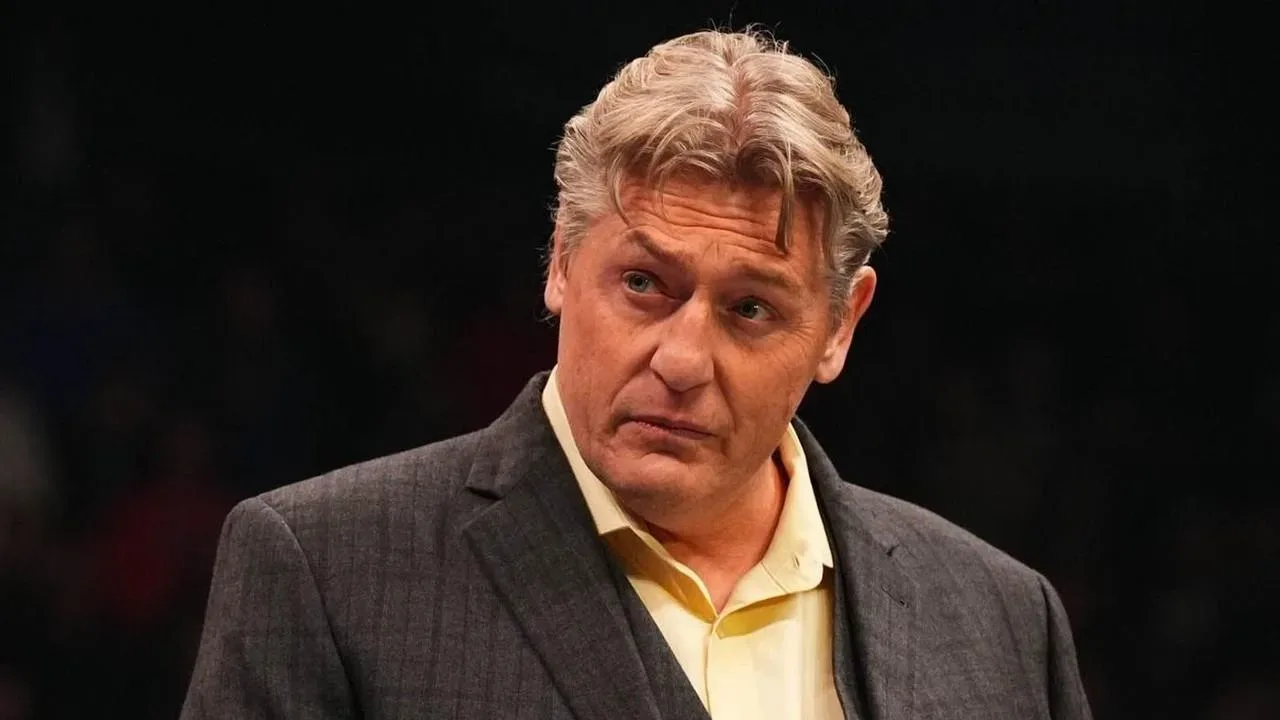
William Regal has offered a pointed reminder to wrestlers across the industry: pinfalls and kickouts should carry the urgency of a moment that can change a career.
Regal, who currently serves as WWE’s Vice President of Global Talent Development, addressed the subject in a social-media post while making clear that his message was not limited to one promotion. Drawing on 42 years in wrestling and his experience working with talent across multiple generations, Regal argued that performers need to present every pin attempt as a genuine effort to win and every escape as a desperate attempt to avoid defeat.
His core point was rooted in the internal logic of a wrestling match. Wrestlers may know the predetermined result, but the audience is asked to invest in the fight as a competition. When a wrestler covers an opponent loosely or casually rolls a shoulder off the mat without visible strain, Regal believes the scene loses a key part of its credibility.
View the referenced post on X
“We are portraying trained pro fighters with instincts,” Regal wrote. “If you don’t win you would make less money in the story we’re telling.”
For more background on this topic, read Naomi Reportedly Discussed for WWE Return as Bloodline Situation Develops.
Regal stressed that the stakes apply in every type of match presentation, including bouts built around comedy. His argument is not that every wrestler must work the same style or eliminate personality from a performance. Rather, the former in-ring competitor believes the objective of winning needs to remain visible whenever a referee begins a count.
Why the pinfall is central to the story
A pinfall is one of wrestling’s clearest storytelling tools. The referee dropping to the mat, the hand striking the canvas and the crowd counting along create an immediate shared signal: the match could be over. It is a simple moment, but it asks a great deal from everyone involved. The wrestler making the cover must look as though they are trying to hold an opponent down. The wrestler underneath must react as though remaining pinned would be a serious failure. The referee’s count gives the audience a structure through which to process the suspense.
Regal specifically noted that television cameras focus tightly on these moments. That makes the details harder to hide. A cover that leaves an opponent’s shoulders insufficiently controlled, or a kickout that appears effortless after a major move, can undercut the impact that a match has spent several minutes building.
His advice was direct: wrestlers should “pin and kick out like your life and career depend on it.” In Regal’s view, that is exactly what the wrestlers’ actions should communicate within the world of the match.
The issue is not simply whether an audience believes a wrestler can physically keep another person down forever. Wrestling fans understand the structure of the form and recognize that competitors will escape at different points. The question is whether the actions make emotional sense. A dramatic near fall works because a viewer can imagine that a split-second difference might have decided the contest. If the cover and escape lack urgency, that narrow margin becomes far less meaningful.
Regal points to an early-2000s example
In explaining his perspective, Regal cited AJ Styles versus Amazing Red from the early 2000s. The match has long been associated with the influential high-energy style that helped shape the work of many wrestlers who followed, and Regal identified a particular aspect of it that stood out to him on a recent viewing.
Rather than focusing only on the athletic offense, Regal highlighted the aggression of the pin attempts and the commitment behind the kickouts. He said Styles and Amazing Red covered and stacked one another with purpose, while their escapes were performed with the kind of urgency expected from competitors fighting to stay alive in a match.
“What I saw was every pin was aggressively applied and shoulders covered and stacked,” Regal wrote. “Every kick out they kicked out like their life depended on it.”
That example is significant because Regal also acknowledged the wider influence that Styles and Amazing Red had on later generations. He observed that younger talent often take inspiration from wrestlers they admire, just as performers have always borrowed ideas from those who came before them. But he suggested that some of the foundational details surrounding those memorable matches have become less consistent over the past two decades.
For Regal, the lesson is not to duplicate another wrestler’s moveset, pace or personality. It is to study why a sequence worked. A visually spectacular move may capture attention, but the follow-up cover and the response beneath it determine whether that move feels like a match-ending threat. The same principle holds true for a straightforward maneuver. If it is sold as dangerous and followed by a forceful attempt to win, it can become a credible turning point.
Physical discomfort and believable struggle
Regal’s message also addressed the physical reality of being pinned. He argued that performers should accept the discomfort involved in being tightly stacked or held down for a brief period if that discomfort helps the match look authentic.
“If you can’t be uncomfortable for a few seconds being stacked up in a pin, maybe this isn’t for you,” Regal wrote.
That line reflects a broader philosophy that has followed Regal throughout his career. Wrestling involves cooperation, but it must not look cooperative. Every hold, strike, escape and reaction is designed to give the audience a convincing version of conflict. The craft depends upon performers protecting one another while still creating the appearance that neither side is willing to yield.
In a pinning situation, the wrestler on top has to apply enough visible pressure to make the cover plausible, while the wrestler underneath has to give the moment resistance and then fight free in a way that appears earned. There is an obvious balance to maintain: the sequence must be safe, and it must suit the performers and the situation. Regal’s concern is that safety and smooth execution should not become an excuse for removing the struggle from the visual.
He compared wrestling to fight scenes in films, noting that viewers understand the punches are not truly landing in the way they appear to. Even so, if the action is visibly unconvincing, audiences can eventually stop investing in it. Wrestling operates under the same expectation. Fans willingly engage with the presentation, but the performers must give them a reason to keep believing in the moment.
A message for wrestlers in every company
Although Regal works for WWE, he emphasized that he watches wrestling worldwide and intended the observation for talent in all companies. That perspective comes from a career spanning WWE and WCW, as well as decades of contact with wrestlers throughout the business.
Regal retired from active in-ring competition in 2013, but his role in wrestling has remained substantial. Since returning to WWE in 2023, he has held the Vice President of Global Talent Development position, placing him in a role where the finer points of ring work, presentation and professional growth carry obvious importance.
His latest comments are consistent with the kind of guidance he has shared publicly in recent months. In September, Regal encouraged wrestlers to study Roman Reigns following Reigns’ match against Penta on Monday Night Raw. In both cases, the focus was on learning from details that can be applied beyond a single match or performer.
The advice about pinfalls may seem basic, but that is part of Regal’s point. Wrestling’s most important mechanics can become easy to overlook when performers and audiences are surrounded by increasingly elaborate offense, rapid pacing and constant highlights. A dramatic match does not require every sequence to be complicated. It requires the wrestlers to make the audience feel that the outcome is in doubt.
Regal concluded by urging wrestlers not to underestimate the value of the audience’s attention. Fans are giving their time to the match, and performers have a responsibility to make the contest worthy of that investment. A hard cover, a frantic kickout and a convincing struggle for survival may last only seconds, but those seconds can determine whether a near fall becomes a memorable reaction or simply another count.
For Regal, the standard is straightforward: if the story says a victory or defeat matters, the pinfall must show that it matters too.

Darryl Polo
Darryl Polo is a passionate wrestling fan covering WWE, AEW, TNA and beyond. He loves great rivalries, breakout stars and the moments that keep fans talking long after the bell. How we work.