
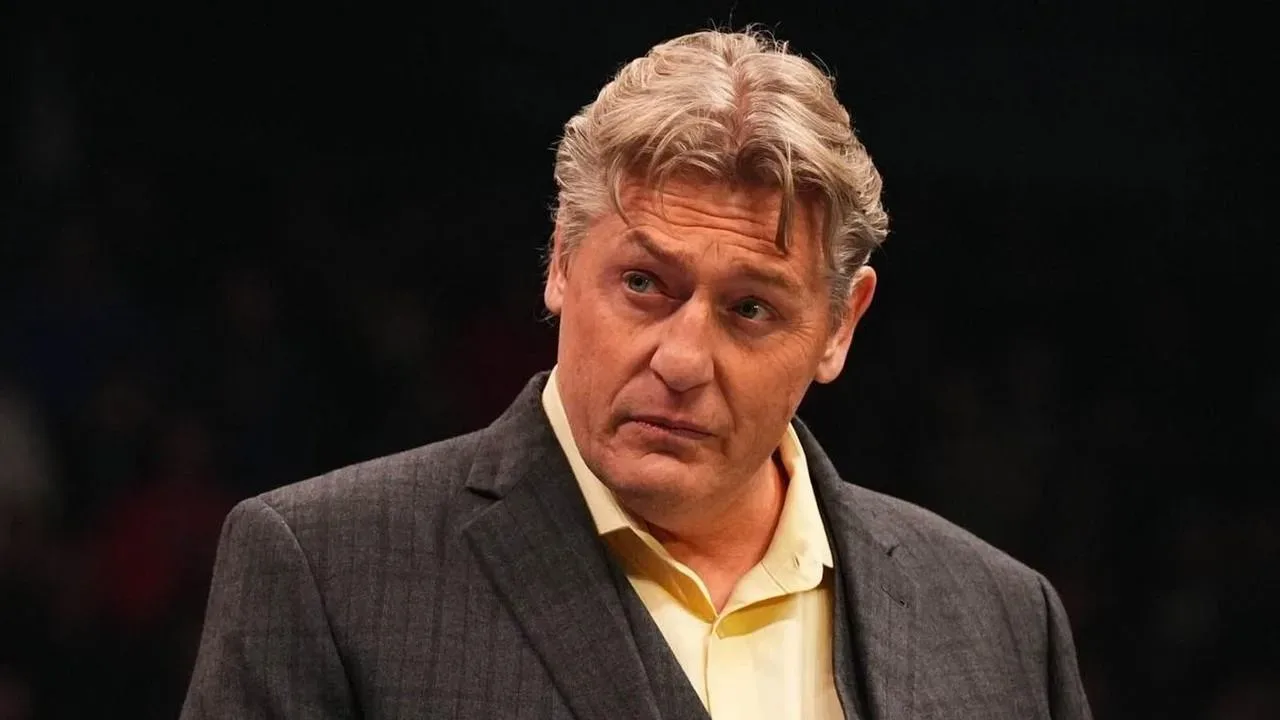
William Regal has offered emphatic praise for Roman Reigns following the World Heavyweight Champion’s WWE Raw main-event match against Penta, pointing to Reigns’ reactions and body language as essential viewing for wrestlers at every level.
Raw was headlined by Reigns defending the World Heavyweight Championship against Penta. While the anticipated result did not necessarily create mystery around the destination of the bout, the match nevertheless drew significant praise, with many viewing it as Penta’s strongest performance since arriving in WWE. Reigns retained his title, but Regal’s focus was not simply on the result or on a sequence of moves. Instead, the veteran performer and longtime wrestling authority singled out the subtler parts of Reigns’ presentation that can make a match resonate with an audience.
“If any talent of any standard want to really up their quality of drawing in your audience then study in great detail Roman Reigns facials, reacting ( I would say selling but selling is acting and this was in a different world of that ) and body motion from last nights bout against Penta on Raw. Masterful.”
View the referenced post on X
Regal’s wording is notable because it draws a distinction between conventional selling and the kind of reactive performance he saw from Reigns. In wrestling terminology, selling often refers to making an opponent’s offense look painful and consequential. Regal suggested Reigns’ work against Penta went beyond that familiar definition. His response to Penta’s attacks, shifts in expression and physical movement helped convey the changing emotions and stakes of the championship match.
For more background on this topic, read William Regal Urges Wrestlers to Study Roman Reigns’ Work in WWE Raw Main Event.
Regal identifies the details behind audience connection
For younger wrestlers, Regal’s recommendation is a valuable reminder that high-level main-event work is not defined by athletic execution alone. A wrestler can deliver every move cleanly, maintain a fast pace and still fail to make viewers emotionally invest in the contest. Facial expressions, timing, posture and the ability to acknowledge an opponent’s offense all contribute to the larger story being told in the ring.
That is the area Regal believes Reigns displayed at an elite level against Penta. Reigns’ reactions were not presented as generic signals that he had been hurt. Rather, Regal saw an active performance: a champion responding to a dangerous challenger, allowing the audience to follow the tension of the match through more than just the action itself.
The distinction matters particularly in a title match. A World Heavyweight Champion is expected to carry himself differently from a challenger. Reigns has the responsibility of projecting confidence and authority, while also making the threat in front of him feel credible enough that viewers can become absorbed in the struggle. If the champion appears untouched or emotionally disengaged, the challenger’s best offense can lose impact. If the champion reacts too broadly or without control, the tone of the match can change in the wrong direction. Regal’s praise indicates that Reigns found the balance needed to elevate the situation.
Penta brought a distinct challenge to the bout, and the Raw main event gave him a prominent opportunity opposite one of WWE’s central stars. Even when fans believed Reigns was likely to leave with the championship, Penta’s performance was widely received as a breakthrough moment in his WWE run. The match’s reception demonstrates that predictability in a wrestling result does not prevent a contest from being effective. The question is whether the performers give viewers enough compelling material to invest in the journey.
Why Reigns’ reactions matter in a predictable championship match
Predictable outcomes are often treated as an automatic weakness in wrestling, but the Reigns-Penta match illustrates why that is not always the case. A match can have a heavily favored winner and still create drama through execution. The challenger’s urgency, the champion’s responses and the escalation of the action can cause viewers to wonder whether the expected result may not be as certain as it seemed before the bell.
Regal’s observation speaks directly to that principle. Reigns’ facial work and body motion could help turn individual moments into meaningful developments. A look of frustration, surprise, concern or determination can give a crowd a cue to react. A change in physical demeanor can tell the audience that an opponent’s attack has shifted the momentum. Those details add layers without requiring an announcer or a lengthy verbal explanation to spell them out.
That kind of communication is particularly important in a television main event. WWE Raw reaches a broad audience, including longtime fans who recognize the language of professional wrestling and casual viewers who may be responding primarily to what they can see and feel. A performer who can clearly convey the story of a match through expression and movement has the ability to connect across both groups.
Reigns has long been placed in situations where presentation is under intense scrutiny, especially as a world champion. Every movement can be interpreted as part of his character: confidence can become arrogance, irritation can reveal vulnerability, and a measured response can reinforce the sense that he is in control. Against Penta, Regal believed those elements were not background details. They were central components of what made the match work.
Penta’s strong showing gains added importance
The praise for Reigns should not obscure the significance of Penta’s performance. Being selected to challenge for the World Heavyweight Championship in the Raw main event is a major stage, and the bout was praised as the best match of Penta’s WWE career so far. A performance like that can increase a wrestler’s standing even without a title change, especially when it establishes that the challenger belongs in the ring with the promotion’s top champion.
In that sense, Reigns’ reactions were also beneficial to Penta. Wrestling is a collaborative form of performance. A challenger’s offense becomes more convincing when the champion responds with the right degree of urgency and recognition. Likewise, a champion’s eventual victory can feel more meaningful when the opponent has been established as a legitimate danger. Regal’s post centered on Reigns, but his comments implicitly underline the shared nature of an effective match.
The contest gave Penta room to demonstrate what he can do in a major WWE setting, while Reigns’ work helped frame that effort as important. That combination can be especially productive when a challenger enters a bout as an underdog. The audience does not need to be guaranteed a title change to accept that the challenger is capable of pushing the champion further than expected. The performers simply need to create the feeling that the contest matters.
A lesson from one of wrestling’s most respected voices
Regal’s endorsement carries weight because of his extensive experience in professional wrestling. His comments were not framed as a broad, vague compliment. He specifically encouraged wrestlers of “any standard” to closely study particular elements of Reigns’ work: facials, reacting and body motion. That specificity makes the message more useful than simple praise.
For wrestlers studying the match, the key may be to watch how Reigns responds between the major spots as much as during them. How does his expression change after a momentum swing? When does he show confidence, and when does he reveal that Penta has forced him into a difficult position? How does his body language communicate his state of mind before he launches an answer? Those are the types of questions Regal’s assessment invites performers to consider.
The advice also applies beyond WWE’s main-event scene. Wrestlers working anywhere can benefit from understanding that audiences frequently react to the pauses, glances and physical adjustments surrounding the moves. Those moments can provide clarity, build anticipation and keep a match grounded in recognizable emotion. Regal’s view is that Reigns delivered those elements at an exceptional level on Raw.
Reigns’ World Heavyweight Championship defense against Penta will be remembered not only for the expected champion retaining, but for the quality of the match and the opportunity it gave Penta to shine. Regal’s response adds another layer to the discussion. He saw the bout as a practical example of how a top wrestler can draw viewers deeper into a match through performance choices that may be easy to miss at first glance.
As WWE continues to present Reigns as its World Heavyweight Champion, his work against Penta now stands as the kind of performance Regal believes other talent should revisit in detail. The moves and outcome are part of the story, but the “masterful” qualities Regal identified came from how Reigns made the audience feel the match unfolding moment by moment.

Darryl Polo
Darryl Polo is a passionate wrestling fan covering WWE, AEW, TNA and beyond. He loves great rivalries, breakout stars and the moments that keep fans talking long after the bell. How we work.