
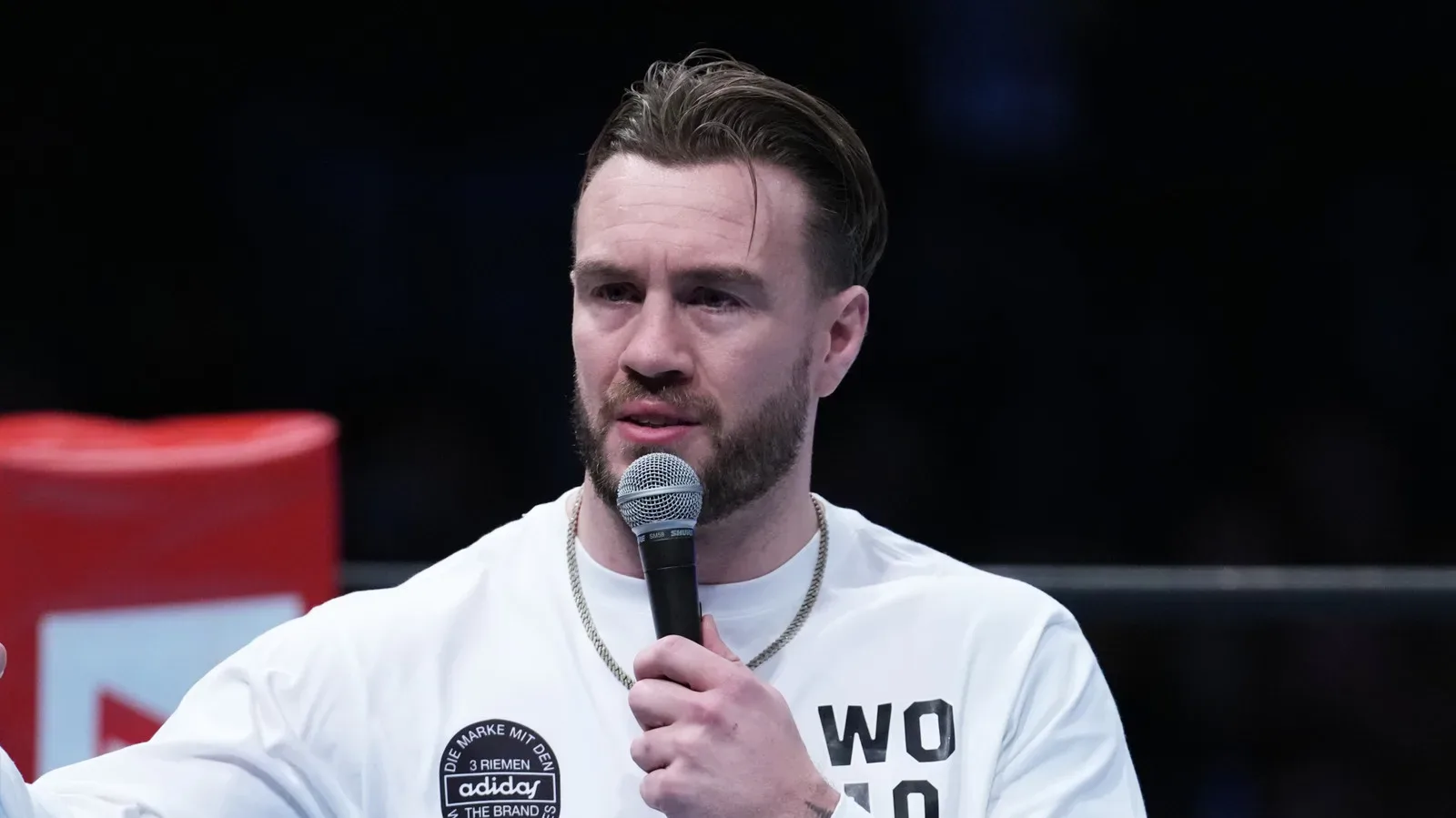
Will Ospreay is enjoying one of the defining moments of his career after defeating Kenny Omega at AEW All In to become AEW Men’s World Champion. Three days into that title reign, Ospreay has looked back at a much earlier chapter of his life: the moment professional wrestling first caught his attention and the winding route that eventually brought him into the ring.
For a performer known worldwide as the Aerial Assassin, Ospreay’s journey was not simply a matter of deciding to become a wrestler and immediately enrolling at a wrestling school. Before formal training, before his high-flying reputation and before championship opportunities on major stages, Ospreay was a young fan watching television with his father. A chance encounter with wrestling programming became the starting point for an obsession that never went away.
“I think he was, like, flicking between a Chelsea game and maybe ‘Star Trek,’” Ospreay said of his father. “And, I just got fascinated by it, and just kept tuning in.”
It is a simple beginning, but it speaks to an experience familiar to many wrestlers and fans. Professional wrestling can enter a person’s life unexpectedly. A channel change, a memorable match or one visually striking move can provide the first connection. In Ospreay’s case, the initial fascination developed into a long-term goal, even if the road toward pursuing that goal did not begin with wrestling drills.
For more background on this topic, read Kofi Says Tony Khan’s Energy at All In Has Made The New Level’s AEW Move Feel Validating.
Instead, Ospreay’s earliest preparation came through drama. His mother, Sue, operated a drama academy, and Ospreay took part in it. That experience exposed him to performance elements that would later carry obvious value in a wrestling environment. Wrestling demands athleticism, but it also asks performers to understand movement, pacing, reactions and the importance of making an audience feel what is happening in the ring.
Ospreay explained that the academy included dance teachers, giving him an early education in rhythm and timing. Those are qualities that have remained central to his wrestling style. Whether a wrestler is executing a fast-paced sequence, setting up a major aerial maneuver or responding to an opponent and the crowd in real time, timing can determine whether a moment looks smooth, dramatic and impactful.
“She would bring in dance teachers, so I got a sense of rhythm straight away,” Ospreay said. “I understood how to time things.”
That background does not mean Ospreay was consciously mapping out a future as a professional wrestler during those early lessons. But looking back, he can identify the connections. His eventual work became synonymous with speed, movement and precision, and his childhood exposure to performance helped develop instincts that could be applied once he did step into a ring.
Another formative influence came from watching WCW. Ospreay was particularly captivated by Billy Kidman, the former WCW Cruiserweight Champion whose aerial offense made a lasting impression on a young viewer. Kidman’s shooting star press stood out so strongly that Ospreay did not merely watch it; he studied it.
The shooting star press has long been regarded as one of wrestling’s most spectacular aerial maneuvers. It requires the performer to launch backward, rotate in the air and land chest-first across an opponent. For a child watching at home, its appeal is easy to understand. It looks impossible until the viewer sees it performed, and even then it retains an element of danger and wonder. For Ospreay, it became something worth examining frame by frame.
“Watching WCW, and seeing Billy Kidman do a shooting star press, I’d pause it, rewind it,” Ospreay said. “Where do his arms go? I broke down little bits about it, and then I would just go into my garden and try it on the trampoline.”
That recollection offers a revealing glimpse into Ospreay’s mindset well before he began legitimate wrestling training. He was not just excited by the move’s spectacle. He wanted to understand its mechanics. Pausing and rewinding footage to focus on arm placement and individual parts of the motion showed an analytical curiosity. The trampoline gave him a place to experiment with the movement, but the key detail is the effort he put into observing and breaking down what he saw.
Ospreay’s trampoline activity also caught the attention of his mother. She responded by enrolling him in a trampoline class, an understandable step for a young person spending time attempting aerial movements in the garden. However, Ospreay did not stay in the class for long. He ultimately felt it was redundant and quit soon after.
His interest in wrestling itself remained intact. Eventually, Ospreay began formal training at the Dropkixx Wrestling school. That first structured stop did not become a permanent home, though. Ospreay was kicked out after engaging in backyard wrestling. The setback could have ended the pursuit for many aspiring wrestlers, particularly at such an early stage. It instead became one part of a broader learning process.
Ospreay later found an opportunity with the London School of Lucha Libre. That was the environment where his path continued, setting the stage for the career that followed. The eventual rise of the Aerial Assassin is now well known to audiences who have watched him on major stages, but his recollection makes clear that there was no single straight line from childhood fandom to championship success.
A Champion’s Story Is More Than a Highlight Reel
Ospreay’s current position makes the story especially timely. Defeating Omega at AEW All In to win the AEW Men’s World Championship placed him at the center of AEW’s men’s division. A title victory of that scale naturally focuses attention on the match, the opponent and the significance of the championship itself. Yet stories from a wrestler’s early life add another dimension to the achievement.
In Ospreay’s case, that dimension includes a television remote moving between a Chelsea game and “Star Trek,” drama classes run by his mother, dance teachers who helped cultivate an understanding of rhythm, and old WCW footage repeatedly rewound to study Billy Kidman’s shooting star press. It also includes a garden trampoline, an abandoned trampoline class, an early dismissal from one wrestling school and a new beginning at another.
None of those moments alone guaranteed anything. They do, however, illustrate how a wrestler’s identity can take shape through a collection of experiences. The athletic side of Ospreay’s presentation is an obvious part of his appeal, but his comments underline that the performance side had deep roots as well. Learning rhythm and timing through drama and dance can sound far removed from a wrestling ring, yet both qualities are essential when a match depends on coordination between two performers and a live audience’s emotional response.
His fascination with Kidman’s shooting star press provides another useful lens. Wrestling’s visual language is often passed from generation to generation through fans who become performers. A move seen on television can inspire a child to start paying closer attention. A wrestler’s approach to timing, motion or presentation can become an influence long before that child has access to a professional training facility.
At the same time, Ospreay’s account does not romanticize every step. His first attempt at formal training ended with him being kicked out of Dropkixx Wrestling after backyard wrestling. The journey involved correction and change, not uninterrupted progress. Moving on to the London School of Lucha Libre gave him another chance to pursue the craft in a proper training setting.
From Childhood Fascination to the AEW World Title
Now, the fan who once paused WCW footage in order to inspect a shooting star press holds AEW’s top men’s prize. The distance between those two images is considerable, but Ospreay’s recollections connect them. His career was built from an early fascination with wrestling, a desire to understand the physical details behind what he watched, and performance skills developed in places that were not traditional wrestling schools.
Ospreay’s story is also a reminder that wrestling preparation can take many forms. Formal training remains essential, and his move from Dropkixx Wrestling to the London School of Lucha Libre marked an important part of that process. But performance awareness, rhythm and the instinct to study the work of previous wrestlers all contributed to the foundation he describes.
As Ospreay begins his AEW Men’s World Championship reign, his look back at those formative years puts the milestone in perspective. The championship win over Omega at AEW All In is the latest major moment in a career shaped by dedication, setbacks and influences that started at home. From a father’s channel surfing to Sue Ospreay’s drama academy and a young fan’s close study of Billy Kidman, the path to becoming the Aerial Assassin was anything but ordinary.
In pictures

Darryl Polo
Darryl Polo is a passionate wrestling fan covering WWE, AEW, TNA and beyond. He loves great rivalries, breakout stars and the moments that keep fans talking long after the bell. How we work.