
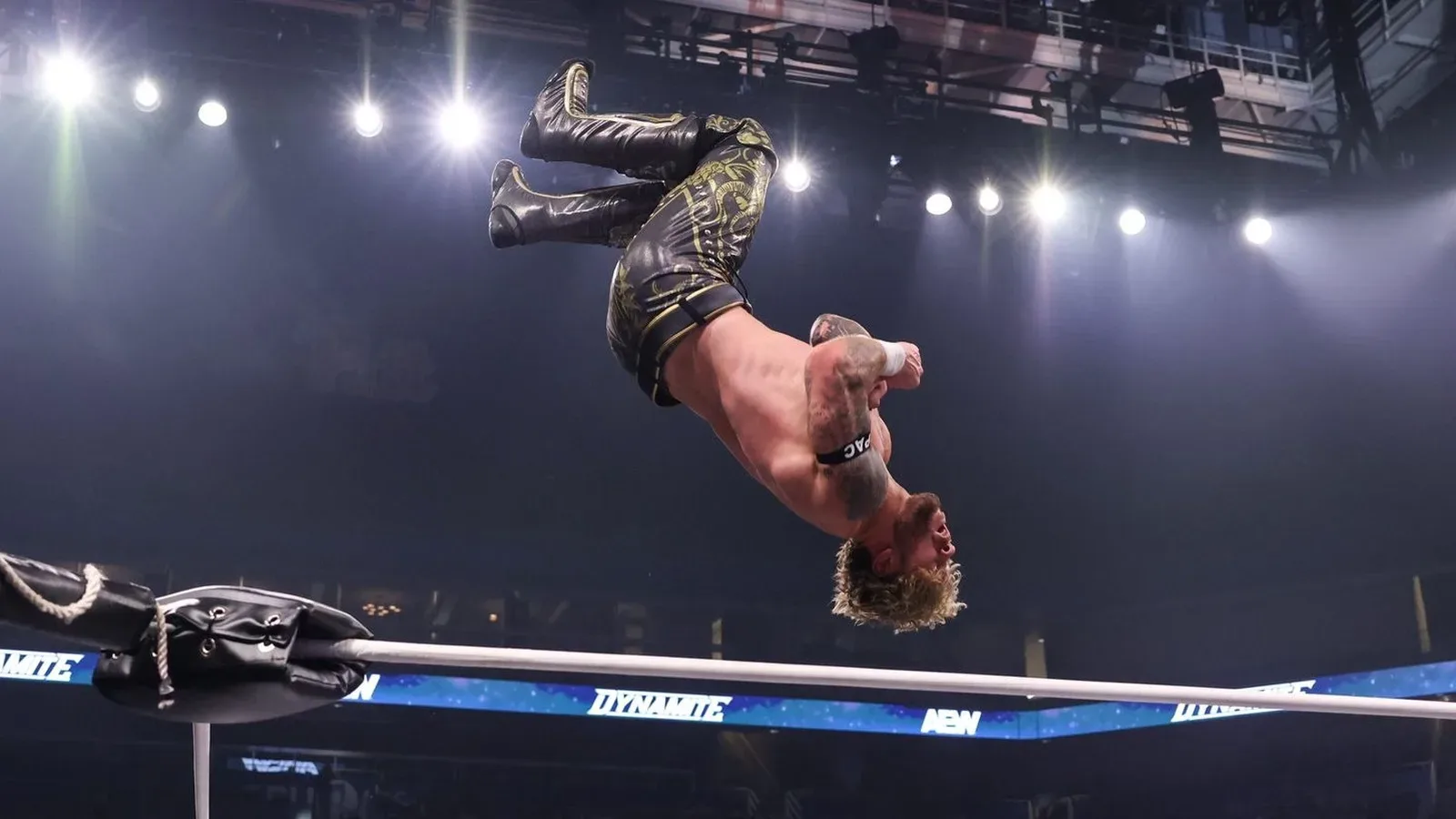
Will Ospreay has reflected on one of the most emotional moments of his AEW career: breaking out PAC’s signature Black Arrow during his September 30 AEW Dynamite match with Ricochet.
The bout was presented as a tribute to PAC, the late friend and major influence shared by both competitors. Ospreay and Ricochet entered the night with their familiar competitive friction still hanging over them, particularly with Ospreay holding the AEW World Championship and Ricochet having clear ambitions of reaching that position himself. But their match carried a much larger purpose than their own rivalry. The two performers set aside those issues for a night of remembrance, and Ospreay made the decision to honor PAC with one of the most difficult high-risk moves in modern wrestling.
Ospreay successfully connected with the Black Arrow, PAC’s celebrated corkscrew shooting-star-style finishing maneuver. It was a striking choice not simply because of the move’s association with PAC, but because Ospreay had not performed it in years. Speaking on “Speedball” Mike Bailey’s backstage video blog following Dynamite, Ospreay described the personal and physical challenge behind the moment.
“That was a tough one. I ain’t done that in eight years is the last time I did it and I was ten kilos lighter, I don’t know what that is in pounds. But that was one of the most difficult matches I’ve ever done in my life, and when it comes to myself and Trevor (Ricochet), obviously there is always hard feelings between us because egos always get in the way and you always want to be sitting on top of the throne and I know he wants this championship. But to be able to put our differences aside and do a great tribute to a very good friend of the pair of us, I wanted to do it right.”
For more background on this topic, read MLP Northern Rising Set For Three-Part TSN, MyAEW And Fight Nation Special.
An eight-year gap made the Black Arrow a major gamble
Ospreay’s comments underline how much thought and risk were attached to the tribute. The Black Arrow is not a move that can be treated as a routine callback. It demands exceptional balance, timing, body control and confidence from the wrestler attempting it. The visual impact comes from the performer launching from the top rope, rotating through the air and still landing accurately enough to complete the pinning combination.
For Ospreay, the difficulty was magnified by the time since he had last used it. He said eight years had passed since his previous attempt, and he also noted that he is now ten kilograms heavier than he was then. That combination made the decision to bring it back especially significant. A wrestler’s weight, conditioning and familiarity with a maneuver can all affect the margin for error on a top-rope aerial move. Ospreay did not present the spot as a casual gesture. He made clear that it was among the most demanding things he has done in a match.
That reality gave the Black Arrow a different emotional weight. It was not only a recognizable reference for viewers who understood PAC’s influence on Ospreay and Ricochet. It was an active commitment by the AEW World Champion to push himself physically in order to make the tribute feel worthy of the person being honored.
Ospreay said the discussion heading into the show centered on the belief that he and Ricochet were the only wrestlers who could realistically execute the Black Arrow. Whether viewed as a statement about their athletic ability, their shared connection to PAC, or both, that expectation placed even more pressure on the eventual moment. Ospreay found a way to deliver it when the match called for it.
Competition remained, but the tribute came first
The September 30 match did not erase the issues between Ospreay and Ricochet. Ospreay openly acknowledged that there are hard feelings between them and connected that tension to the competitive egos of two wrestlers who each want to stand at the top of AEW. With the AEW World Championship around Ospreay’s waist, Ricochet’s desire to hold that title remains a meaningful part of the dynamic between the two.
Still, Ospreay’s reflection made it clear that the championship rivalry was not the central story of the night. He and Ricochet had a shared responsibility to honor a friend, and the match became the vehicle for that. In wrestling, rivalries often create the most compelling in-ring situations when neither side is willing to yield ground. This was a different kind of challenge. The performers had to retain the intensity and quality expected of a major match while also ensuring the emotional purpose behind it was never lost.
Ospreay said they were able to put their differences aside to create what he considered a proper tribute. Bailey, who filmed the backstage clip, described the match as a perfect tribute to PAC. The exchange captured why the Black Arrow resonated: it was not merely an impressive move placed into a match for applause. It represented the convergence of shared history, technical ability and a desire to honor someone important to both wrestlers.
Why the moment fit Ospreay’s role as champion
Ospreay has built much of his reputation on being willing to attempt extraordinary things in the ring, but the Black Arrow had a distinctly different meaning from a standard showcase sequence. As AEW World Champion, he had the platform to make the tribute a central moment on Dynamite. More importantly, he used that platform to focus attention on PAC’s impact rather than simply adding another highlight to his own catalogue.
The move’s placement in a match with Ricochet was also fitting because both men credited PAC as a major influence. Ospreay referred to Ricochet as Trevor while discussing their bond and their ongoing competitive issues, emphasizing the personal connection underlying the performance. Their match was shaped by the understanding that their relationship with PAC existed beyond the title picture and beyond whatever animosity had developed between them.
That did not require either wrestler to abandon what makes them effective. Ospreay and Ricochet are associated with high-level athleticism, speed and a willingness to take risks. In that sense, the Black Arrow was a natural fit for the match. Yet the eight-year gap since Ospreay had last performed it ensured that the move could not be dismissed as simply another part of his established offense. It was deliberately saved for a meaningful occasion.
A tribute built around execution and remembrance
Tribute matches can be difficult to navigate because the wrestlers must balance emotion with execution. The purpose must be clear, but the action must still be safe, coherent and worthy of the person being remembered. Ospreay’s remarks suggest that he and Ricochet approached their match with that responsibility in mind.
For Ospreay, doing it right meant more than mentioning PAC or including a familiar visual cue. It meant taking on a maneuver he had not used in nearly a decade, despite knowing how demanding it would be. The result was a moment that directly connected the competitors to their late friend and gave the September 30 episode of Dynamite an enduring image.
The AEW World Champion’s account also reinforces the difference between appreciating a move and carrying the responsibility of performing it. Ospreay knew the Black Arrow was difficult. He knew the expectations surrounding it. He knew his body had changed since the last time he attempted it. Nevertheless, he believed it was necessary for the tribute he and Ricochet wanted to create.
In the end, the match stood as a rare pause in a championship rivalry. Ospreay and Ricochet remain driven by the same desire to reach the top, and Ospreay knows Ricochet wants the title he currently holds. On September 30, however, their individual ambitions took a back seat. The Black Arrow provided the defining symbol of that decision: a demanding, deeply personal salute to PAC, delivered by a champion determined to make sure the occasion was handled with the respect it deserved.
In pictures

Darryl Polo
Darryl Polo is a passionate wrestling fan covering WWE, AEW, TNA and beyond. He loves great rivalries, breakout stars and the moments that keep fans talking long after the bell. How we work.