
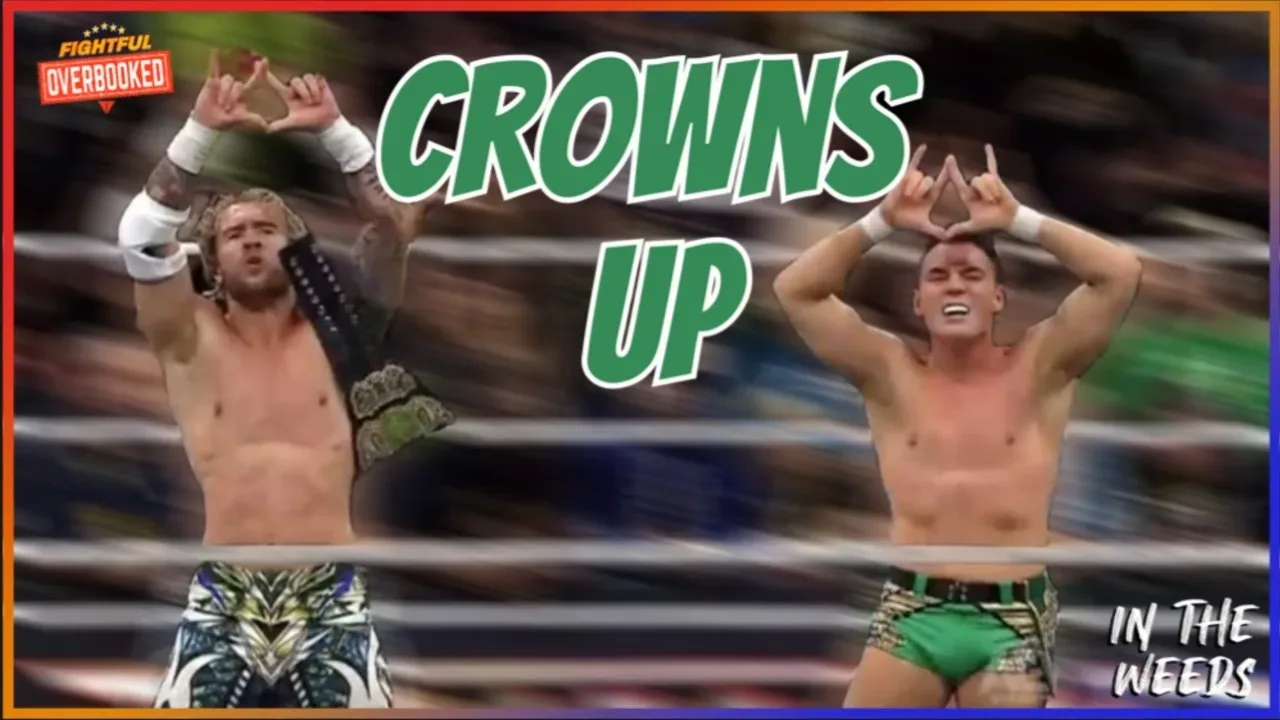
Wheeler Yuta believes Will Ospreay’s time with the Death Riders made sense when it began, even if the alliance was ultimately destined to fail.
Ospreay spent several weeks aligned with the AEW faction during the summer, a stretch that led to widespread speculation that he could become a permanent member of the group. He trained with the Death Riders, adopted elements of their hard-edged approach, and appeared to share their commitment to pushing one another physically. But the partnership came to an end at AEW Redemption when Ospreay refused to attack Kenny Omega.
That decision established a clear line between Ospreay and the group’s most ruthless members. Yuta, who has long been associated with the Death Riders’ willingness to embrace harsh and uncompromising tactics, said Ospreay brought plenty of valuable qualities to the faction. In Yuta’s view, however, being motivated, disciplined, and prepared to work harder than everyone else is not the only requirement for a place in the Death Riders.
The willingness to go beyond the limits that others will accept is just as central to the group’s identity.
For more background on this topic, read Thekla Takes Wait-and-See Approach to Kairi Sane’s Rumored AEW Future.
Training brought Ospreay into the fold
Yuta described the early part of Ospreay’s association with the Death Riders positively, particularly the atmosphere created around training. The group’s mindset has been built around competition, self-improvement, and demanding more from every person in the room. Ospreay, a wrestler widely known for his physical intensity and drive to perform at an elite level, appeared able to meet that standard.
“I think when he was in the Death Riders and we were training, it was great,” Yuta said. “We all tried to elevate each other and he really got on board with it.”
Yuta noted that much of the work revolved around the neck, an important detail given the physical emphasis surrounding the group and the punishment Ospreay was prepared to endure. The Death Riders have consistently projected a culture in which discomfort is not merely tolerated but treated as part of the process. For a wrestler entering that environment, participation means accepting a level of intensity that can be both physically and mentally demanding.
By Yuta’s account, Ospreay did not stand apart from the group during that period. He took part in what they were doing and accepted their methods.
“He was there with us,” Yuta said.
The connection extended beyond training sessions. Yuta revealed that the Death Riders maintained a group chat used to motivate and push one another, and that Ospreay had been included while he was associated with the faction. That particular chat is no longer active, reflecting the finality of Ospreay’s departure from the group.
“We have a Death Rider group chat going and there was one with Will in it, that one is not active anymore obviously,” Yuta said. “We’re always motivating each other and pushing each other, he fit right into that when he was a part of the group.”
The detail offers a glimpse into why the possibility of Ospreay joining on a long-term basis seemed plausible. On the surface, he possessed several traits that aligned with the faction’s stated philosophy. He is driven to improve, thrives on competition, and has repeatedly presented himself as someone who wants to raise the level of the matches and wrestlers around him.
Why the fit appeared right at the time
For Yuta, the original decision was understandable. He did not portray Ospreay as someone who was incapable of functioning within the Death Riders. Instead, he explained that the relationship worked during the period when their shared goals centered on training, motivation, and raising standards.
“At the time, I thought it was the right move,” Yuta said.
That assessment is notable because it comes from someone inside the group rather than an observer looking at the situation from a distance. Yuta saw Ospreay’s effort firsthand and believed the former ally was sincerely engaging with the Death Riders’ culture. Ospreay was not simply standing near the faction for appearances; he was participating in their work and responding to the challenge they presented.
Yet the eventual split showed that shared training habits and a similar desire to excel do not automatically produce a lasting alliance. The Death Riders demand a level of ideological commitment beyond athletic ambition. The group’s unity depends on whether someone is ready to make the same severe choices when a situation requires it.
At AEW Redemption, Ospreay’s refusal to attack Omega demonstrated that he was not willing to make every choice that the Death Riders would expect. The moment brought his personal loyalty and affection into direct conflict with the faction’s methods. Ospreay chose not to cross that line, and the consequences for his place in the group were immediate.
PAC saw a side of Ospreay that changed the equation
Yuta also pointed to PAC as someone with a more developed view of Ospreay’s character. While Yuta felt the alignment was the right move at first, he acknowledged that PAC’s perspective carries weight because of his deeper experience with Ospreay.
“Obviously PAC has seen some of his character and has a deeper perspective on it,” Yuta said.
Yuta did not elaborate on every issue PAC may have recognized, nor did he claim that Ospreay lacked the desire to become better. His comments instead drew a distinction between Ospreay’s positive traits and the specific moral boundary that prevented him from fully becoming a Death Rider.
That boundary matters. Ospreay may share much of the group’s competitive DNA, but Yuta believes he does not share the same capacity for actions the faction considers necessary. The Death Riders are not defined solely by their work ethic. They are also defined by what they are prepared to do to impose their will, control a situation, or eliminate resistance.
“I still see — Will does share some of our values, right?” Yuta said. “He’s always motivated to push himself, he’s always motivated to train hard and raise the standard.”
Those words leave room for respect. Yuta did not dismiss Ospreay as uncommitted or portray his former stablemate as someone who lacks toughness. Rather, he credited Ospreay for the qualities that made the partnership compelling in the first place.
But respect for Ospreay’s work ethic does not mean Yuta sees a path back into the fold.
The defining difference: how far Ospreay will go
Yuta stated that the decisive issue is Ospreay’s reluctance to embrace the darker actions that come naturally to members of the Death Riders. In Yuta’s phrasing, those are the “unsavory things” that certain people in the group are prepared to do without hesitation.
“I think when it comes to doing those unsavory things that guys like me thrive in, I don’t think he’s willing to go that far,” Yuta said.
The comment clarifies the ideological gap at the center of Ospreay’s exit. Ospreay can train alongside the Death Riders. He can compete at their pace, accept physical punishment, and pursue the same goal of becoming better. What he cannot do, at least in Yuta’s estimation, is abandon the relationships and principles that held him back from attacking Omega.
Yuta said he understands why Ospreay made that choice. There is no indication in his comments that he is confused by the affection Ospreay felt or the connection that prevented him from striking Omega. But understanding the emotion behind the choice is different from accepting it as compatible with the Death Riders.
“I understand the affection, but I don’t think there’s really a place for him in the Death Riders anymore unfortunately,” Yuta said.
That conclusion closes the door on the version of the alliance fans saw over the summer. Ospreay’s time in the faction may have been brief, but it was not meaningless. It revealed genuine common ground between him and the Death Riders, especially in their shared emphasis on effort, conditioning, and raising the standard. It also revealed the exact point where that common ground ends.
For Yuta, Ospreay was a strong fit in the training room and a valuable presence in a culture designed to push people harder. At AEW Redemption, though, Ospreay proved that there are limits he will not cross. In the Death Riders’ world, that limit is enough to make a long-term place in the group impossible.
In pictures
Darryl Polo
Darryl Polo is a passionate wrestling fan covering WWE, AEW, TNA and beyond. He loves great rivalries, breakout stars and the moments that keep fans talking long after the bell. How we work.