
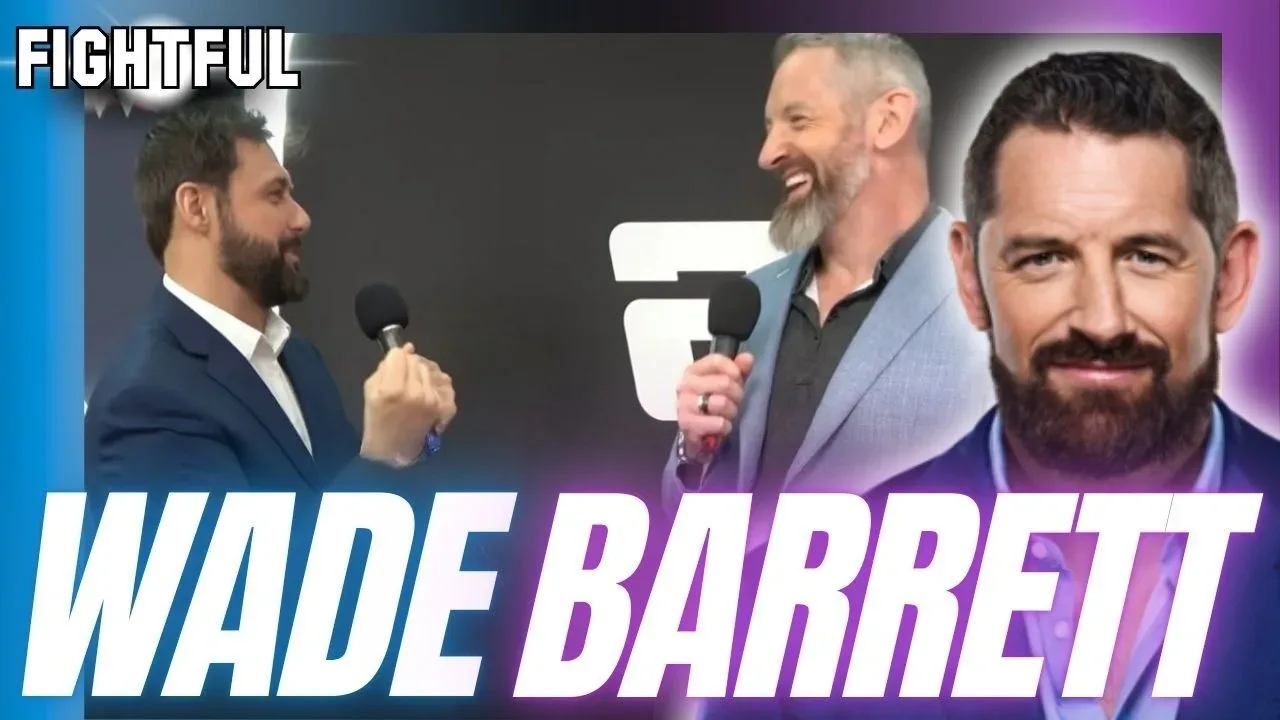
Wade Barrett has worked alongside several of WWE’s most prominent voices since moving into commentary, and the SmackDown color analyst has high praise for the partners who have helped shape his broadcast career.
Barrett currently calls Friday Night SmackDown with Joe Tessitore, a pairing that has given the former WWE superstar a regular platform alongside a broadcaster whose background was built outside professional wrestling. Before that, Barrett also spent significant time calling WWE action with Michael Cole and Corey Graves. Looking back on those partnerships, Barrett pointed to Cole as the colleague with whom chemistry comes most naturally while also emphasizing how impressed he has been by Tessitore’s adaptation to WWE.
For Barrett, the opportunity to work with both Cole and Tessitore represents two very different, but equally valuable, commentary experiences. Cole is a long-established voice of WWE television and someone Barrett views as a major influence. Tessitore, meanwhile, came into the company with extensive broadcasting experience but without a professional wrestling commentary background. Barrett believes Tessitore’s transition has been remarkably quick.
Michael Cole’s influence remains important to Wade Barrett
When asked about his favorite commentary partner in WWE, Barrett explained that the connection he has with Cole feels immediate. Their dynamic has often allowed Barrett to playfully challenge Cole on air while maintaining the kind of rhythm needed to guide a live wrestling broadcast.
For more background on this topic, read Zoey Serrano Reflects on WWE Character Work, Calls TNA Run a ‘Whole New Rebirth’.
“Chemistry, I think, is automatic with Michael Cole,” Barrett said. “I love mocking him and prodding him, but he really is the GOAT of professional wrestling commentary.”
Barrett’s description underlines the balance that has made a strong WWE commentary team so important over the years. A color commentator is expected to enhance the action, provide perspective on the competitors and tell the emotional side of a match. The play-by-play announcer must keep the broadcast moving, establish the stakes and help the audience follow every development. When the roles complement each other, the announcers can react naturally rather than simply waiting for turns to speak.
Barrett has consistently brought a performer’s point of view to the desk. As a former in-ring competitor, he can speak to the physical punishment, competitive motivations and strategic decisions involved in a match. His on-air style also leaves room for humor, particularly when he is able to poke fun at a partner. That sort of exchange can help create personality without taking focus away from the wrestlers and stories being presented.
In Cole, Barrett sees someone who has mastered the demands of WWE’s unique live environment. Cole’s tenure has placed him at the center of countless major events, championship matches and pivotal storyline moments. Barrett said he feels fortunate not only to call shows with Cole, but also to learn from him.
“So I’m incredibly lucky to have him as a friend and sit under his learning tree, and fit in automatically with him,” Barrett said.
The phrasing reflects the respect Barrett has for a broadcaster who has become synonymous with WWE programming. Although Barrett entered commentary with the benefit of his wrestling experience, live television announcing requires a separate set of skills. Timing, pacing, reacting to unexpected developments and communicating a match’s story in real time are all central to the job. Barrett’s comments make clear that he regards his work opposite Cole as an important part of his ongoing development behind the desk.
Joe Tessitore’s quick WWE adjustment has impressed Barrett
While Cole represents a wealth of wrestling-specific knowledge and experience, Tessitore has arrived at WWE from a different direction. Tessitore had an extensive background in sports broadcasting before joining WWE, but Barrett noted that he did not have professional wrestling commentary experience when he first entered the role.
That has made Tessitore’s progress particularly notable to his SmackDown partner. Barrett said Tessitore has now been involved in WWE for around 18 months, and he credited the play-by-play announcer for getting up to speed quickly in an environment with its own vocabulary, storytelling traditions and live-production demands.
“But also Joe Tess, who I work with every week on SmackDown,” Barrett said. “He has been incredible. He’s been around probably 18 months now in this game. Wealth of experience coming in, but no experience in the wrestling game despite the fact he’s a big fan of it.”
Professional wrestling commentary calls for more than simply describing what is happening in the ring. Announcers have to recognize the importance of rivalries, championships and personal grudges, while also communicating the emotion behind every major turn. They must be prepared to adjust when a match changes direction or when a live segment takes an unexpected path. Familiarity with the performers and the rhythms of WWE television is therefore especially important.
Barrett believes Tessitore has handled that learning curve effectively. The color commentator also pointed to the growing relationship the pair has developed during their weekly work on SmackDown.
“So him getting up to speed that quickly and me being part of this relationship on air that I have with him has been really cool,” Barrett said.
That on-air relationship is a significant part of the SmackDown presentation. Commentary teams need enough familiarity to challenge one another, clarify points and create memorable reactions without losing the thread of the match or segment. Barrett’s praise suggests that he sees Tessitore’s progression not merely as an individual accomplishment, but as something that has helped their booth become more cohesive.
Barrett summed up his position by noting the value of working with two broadcasters at different stages of their WWE commentary journeys.
“So to get to work with Cole and Joe Tess back to back, I’m a very lucky commentator,” Barrett said.
Barrett also highlights Tessitore’s work with Zuffa Boxing
Tessitore’s duties under the TKO umbrella extend beyond WWE. He is also working as a play-by-play commentator for Zuffa Boxing, adding another combat-sports assignment to his schedule. Barrett has watched multiple Zuffa Boxing broadcasts and said Tessitore has excelled in that setting as well.
Boxing and professional wrestling are distinct forms of entertainment, but both demand an announcer capable of translating urgency and physicality to the audience. In boxing, the broadcast voice must capture the stakes of each exchange while explaining shifts in momentum and reacting to the intensity of a fight. Barrett feels Tessitore’s enthusiasm comes through clearly when he is calling those bouts.
“He’s doing all the Zuffa boxing stuff now, and that’s been a new arc for him under the TKO umbrella and he’s absolutely killing it,” Barrett said.
Barrett added that he had watched two or three of Tessitore’s boxing shows and could hear how energized his partner was by the action. That energy, in Barrett’s view, carries back to WWE television.
“You just feel how excited he is to be watching these guys beating the hell out of each other,” Barrett said. “He brings that energy to WWE, too. So, yeah, great to work with Tess.”
The praise reinforces how highly Barrett values authentic enthusiasm at the commentary desk. WWE broadcasts rely on announcers to help convey why a match matters and why a particular moment should resonate with viewers. A commentator’s excitement cannot replace the work being done by the performers, but it can amplify a match’s biggest moments and help frame the emotional stakes for the audience.
A commentary role built on experience and collaboration
Barrett’s own route from WWE competitor to commentator has given him a distinctive voice on SmackDown. He is able to draw upon his experience in the ring while continuing to learn the craft of broadcasting from colleagues with different professional backgrounds. His comments about Cole and Tessitore show that he values both the knowledge of a veteran wrestling voice and the perspective of a seasoned sports broadcaster finding his place in WWE.
For Barrett, Cole provides automatic chemistry, trusted guidance and an example of excellence in professional wrestling commentary. Tessitore brings a different kind of value: an experienced broadcaster’s confidence, a fan’s interest in the product and an eagerness that Barrett believes is evident on both SmackDown and Zuffa Boxing.
As Barrett continues to call SmackDown each week with Tessitore, the partnership will remain an important part of the show’s sound. His reflections also make clear that the color commentator does not take his past work with Cole for granted. Between an established WWE institution and a rapidly developing play-by-play partner, Barrett sees himself as fortunate to have learned from—and worked alongside—both voices.

Darryl Polo
Darryl Polo is a passionate wrestling fan covering WWE, AEW, TNA and beyond. He loves great rivalries, breakout stars and the moments that keep fans talking long after the bell. How we work.