
WWE’s effort to secure a new trademark registration for “RKO” in connection with professional wrestling has hit an early obstacle at the U.S. Patent and Trademark Office.
In a nonfinal office action dated November 3, the USPTO refused WWE’s application on the basis that the proposed mark overlaps with existing trademarks connected to RKO Pictures. The office action centers on the possibility of confusion created by the shared “RKO” wording, a term that is closely associated with Randy Orton’s longtime finishing move and one of the most recognizable move names in modern WWE history.
The refusal is not a final decision. WWE can respond with arguments and evidence in an attempt to overcome the USPTO’s concerns, and the company has until February 3 of next year to do so. WWE also has the option of paying for a three-month extension if it needs additional time to prepare its response.
Why the USPTO Raised an Objection
The issue identified by the USPTO is the similarity between WWE’s requested “RKO” mark and existing registrations associated with RKO Pictures. In trademark review, the central question is not simply whether two parties operate in exactly the same business. The office also considers whether consumers could potentially believe that the goods or services offered under similar marks come from the same source or are connected in some way.
For more background on this topic, read Gurv Sihra Cleared to Return to Wrestling Following Collapsed Lung.
The examiner’s explanation specifically emphasized that the marks share the same central wording:
“Applicant’s and registrant’s marks all share the sole or dominant literal element ‘RKO,’ one of registrant’s marks is in typed form and is identical to applicant’s mark.”
That language places the focus squarely on the letters themselves. WWE’s filing seeks protection for “RKO” for wrestling purposes, while the prior registrations cited by the USPTO involve RKO Pictures-related marks. Because “RKO” is the sole element of WWE’s proposed word mark, the office found that the overlap was significant enough to issue the refusal.
A nonfinal office action is a routine stage in many trademark matters, but it requires a substantive response if an applicant intends to continue pursuing registration. WWE may seek to distinguish wrestling-related use from the goods and services covered by the cited registrations, provide legal arguments as to why confusion is unlikely, or take another available route in response. The application will not simply proceed to registration without WWE addressing the refusal.
A Major Piece of Randy Orton’s WWE Identity
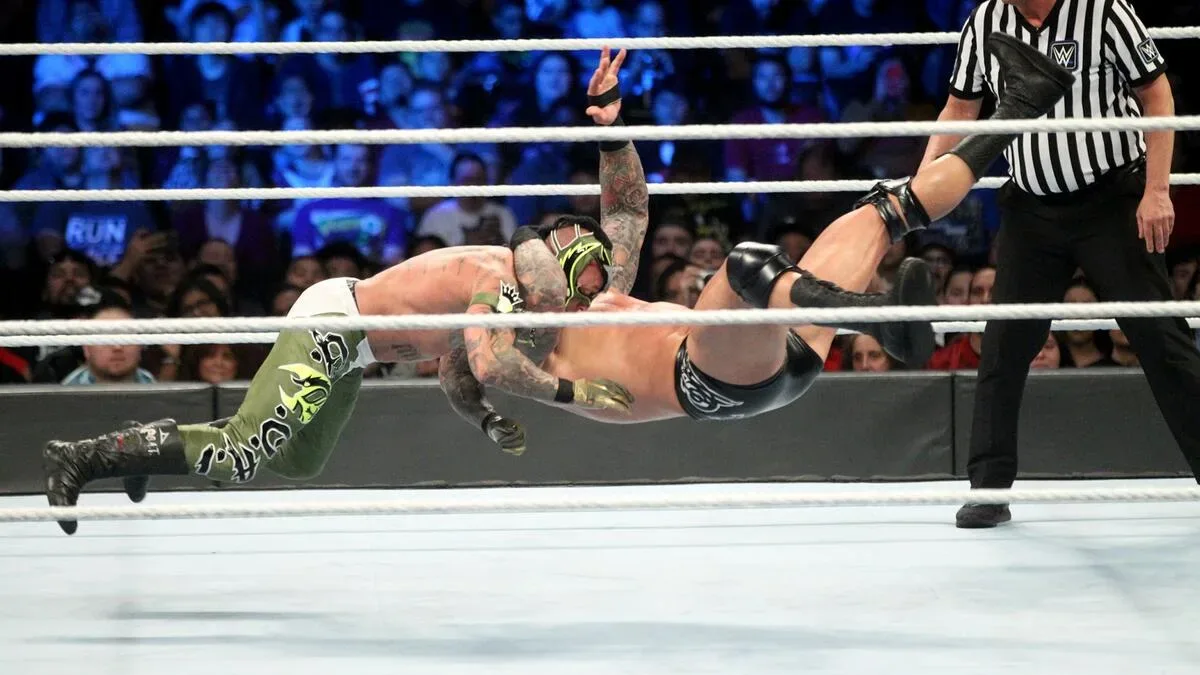
For WWE fans, “RKO” is inseparable from Randy Orton. The move has been a defining part of Orton’s presentation through much of his career, with its sudden delivery helping establish the phrase “RKO outta nowhere” as a lasting part of wrestling vocabulary.
Orton has been one of WWE’s leading stars for more than two decades, and the RKO has remained a consistent calling card across multiple eras of his career. The maneuver’s visibility extended beyond weekly wrestling programming as clips and memes played on the idea that an RKO could be delivered suddenly and unexpectedly in virtually any setting.
That cultural familiarity makes the term commercially valuable to WWE. Move names can be tied to branded apparel, collectibles, promotional campaigns and other wrestling merchandise, particularly when they are connected to a performer with Orton’s longevity and name recognition. The new application was filed on July 6 as WWE sought formal protection for the phrase in relation to wrestling.
However, the current office action does not mean WWE loses the ability to refer to Orton’s finisher as an RKO. The immediate question is whether this particular application can obtain a new federal registration in the form WWE requested. Trademark registration and the continued use of a term in entertainment programming are separate questions, and the November 3 action concerns the pending application.
WWE Already Holds Other RKO-Related Registrations
The company is not starting from scratch when it comes to the RKO branding. WWE already owns several trademarks involving the RKO phrase and related merchandise. Those existing registrations underline the longstanding commercial association between the move and Orton’s WWE career.
The latest filing nevertheless appears to have created a more direct issue because it sought the standalone “RKO” wording. The USPTO’s quoted rationale notes that one of the cited registrations is in typed form and is identical to WWE’s proposed mark. That makes the examiner’s concern especially straightforward: both sides rely on the same three-letter wording as the mark’s dominant, or only, literal feature.
WWE’s response, if it elects to submit one, will determine whether the application remains active. The company could attempt to persuade the examiner that the relevant markets, commercial impressions or consumer expectations are sufficiently different. It may also present evidence intended to address the cited conflict. No response or resolution has yet been announced, and the application remains at the nonfinal-refusal stage.
What the February Deadline Means
The February 3 deadline is the next key date in the matter. WWE can file a response before that date, or it can seek a three-month extension by paying the applicable fee. The availability of an extension gives the company additional procedural flexibility, but it does not remove the need to answer the USPTO’s objection if WWE wants the application to continue.
Should WWE respond, the USPTO will review the arguments and any supporting material. The examiner could withdraw the refusal, maintain it, or raise further issues depending on the contents of the response. Because the current action is explicitly nonfinal, the process is still open and no final conclusion has been reached about whether WWE’s standalone “RKO” application will ultimately register.
The matter is notable because the mark at issue is not an obscure phrase or a newly introduced WWE concept. “RKO” is among the most established pieces of branding attached to a single WWE wrestler, and its use has been reinforced over years of matches, broadcasts, merchandise and fan discussion. At the same time, the USPTO’s action shows that popularity within wrestling does not by itself eliminate conflicts with earlier marks held elsewhere in the entertainment landscape.
RKO Pictures Connection Creates the Central Hurdle
RKO Pictures is the point of overlap cited in the office action, and that association is why WWE’s application has not moved forward at this stage. The USPTO is required to consider prior registrations when reviewing a new application, particularly where the wording is identical or where a shared term is the dominant portion of both marks.
WWE’s use of the term carries an obvious wrestling meaning for its audience: it is the name of Orton’s signature move. But the examining attorney’s analysis is directed at the legal comparison of marks and their potential marketplace effect, rather than the term’s place in WWE storylines or its viral history. The quoted office action makes clear that the identical “RKO” wording was enough to prompt the initial refusal.
For now, the filing remains unresolved. WWE has a path to contest the decision, and the company also has time to request a short extension before its response is due. Until the USPTO issues a later decision, the status is best understood as an active application facing a nonfinal refusal—not a completed rejection that permanently ends WWE’s attempt to trademark “RKO” for wrestling purposes.
The development arrives amid continued trademark activity from WWE. On the same date as the RKO office action, November 3, WWE filed applications involving two different ring names. Those filings are separate from the RKO matter, but together they reflect WWE’s ongoing effort to protect names, phrases and other intellectual property connected to its talent and programming.
Whether the company can add a standalone wrestling-related “RKO” registration to that portfolio will depend on what happens next in the USPTO process. WWE’s deadline to respond is February 3 of next year, subject to the potential three-month extension.

Darryl Polo
Darryl Polo is a passionate wrestling fan covering WWE, AEW, TNA and beyond. He loves great rivalries, breakout stars and the moments that keep fans talking long after the bell. How we work.