
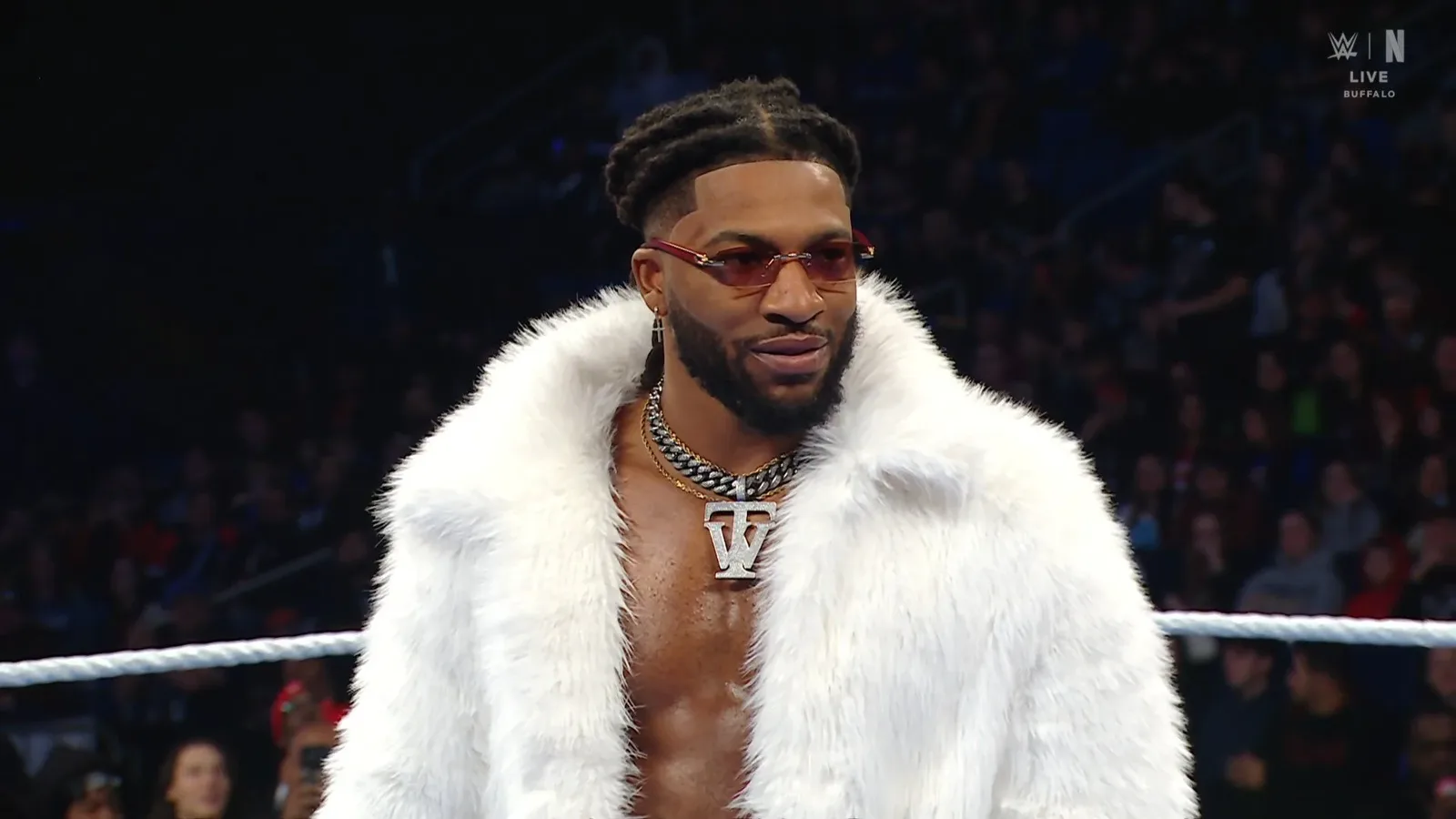
Trick Williams believes the responsibility of being a WWE star extends beyond winning championships and delivering memorable performances. As the current United States Champion continues to be positioned among the company’s most recognizable modern personalities, Williams has spoken about the value of serving as a positive example for younger viewers.
Williams discussed the subject during a recent interview when he was asked whether he takes pride in being a leader for younger generations, including Gen Z and Gen Alpha. The champion answered emphatically, connecting his present-day role to the impact that wrestling’s larger-than-life stars had on him while he was growing up.
“Yeah, I think. Absolutely. Because I remember how I felt being a young kid and watching. Like, how much all these things actually helped you develop into who you were. It was the culture icons, the people who you went to school the next day talking about. It made you walk a little bit up higher. Like, ‘Man, I want to–I’m the Rock. I’m Stone Cold Steve Austin.’ Just having that visualization of what greatness looks like to you kind of helps you as a young man, a young woman find a way through life alongside your family and everything like that. But, yeah, as an entertainer, it’s very important to represent yourself the right way.”
Williams understands the connection between wrestling and identity
The comments offer a clear look at how Williams views professional wrestling’s cultural reach. For generations, WWE has produced stars who have been much more than in-ring competitors to their audiences. Names such as The Rock and “Stone Cold” Steve Austin became reference points for fans, inspiring catchphrases, schoolyard debates, costumes, merchandise collections, and the kind of confidence that can follow a fan long after a television show ends.
For more background on this topic, read Trick Williams Credits Booker T, Shawn Michaels And Michael Hayes For Guiding His WWE Rise.
Williams specifically recalled the experience of watching wrestling as a young person and then talking about it the next day at school. That memory is central to his answer. Wrestling can create a shared language among viewers, particularly younger ones who see performers demonstrate confidence, resilience, charisma, athleticism, and ambition on a weekly basis.
For Williams, the most meaningful element is not simply imitation. His point is that seeing an image of excellence can give young people something tangible to aspire toward. A viewer may not become a professional wrestler, but the presentation of someone projecting belief in himself or herself can still have value in everyday life.
That idea fits naturally with Williams’ own rise in WWE. He has developed into a prominent champion with a presence built around confidence and crowd connection. His popularity has made him one of the performers frequently discussed as an important part of WWE’s future, but Williams’ remarks indicate that he is also considering what it means to occupy that position in the present.
A champion’s role is larger than the title
Holding the United States Championship carries immediate competitive prestige, yet it also places a wrestler in a visible position across WWE programming and promotional activity. With that visibility comes an opportunity to reach fans who may be seeing Williams for the first time, as well as those who have followed his journey and now view him as a champion.
Williams did not frame that responsibility as a burden. Instead, he described it as something important to handle correctly. His emphasis on representing himself “the right way” speaks to the balance expected of a modern WWE star: a performer must remain compelling, entertaining, and authentic while recognizing that younger viewers can take inspiration from the people they see on screen.
That is particularly relevant for a wrestler who has become associated with energy, self-assurance, and a strong connection to the audience. Those qualities can make a star stand out, but they can also make the message behind the performance more powerful. Williams appears aware that his conduct and public image can matter to fans who are still developing their own sense of confidence and direction.
His comments also avoid reducing leadership to a simple slogan. Williams pointed to the role of family and the wider process of finding one’s way through life. Wrestling, in that sense, can be one part of a young person’s world rather than a replacement for the people and institutions around them. The value he describes is in giving fans a visual example of greatness and possibility.
The lasting influence of wrestling icons
The Rock and Austin remain two of the clearest examples of WWE stars whose impact moved far beyond the ring. Their eras were defined by enormous audience reactions, distinctive personalities, and the ability to make fans feel like they were part of something major. Williams invoked both names as examples of the kind of figures children would identify with and discuss long after an episode of WWE programming had gone off the air.
That cycle has always been an important part of wrestling fandom. New generations discover established legends, while also finding current stars who feel like their own. The performers who become especially meaningful are often those who give fans a recognizable attitude or message to embrace. In Williams’ case, his comments show that he understands why the connection matters because he experienced it himself.
There is also an important distinction in the way he described those icons. He did not merely point to their fame. He spoke about the way their presence could make a young fan “walk a little bit up higher.” That image captures the emotional side of wrestling’s influence. A fan watching an athlete and entertainer who appears fearless can leave with a greater feeling of self-belief.
For WWE’s younger audience, that kind of representation remains significant. Today’s fans have access to wrestling content and commentary in more places than previous generations did, and they can engage with performers continuously rather than only during weekly television broadcasts. That makes the standards set by highly visible talent especially meaningful. Williams’ perspective is that the entertainer has a duty to be conscious of that influence.
Why Williams’ perspective resonates
Williams has become a popular figure in WWE at a time when the company continues to elevate a new wave of talent. In that environment, fans often look toward rising champions to identify the personalities who could define future eras. Praise that labels a wrestler as part of WWE’s future can be flattering, but it also comes with expectations.
Williams’ answer suggests he is not approaching those expectations only through the lens of match quality or title defenses. He is also thinking about how a performer can affect the people watching. His definition of leadership is rooted in visibility, example, and the ability to show younger fans what confidence and achievement can look like.
That does not require a wrestler to present an unrealistic version of life. Rather, Williams’ comments point toward the motivational power of seeing someone pursue excellence in a public setting. Wrestling is built on spectacle, but the most enduring stars often connect because audiences see qualities that they want to develop in themselves.
For a young viewer, that could mean responding to a champion’s confidence. For another, it may mean seeing someone who has worked into a major role and believing that personal goals are attainable. Williams’ view is that these images can help a young man or young woman navigate life alongside the support of family.
Looking ahead as United States Champion
As United States Champion, Williams is in a position to keep turning those ideals into action. The championship gives him a platform, and his popularity gives him a direct connection with an audience that includes the younger fans he referenced. Whether he is competing in high-profile matches, appearing before live crowds, or speaking about his career, the way he carries himself will remain part of that connection.
Williams also addressed his mentors in wrestling during the same interview, underscoring that his own development has been shaped by those who helped guide him. While he did not present leadership as something achieved alone, he made clear that he recognizes the chance to pass forward the kind of inspiration he received as a fan.
His message is ultimately straightforward: entertainers can matter to people, especially when those people are young and searching for examples of what greatness can be. Williams remembers what it felt like to look at wrestling’s biggest names and imagine himself in their position. Now, as a WWE champion, he understands that many fans may be looking at him in much the same way.

Darryl Polo
Darryl Polo is a passionate wrestling fan covering WWE, AEW, TNA and beyond. He loves great rivalries, breakout stars and the moments that keep fans talking long after the bell. How we work.