
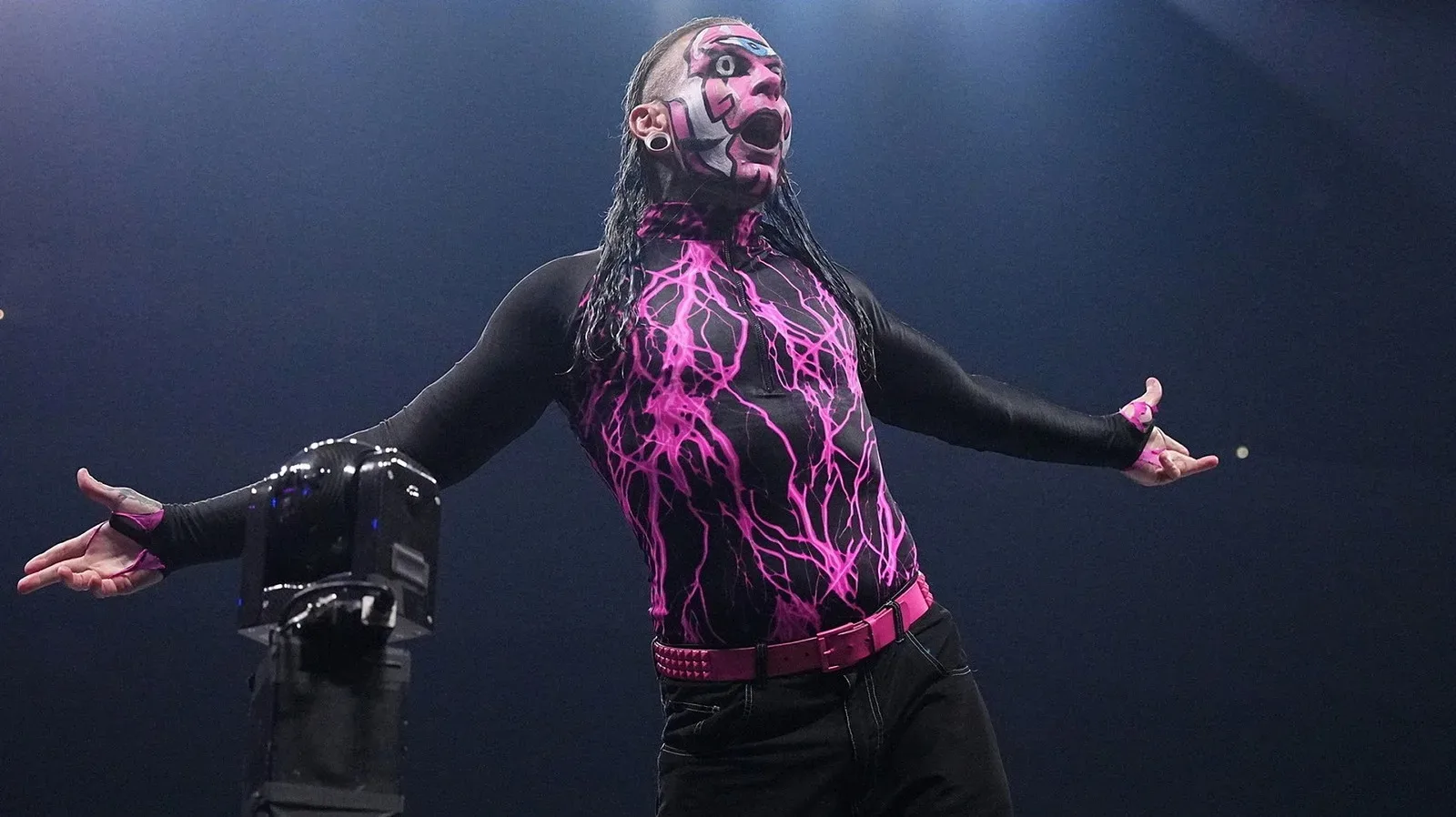
Jeff Hardy has issued a candid public apology for the driving-under-the-influence incidents that have shadowed portions of his professional wrestling career in both WWE and AEW.
Speaking on Insight with Chris Van Vliet, Hardy did not attempt to minimize the seriousness of his past decisions. The veteran performer, whose high-risk style and connection with fans made him one of the most recognizable stars of his generation, said he remains embarrassed and ashamed by the choices that led to his legal troubles.
“I just want to say this: I apologize. I’m so embarrassed of [that]. It’s such a stupid act; such a childish thing to do and I’m so ashamed,” Hardy said on Insight with Chris Van Vliet.
Hardy’s comments were centered on accountability rather than excuses. He acknowledged the emotional weight that can accompany serious mistakes, while explaining that he has tried to continue moving forward instead of allowing regret to consume him. Even so, the consequences of driving under the influence remain something he clearly carries with him.
For more background on this topic, read Trick Williams Embraces Responsibility of Representing WWE’s Younger Fans.
“I really screwed up my driving situation,” Hardy said.
For Hardy, stories involving automobile accidents can bring those feelings back to the surface. He said such reports make him think about the potential harm his own actions could have caused. That recognition is an important part of the apology: Hardy was not merely reflecting on how the incidents affected his career, but on the possibility that impaired driving could have harmed other people.
“I just want to say that in front of [everybody], I am very sorry for those times I went out there and drove under the influence,” Hardy said. “It was so childish and unprofessional.”
A Career Defined by Remarkable Highs and Difficult Setbacks
Hardy has spent decades as a major presence in wrestling. Alongside his brother Matt Hardy, he helped redefine tag team wrestling as one half of The Hardy Boyz, participating in matches that became defining memories for an era of fans. His willingness to take extraordinary physical risks, coupled with his distinctive presentation and unpredictable energy, made him a singular attraction.
His appeal also extended far beyond tag team competition. Hardy developed into a successful singles star, earning world championship recognition during his WWE career and building a fan base that remained intensely loyal through multiple professional stops. His entrances, face paint, daredevil offense and willingness to put his body on the line helped establish a bond with supporters who saw him as an unconventional, resilient figure.
That career history is what has made his substance-related issues especially painful for many fans to watch. Hardy has had opportunities interrupted by personal struggles, with those setbacks affecting his availability, his standing with major promotions and the momentum he had built in the ring. His latest remarks do not erase those consequences, but they reflect a willingness to confront them directly in public.
In professional wrestling, performers are often celebrated for toughness and their ability to work through pain. Yet Hardy’s comments underline a different reality: personal health, substance abuse and decision-making outside the ring can have consequences that no match result or championship can outweigh. His language was notably blunt, describing impaired driving as both immature and unprofessional.
Hardy Has Previously Discussed Substance Struggles
Hardy has spoken before about the circumstances surrounding his struggles during 2021 and 2022. In an interview last year, he recalled that his late father’s illness was among the factors that contributed to him falling back into old habits. Hardy said he began drinking heavily as he tried to cope with his father’s declining health.
That history provides context for the difficult period Hardy has described, though it does not change the central point of his new remarks. Hardy’s message on Insight with Chris Van Vliet was not framed as an attempt to shift responsibility elsewhere. Instead, he expressed remorse for his actions and recognized the danger associated with getting behind the wheel while under the influence.
There is an important distinction between providing context and offering justification. Hardy’s discussion of grief and addiction speaks to the personal circumstances he has faced, while his apology addresses his own responsibility for the decisions he made. Both parts of that conversation matter. Substance abuse can be deeply complicated, particularly when it intersects with loss and mental health, but driving under the influence presents a danger to the driver, passengers, pedestrians and others on the road.
Hardy appeared to understand that distinction in his comments. His focus on accidents and the possibility that he could have caused one emphasized that he is considering the broader stakes involved, not simply the professional fallout from arrests or suspensions.
The Professional Cost of Personal Decisions
Hardy’s career has included major runs in WWE and AEW, two promotions where his name and experience have carried significant value. In WWE, he had long been established as a proven star with a passionate following. His move to AEW reunited him with Matt Hardy in a prominent national setting, creating another opportunity for The Hardy Boyz’ legacy to be showcased in front of a new audience.
However, legal issues and substance-related struggles have repeatedly complicated those opportunities. Wrestling is a business built around reliability as much as talent. A performer can be immensely popular and still lose valuable momentum when they are unavailable for storylines, television appearances, live events or long-term plans. Hardy’s acknowledgment that his behavior was unprofessional recognizes that reality.
Still, the human dimension should not be lost beneath the career analysis. Hardy’s statement was not a promotional claim or a wrestling angle. It was an apology from someone reflecting on dangerous decisions, the shame he feels over them and the work involved in trying to continue ahead after serious failures.
For fans, the interview may be difficult because Hardy’s career has inspired so much investment. His supporters have watched him perform through punishing matches and return from setbacks that might have ended other careers. That history can create an instinct to root for another comeback. At the same time, accountability has to remain part of any discussion about impaired driving and recovery.
An Apology Centered on Accountability
Hardy’s most significant point was simple: he is sorry. He described the behavior in unequivocally negative terms and did not portray it as something glamorous, rebellious or inevitable. His words pushed against the mythology that can sometimes surround troubled wrestling stars, particularly performers whose personas have long been associated with risk-taking and defiance.
There is a sharp difference between taking a spectacular leap inside a wrestling ring and making a reckless decision on a public road. One is a calculated element of a performance, undertaken within a professional environment. The other can put innocent people in danger. Hardy’s comments showed that he recognizes that difference and regrets the times he failed to act responsibly.
His remarks also serve as a reminder that remorse is not the same as resolution. An apology is meaningful when it is accompanied by continued accountability and healthier choices over time. Hardy did not make sweeping promises during the comments discussed here. Instead, he spoke honestly about regret, the sadness that returns when he hears about car accidents and the need to keep moving forward despite the guilt he feels.
That restraint gives the message a degree of gravity. Rather than trying to package his past as a neatly completed chapter, Hardy acknowledged that its emotional impact remains present. The shame, he indicated, can still arrive in waves.
Jeff Hardy’s legacy in wrestling is substantial, built on creativity, athletic courage and a rare ability to connect with audiences. It is also a legacy that includes serious personal mistakes. His appearance on Insight with Chris Van Vliet placed the latter subject at the forefront, with Hardy offering an unmistakable apology to those affected by his choices and admitting that driving under the influence was dangerous, childish and unprofessional.
For a performer whose career has been marked by dramatic rises, painful interruptions and repeated attempts to move forward, the message was a sober one: he is ashamed of what he did, he understands how much worse the consequences could have been, and he remains sorry for the times he chose to drive while impaired.
In pictures

Darryl Polo
Darryl Polo is a passionate wrestling fan covering WWE, AEW, TNA and beyond. He loves great rivalries, breakout stars and the moments that keep fans talking long after the bell. How we work.