
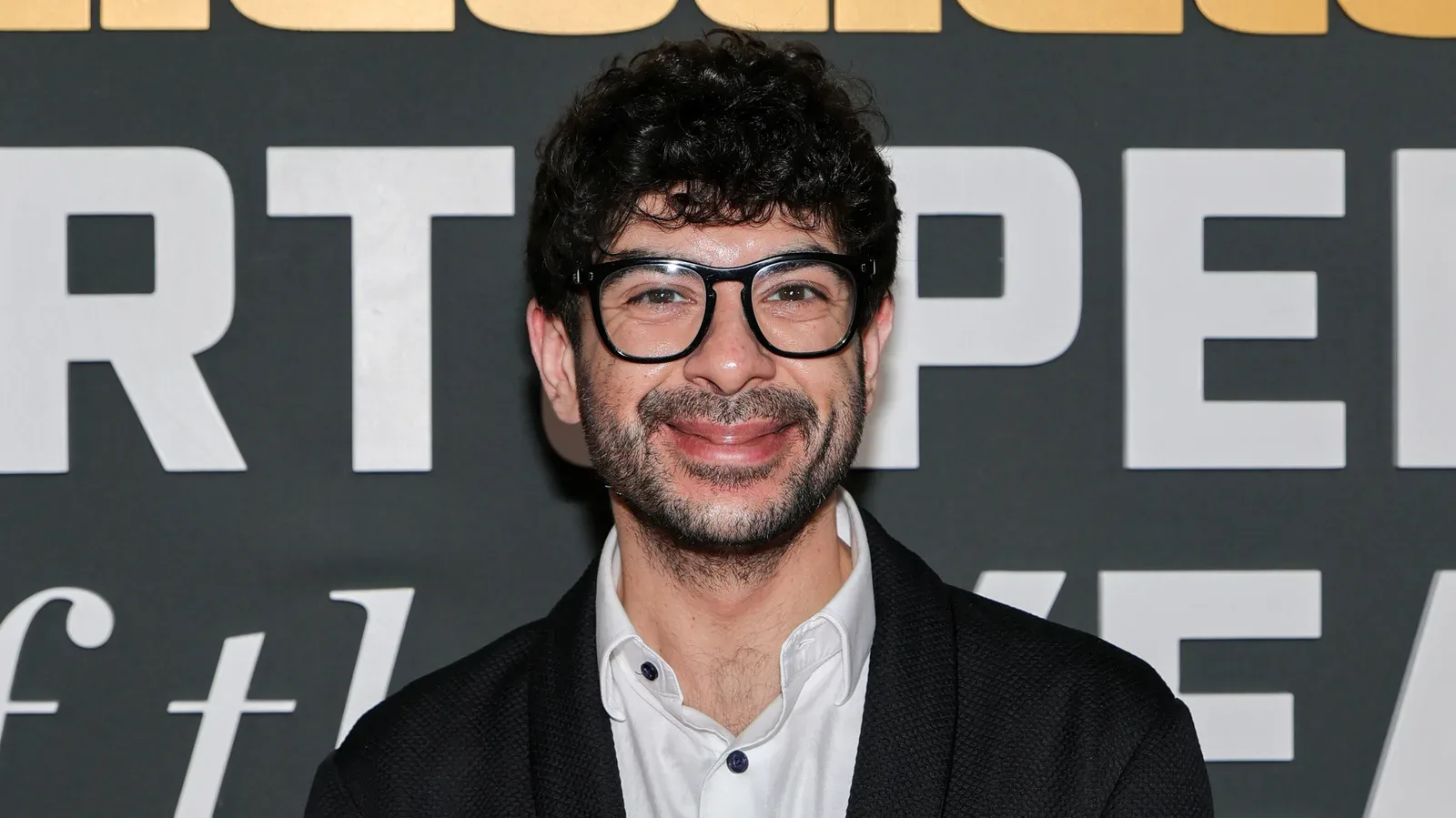
AEW is entering another Continental Classic season, but Tony Khan is already looking beyond the annual round-robin competition when it comes to the company’s tournament future.
Speaking after AEW Full Gear 2026, Khan addressed the possibility of introducing more tournaments built around some of the ideas that have helped make the Continental Classic, commonly called the C2, one of AEW’s defining yearly attractions. He did not announce a women’s Continental Classic, a tag team equivalent, or any other specific event. However, he made clear that AEW sees room to build additional tournaments without simply duplicating the C2 name and structure.
“I do think there are potential for other tournaments, too,” Khan said. “They don't necessarily have to have the same branding as the C2, but there's a potential for a lot of great tournaments we can do. I think the C2 has been hugely, hugely successful and it's a round robin format... There are some things about it that are unique to its identity that I think are very strong.”
The comments arrive as AEW prepares to launch the latest Continental Classic. A selection show is scheduled for Monday night, with tournament action beginning Wednesday on AEW Dynamite. As has become customary for the competition, attention will turn to the participants, the league-style standings and the race to emerge from the round-robin stage.
For more background on this topic, read Cole Karter Reportedly Fired By AEW After ROH Taping Absence.
The Continental Classic’s rules remain its defining feature
While the prospect of more tournaments naturally invites discussion about new divisions and formats, Khan emphasized that the C2 is more than a collection of high-profile matches. Its identity is protected by rules that deliberately separate it from the rest of weekly wrestling television.
The most important of those rules is the prohibition on outside interference. Everyone is barred from ringside during Continental Classic matches. Khan described the policy as the tournament’s most protected rule and said it often catches people off guard when they first hear how absolute it is supposed to be.
“It would be the end of that person,” Khan said when discussing what would happen if someone attempted to interfere. “Nobody will ever do it. There will never be outside interference in it, and I think that's part of what makes it so unique because I can't think of another circumstance that's been tested this many times.”
That stance is particularly notable because tournament wrestling regularly creates opportunities for outside involvement, whether through allies attempting to change a result, rivals looking to eliminate a contender, or larger storylines spilling into an important match. The Continental Classic removes that possibility on paper and, in Khan’s view, has proven that commitment in practice.
Across nearly 100 C2 matches held over three tournaments, no one has violated the no-interference rule. Khan pointed to that track record as evidence that the stipulation is not simply a temporary guideline. It is a foundational part of the event’s presentation.
The result is a competition designed to put the wrestlers and their performances at the center. Wins and losses have a clearer finality when there is no manager, partner, stablemate or opponent at ringside who can directly alter the outcome. For AEW, that has helped establish the Continental Classic as a distinct environment within its larger programming calendar.
Could AEW expand the concept without copying it?
Fans have frequently raised the possibility of a women’s tournament modeled after the Continental Classic. There has also been growing interest in a tag team-based competition, especially as AEW and Khan have continued to expand the company’s tag team division. Khan did not confirm either concept at the Full Gear media conference, but his comments give those discussions added relevance.
A future women’s competition would provide a structured setting for AEW’s women’s division, with the round-robin format giving competitors multiple meaningful matches rather than a single-elimination route in which one loss ends a wrestler’s tournament immediately. A tag team tournament could likewise showcase the depth, chemistry and strategic variety of AEW’s teams across several weeks of television.
Still, Khan’s wording suggested that any new event would not necessarily be presented as another Continental Classic. The branding matters because the C2 has developed its own traits: a round-robin league, a carefully tracked points system, a specific seasonal place on the calendar and the strict ringside ban. Reusing every element for every division could risk making the original feel less special.
Instead, AEW could apply selected elements of the C2 model to new competitions while allowing each tournament to establish a separate identity. Khan specifically said that rules and scoring approaches could be used in other formats without placing those events under the Continental Classic banner.
That leaves a wide range of possibilities. An additional tournament could use a round-robin setup but a different theme. It could feature the same emphasis on decisive in-ring competition while using another scoring system. It could involve singles wrestlers, women’s wrestlers, tag teams or another group entirely. At present, those are possibilities rather than announced plans, and Khan was careful not to present them as imminent.
The value of the three-point system
Khan also highlighted another key aspect of the Continental Classic: its scoring. The tournament awards three points for a win rather than two, a detail he said is among the things he loves about the event.
That system gives every match a straightforward competitive stake. Wrestlers are not only trying to avoid elimination; they are trying to build a points total strong enough to survive their entire league schedule. The standings create an additional layer of tension, particularly late in the round-robin stage, when a win, loss or draw can shape who advances.
Three points for a victory also places increased emphasis on winning rather than merely avoiding defeat. Within the C2, the table is part of the story. Fans can follow momentum from week to week, see which competitors are gaining ground and understand exactly why a particular result matters in the race to advance.
If AEW eventually carries the approach into another tournament, the scoring structure could be one of the most useful tools to retain. It gives television matches a built-in reason to matter, while the format can make a broader field of competitors feel involved over a sustained stretch of programming.
At the same time, the scoring itself is not the entire formula. The Continental Classic has benefited from the way its points system works alongside the no-interference standard. The standings gain credibility when matches are presented as contests that must be settled by the participants in the ring.
C2 season begins again
For now, AEW’s focus is on the tournament directly ahead. The Continental Classic selection show will reveal the field and set the stage for Wednesday’s opening matches on AEW Dynamite. The next several weeks will again center on league standings, major singles bouts and the pressure of accumulating points.
Khan’s remarks indicate that AEW views the C2 as a success worth studying, not merely repeating. The company is open to developing more tournament programming, but it also recognizes that the Continental Classic’s strength comes from the specific rules that distinguish it.
There is no official announcement of a women’s round robin, a tag team league or another new tournament. Those ideas remain speculative. What Khan did confirm is AEW’s interest in the broader potential of tournament wrestling and its willingness to consider formats that borrow from the C2’s competitive philosophy without turning every event into the same thing.
As the 2026 Continental Classic gets underway, the immediate test will once again be the one Khan considers most important: whether AEW can maintain the tournament’s protected conditions and let every match stand on its own. Nearly 100 C2 bouts have done so without outside interference. Preserving that standard remains central to what makes the tournament different—and could shape how AEW approaches whatever comes next.
In pictures

Darryl Polo
Darryl Polo is a passionate wrestling fan covering WWE, AEW, TNA and beyond. He loves great rivalries, breakout stars and the moments that keep fans talking long after the bell. How we work.