
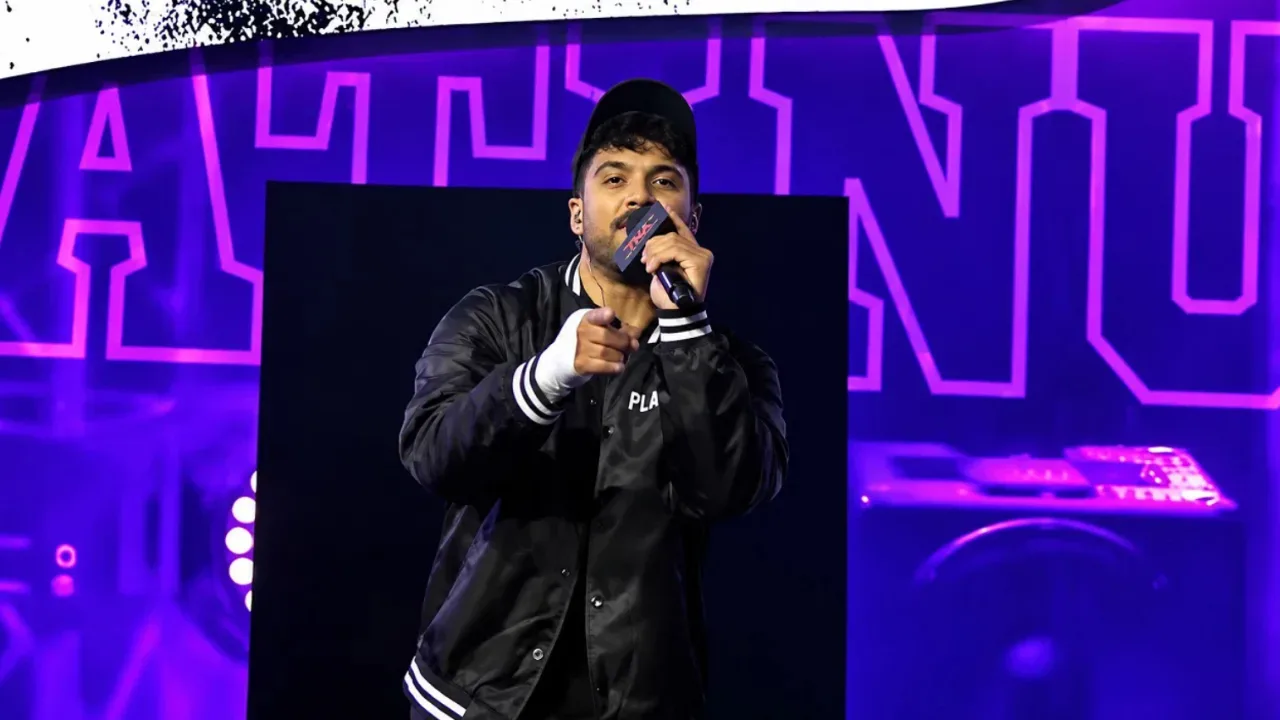
Questions surrounding Max Caster’s appearance at TNA Bound For Glory have reportedly extended beyond the performer himself, with some members of the roster believing TNA should share responsibility for the situation.
The issue centers on Caster’s rap at the event and whether the promotion should have required him to disclose its contents in advance. Talent who discussed the matter reportedly felt that TNA had an opportunity to review what Caster intended to say before he went out, particularly given the unscripted or performance-driven nature that can come with a rap segment. Their view was that the company’s process, rather than Caster alone, should be part of the conversation.
The details of the specific material at issue were not included in the information available. That remains important context: there is no basis to characterize the full rap, its intended target, or the precise chain of events that led to the reaction. What has emerged, however, is a clear internal question about preparation, approval, and who is responsible when live-event content creates controversy.
View the referenced post on X
Why the approval question matters
Professional wrestling is a live performance environment, but it is not generally an environment without structure. Promos, entrances, matches, music cues, timing, production beats, sponsor concerns, broadcast standards, and creative direction all require coordination. The degree of scripting varies greatly from talent to talent and segment to segment, yet promotions still need to know enough about on-screen content to protect their performers, their partners, and the overall presentation of a show.
For more background on this topic, read Avery Styles Praises Rich Swann as TNA Bond Continues to Grow.
That is why the reaction attributed to TNA talent is notable. The concern is not simply that a performer was given a microphone or a platform. It is that a rap is, by design, built around specific lyrics. Unlike an off-the-cuff answer during an interview, the central material can be discussed ahead of time, reviewed, adjusted, or removed if necessary.
If a company does not ask for that information, it can leave itself exposed to surprises. If it does ask but does not act on concerns, that creates a different issue. The currently available information does not establish which, if either, of those scenarios occurred. It only indicates that some talent believe TNA did not have Caster go through the rap beforehand and should take some accountability for that.
That distinction matters because it avoids placing unsupported conclusions on any individual involved. A lack of advance review would raise process questions. It would not, on its own, confirm what anyone knew, approved, intended, or expected. Likewise, the existence of criticism from talent does not establish a unanimous locker-room view.
Reported mood after Bound For Glory
Despite the concern expressed by some talent about TNA’s role, the immediate atmosphere following the event was reportedly not outwardly chaotic. Everything was said to have seemed fine on the bus traveling from the venue back to the talent hotel.
That detail does not erase the later debate, but it does suggest that there was not an obvious public confrontation among those traveling after the show. In wrestling, reactions to a segment can develop over time. What may appear settled in the immediate aftermath can become a larger subject once talent have had time to reflect, clips circulate, or conversations take place away from the venue.
It is also possible for people to have different views without creating a visible scene. One person may see a performance as an individual error; another may see it as a creative-management issue. Others may not view it as a major problem at all. The reported lack of visible tension on the return trip should therefore be read as a snapshot of the post-event environment, not a definitive verdict on how everyone involved felt.
Caster has addressed the matter
Caster has released a video statement concerning the Bound For Glory situation. The contents of that statement were not provided in the information surrounding the latest backstage reaction, so it would be inappropriate to assign him a particular explanation, apology, defense, or account of events here.
Still, the fact that Caster chose to speak publicly means the matter has moved beyond an isolated live-event moment. Public statements often become a key part of how wrestling controversies are interpreted, especially when fans and industry figures are trying to establish whether an incident was planned, improvised, misunderstood, or handled in a manner that satisfied those involved.
For now, Caster’s video exists as his direct response, while the reported internal feedback has focused on the company’s planning. Those are not mutually exclusive points. A performer can be scrutinized for what is said on a microphone, while a promotion can simultaneously be scrutinized for the safeguards it had—or did not have—in place before the microphone was handed over.
Live creative comes with shared responsibility
The larger issue raised by this situation is a familiar one across wrestling: how much freedom should a promotion give talent in the moment, and where should it draw a line?
Creative freedom has long been a valuable part of the business. Many of wrestling’s strongest promos have felt spontaneous because performers were trusted to speak in their own voice. A heavily scripted approach can make a segment feel rigid if it does not suit the talent delivering it. At the same time, freedom works best when there is a shared understanding of boundaries, planned talking points, and content that could create complications for the promotion or other people.
Raps can present a particularly clear example of that balance. They may be performed with energy and personality, but they are also typically prepared material. That gives producers and management an opportunity to know the broad themes, potential references, and major lines before the segment occurs. Review does not necessarily mean stripping away the performer’s voice. It can simply mean making sure everyone understands what is going to be presented on a TNA stage.
Some of the reported internal reaction appears to be rooted in that practical reality. If TNA had not asked Caster to run through the rap, the concern is that the promotion failed to use an obvious opportunity to prevent a problem. This is less an argument against performers taking creative swings and more an argument for clear communication before those swings are taken in a public setting.
What remains unknown
There are significant unanswered questions. It is not known from the available information whether Caster was given any specific instructions ahead of Bound For Glory, whether a producer was assigned to his appearance, whether anyone in management heard parts of the rap in advance, or whether TNA has addressed the matter internally.
There is also no stated disciplinary action, policy change, or formal company response included in the information presently available. Without those details, claims that the situation has led to punishment, creative changes, or broader locker-room fallout would be speculation.
What can be said is that the discussion has placed the focus on TNA’s oversight. Some talent reportedly believe the promotion should not be able to distance itself entirely from a performance that took place under its banner. That perspective is rooted in the idea that live content is a shared product: a wrestler delivers it, but the company presents it, produces it, and ultimately assumes responsibility for what reaches the audience.
The next step for TNA and Caster
The immediate question is whether either side provides further clarity. Caster has already issued a video statement, while TNA has not had a company response detailed in the available reporting. More information could explain whether the issue was tied to an absence of communication, a disagreement about creative boundaries, or something else entirely.
Until then, the most concrete takeaway is not a definitive judgment on Caster or TNA. It is that some talent feel the promotion’s pre-show process deserves examination. The reported calm following the event does not eliminate that criticism, and Caster’s public response does not automatically resolve the company-side concerns.
Bound For Glory is one of TNA’s most prominent events, which makes every appearance and every creative choice subject to heightened attention. In that setting, the argument from within the talent ranks is straightforward: if a rap is going to be part of the show, TNA should know what is in it before it happens. Whether the company agrees with that assessment, and whether it changes anything going forward, remains to be seen.

Darryl Polo
Darryl Polo is a passionate wrestling fan covering WWE, AEW, TNA and beyond. He loves great rivalries, breakout stars and the moments that keep fans talking long after the bell. How we work.