
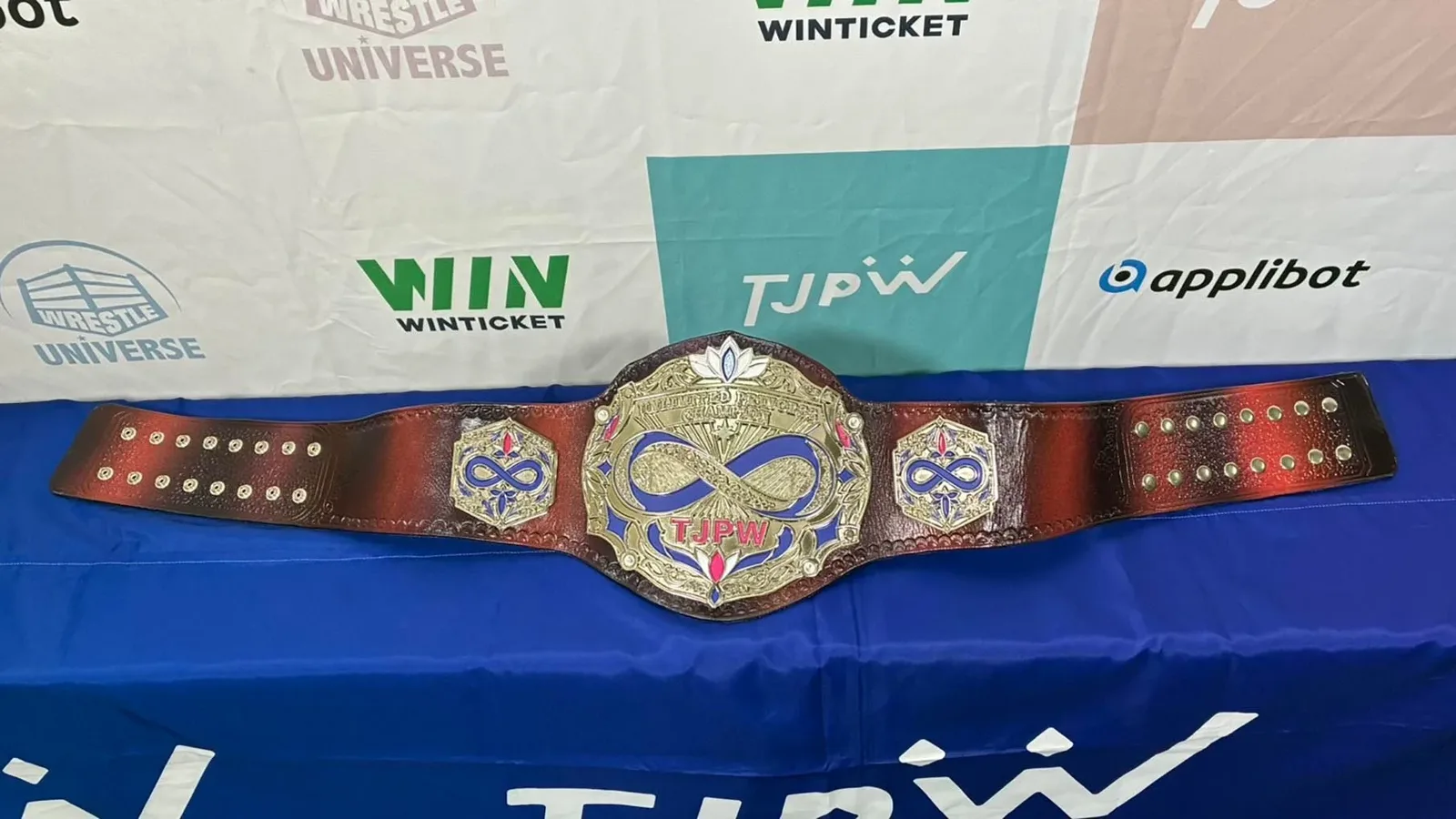
Tokyo Joshi Pro-Wrestling has outlined the tentative conditions for its newly introduced Unlimited Princess Championship, a title designed to operate very differently from a conventional wrestling belt. The championship will be rooted in social media activity, with wrestlers able to challenge for and defend the title at any time provided that a referee is present and the proper approval process has been completed.
The first Unlimited Princess Champion will be decided in a Battle Royal at TJPW’s Korakuen Hall event on December 26. While the inaugural match establishes the division’s first titleholder, the rules announced for future defenses make clear that the championship is intended to extend beyond the usual structure of scheduled cards and standard in-ring encounters.
Under the proposed system, an athlete who wishes to challenge for the championship or initiate a title defense must make an announcement on social media within 24 hours of the planned match. That announcement also needs to state the desired rules for the contest. The match becomes official when the tournament office posts its approval on social media.
This process gives the tournament office a formal role in validating every Unlimited Princess title encounter. A wrestler cannot simply declare a match on their own and treat it as sanctioned. The approval post is the key requirement that turns a proposed challenge or defense into a recognized championship match.
For more background on this topic, read Vinny Pacifico Says He Has Missed Wrestling in Europe as He Eyes a Return.
Approval on social media is central to a valid match
The announced conditions establish a notably narrow window between the public proposal and official authorization. TJPW stated that the interval between the announcement and the tournament office’s approval can be valid even if the approval arrives just one second before the match begins.
That detail is significant because it keeps the title’s concept flexible without removing the promotion’s oversight. A wrestler could announce a proposed match shortly before it happens, receive approval almost immediately before the action starts, and still have a legitimate title bout. At the same time, the title cannot be defended or challenged without the required advance notice and official acknowledgment.
TJPW has specifically ruled out ambush challenges. A surprise attack or unannounced attempt to take the championship will not be recognized as valid under the tentative rules. That limitation separates the Unlimited Princess Championship from a purely spontaneous 24/7-style format, even though the belt can potentially be contested at a broad range of times.
The distinction is important: availability does not mean that anything goes without process. The title may be defended at any time, but only after the participant has publicly declared their intention and obtained approval. In other words, the championship’s unusual freedom is paired with an explicit administrative framework.
Matches do not need traditional wrestling rules
Another defining feature of the Unlimited Princess Championship is that its matches are not required to follow standard professional wrestling rules. The wrestler making the announcement can present the proposed rules for the title match, and the contest will be valid if those rules are approved by the tournament office.
That creates a wide range of possible match formats while avoiding a fixed list of permitted stipulations. Rather than requiring every defense to take place as a standard singles match inside a ring, the title framework allows the participants to propose their own conditions. The deciding factor is not whether the match resembles a conventional bout, but whether the rules have been publicly presented and then authorized.
TJPW has not announced a complete catalogue of match types, restrictions, or locations for the championship. The conditions instead establish the general principle that approved rules can depart from ordinary pro wrestling conventions. As a result, the eventual identity of the Unlimited Princess Championship will be shaped not only by its champion and challengers, but also by the types of contests that receive approval.
The announced structure also means that each proposed defense may carry its own distinct character. One title match could be conducted under familiar wrestling rules, while another could be built around a different approved format. For fans following the belt, the social media announcement is therefore expected to serve two purposes: it reveals that a title match is being proposed and explains the rules that will govern it.
Every defense must be shown on social media
Broadcasting is another non-negotiable part of the championship’s design. TJPW stated that every title defense must be broadcast on social media. This requirement applies regardless of where the match takes place or what rules it uses.
The promotion further clarified that even a standard-style match held in a wrestling ring must be shown in full on social media. A bout does not satisfy the title’s conditions merely because it takes place in a traditional ring setting with a referee. The entire match still has to be broadcast through social media for it to count as an Unlimited Princess Championship defense.
That rule places online visibility at the center of the belt rather than treating it as a promotional extra. The championship is not simply a title that may occasionally be discussed online; its announcements, approvals, and match broadcasts are all built around social media. Each stage of the process is intended to be public in a way that differs from a title defended only on scheduled events.
Requiring a full broadcast also provides a clear record of the contest. Since matches can potentially use nonstandard rules and take place outside a regular event setting, the social media presentation gives viewers a way to follow what happened once the bout has been approved. It also ensures that a title change or successful defense is not left as an off-screen development.
The Battle Royal at Korakuen Hall begins the title’s history
Before any of those flexible defenses can happen, TJPW needs its first champion. That will be determined through the Battle Royal at Korakuen Hall on December 26. The match will mark the official starting point for a championship that has already been positioned as one of the promotion’s most unconventional concepts.
A Battle Royal is a fitting way to establish a title built around broad opportunity. The eventual winner will leave Korakuen Hall as the first wrestler responsible for carrying a belt that can be challenged outside the limits of a normal event schedule. From that point forward, the champion’s decisions about announcements, match rules, and approved defenses will help define the practical meaning of the Unlimited Princess name.
The inaugural champion will also become the first wrestler required to navigate the title’s social media procedures. Any defense will need a public announcement, a stated ruleset, tournament office approval, a referee, and a complete social media broadcast. Those elements will be necessary whether the defense resembles a typical pro wrestling match or takes a different approved form.
For challengers, the same structure offers a route to seek a match that is unusually direct but not entirely unrestricted. They can put forward an announcement and proposed rules, but the tournament office still must authorize the contest. The prohibition on ambush challenges means that contenders will need to make their intentions known rather than attempting to seize an unscheduled opportunity without notice.
A title built around flexibility with public accountability
The tentative conditions reveal a championship that combines freedom of format with a highly visible validation process. TJPW is allowing approved matches that do not have to follow standard rules, but it is also requiring that the rules be announced publicly. The promotion is allowing title bouts at any time, but it is requiring social media approval. It is encouraging the possibility of matches beyond a traditional card, but it is requiring that the entire defense be broadcast online.
Those requirements should make the title easy to track despite its potentially unpredictable nature. A fan watching the championship’s activity will know to look for the initial announcement, the proposed match rules, the tournament office’s approval, and the full social media broadcast. The belt’s system is unusual, but the announced conditions give it a recognizable sequence for every valid challenge and defense.
There is also clear room for the format to develop after the first champion is crowned. The rules have been described as tentative, meaning the December 26 Battle Royal and the early defenses may provide the first indication of how TJPW intends to apply them in practice. What has been established so far is the core standard: no ambush title matches, no valid match without approval, and no completed defense without a social media broadcast.
The Unlimited Princess Championship will begin its history at Korakuen Hall on December 26, but its concept is designed to reach well beyond a single venue or a conventional event card. Once the Battle Royal produces a champion, the title’s first defenses will test a format in which the announcement, authorization, rules, referee, and broadcast are all essential parts of the match itself.

Darryl Polo
Darryl Polo is a passionate wrestling fan covering WWE, AEW, TNA and beyond. He loves great rivalries, breakout stars and the moments that keep fans talking long after the bell. How we work.