
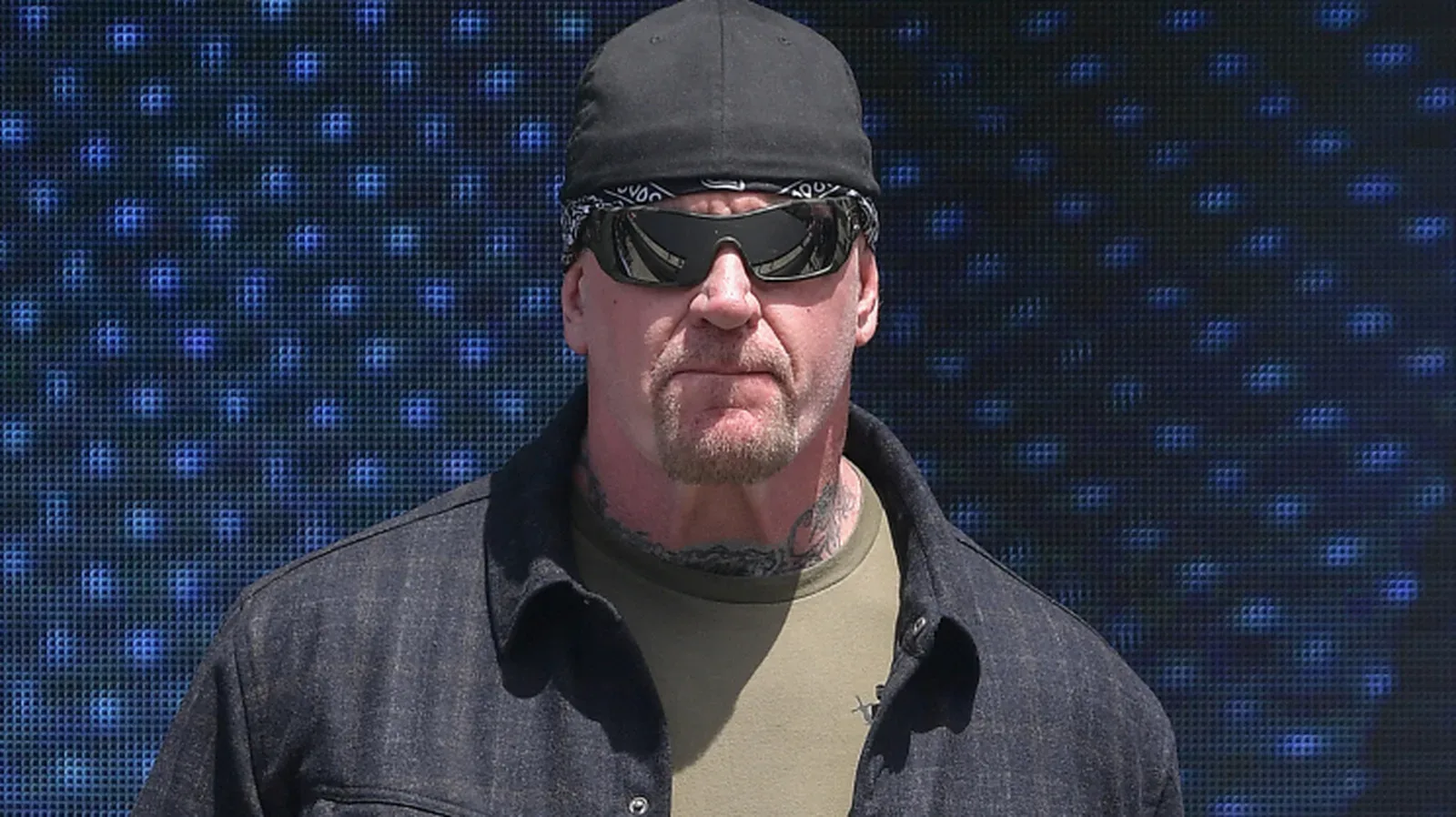
For generations of professional wrestlers, “paying dues” has been one of the business’s most repeated phrases. It can refer to difficult travel, low pay, long waits for an opportunity, physically punishing schedules and the persistence required to remain in the profession when no immediate reward is guaranteed. WWE Hall of Famer The Undertaker, Mark Calaway, recently explained why that period of hardship remains meaningful to him, even as he recognizes that the modern wrestling landscape has changed substantially.
Speaking with Sean “X-Pac” Waltman on Six Feet Under with The Undertaker, Calaway revisited the earliest stages of their respective careers. The conversation centered on the economic reality of trying to break into wrestling at the time, when money was scarce and travel itself could become a significant obstacle for performers attempting to keep their careers moving forward.
Calaway recalled that sleeping in an airport before a flight could simply be part of the process. It was not presented as a glamorous memory, nor as an argument that younger wrestlers should have to face the same circumstances. Rather, it was an example of the uncertainty that came with chasing a place in the industry before either man had reached the level of security associated with their later success.
“Paying those kinda dues were so important and never forgetting that you’re always one day away from [not] at all coming back,” Calaway said on Six Feet Under with The Undertaker.
For more background on this topic, read D-Von Dudley Says He Calls Xelina Every Year on the Anniversary of 9/11.
The Undertaker’s point was rooted in the volatility of wrestling careers. A performer can be talented, dedicated and willing to work, but opportunities are not always immediate or permanent. In earlier eras especially, wrestlers often dealt with a patchwork of bookings, substantial travel costs and the pressure of making every appearance count. For Calaway, living through that uncertainty created a perspective that remained with him even after he became one of WWE’s most enduring and recognizable figures.
His reflection also speaks to why the phrase “paying dues” continues to carry weight among veteran wrestlers. It is not solely about financial struggle or uncomfortable travel arrangements. In its broadest sense, the concept involves learning how to endure disappointment, understanding the value of an opportunity and developing a professional mindset before reaching a larger stage.
A Changing Industry, And A Complicated Lesson
Calaway did not suggest that the business was necessarily better when wrestlers had fewer resources. He described the issue as a double-edged sword, a characterization Waltman agreed with. There is an obvious positive side to the changes in the industry: performers today can have greater access to training, visibility, communication tools and professional opportunities than many wrestlers from previous generations did.
At the same time, Calaway believes that something can be learned from the adversity that came with the old system. He said, “I think there’s a part of the grit that’s missing from some of these guys because they don’t have to do that.”
That observation does not erase the benefits of improved conditions. A wrestler should not have to sleep in an airport, struggle to afford basic travel or face needless instability to prove a commitment to the profession. Waltman, who experienced those conditions himself, made clear that he is grateful current wrestlers do not have to endure everything that he and Calaway did.
Still, both men acknowledged the formative impact of those experiences. Difficult periods can shape how a performer handles pressure, reacts to setbacks and values the moments when an opening finally arrives. The point is not that suffering automatically makes someone a better wrestler. Instead, Calaway and Waltman were discussing how their own challenging paths helped shape their approach to the business.
In WWE, the contrast between eras is especially visible. Today’s performers can develop through more structured training environments and gain exposure in ways that were not available to independent wrestlers decades ago. Social media, extensive video libraries and broader access to wrestling from around the world have changed the way talent learns and builds an audience. There are more routes to being noticed, even if reaching the top level remains extraordinarily difficult.
Yet the emotional realities of the job have not disappeared. Wrestlers still face competition for television time, the possibility of creative changes and the pressure to distinguish themselves in a crowded field. The details may differ from the airport stories Calaway recalled, but the need for resilience remains central to the profession.
Sean Waltman’s Long Road To A Breakthrough
Waltman brought his own career-defining perspective to the discussion. Before he became widely known as The 1-2-3 Kid and later as X-Pac, he spent years working toward the kind of breakthrough that can transform a wrestler’s career overnight. His most famous early WWE moment came in 1993, when he defeated Razor Ramon, played by Scott Hall.
That victory established The 1-2-3 Kid as a major underdog character and remains one of the most memorable upset wins in WWE history. It was a defining introduction for Waltman to a much larger audience, but he emphasized just how much time and work came before that moment.
“The second-most important moment in my career is so far – there’s such a gap between that [moment] and The 1-2-3 Kid. It’s not even funny,” Waltman said on Six Feet Under with The Undertaker.
Waltman’s comment underlined the scale of the gap between his breakthrough as The 1-2-3 Kid and the next most significant point in his career. It also reinforced the idea that success is rarely as sudden as it may appear to viewers. A wrestler may have one televised match, one surprise win or one highly shared clip that changes public perception, but that visible moment is often preceded by years of work that audiences never see.
For Waltman, the time before his Razor Ramon victory was part of the dues-paying process. The eventual success did not erase the difficulty of the journey, but it gave the earlier struggles a place in the larger story of his career. His later work as X-Pac made him an even more prominent figure in wrestling, yet the 1993 upset remains a cornerstone of his legacy.
The Undertaker’s own career offers a different version of the same lesson. Calaway would go on to become an institution in WWE, maintaining the Undertaker character across multiple generations and building a legacy defined by longevity, reinvention and major-event performances. But his comments showed that he has not forgotten the period before that security existed.
Why The Conversation Resonates
The exchange between Calaway and Waltman was not merely nostalgia for a harsher era. It was a discussion about perspective. Both men reached enormous heights in wrestling, but neither framed his success as inevitable. Their memories of poor pay, difficult travel and uncertainty were reminders that careers can change quickly and that a major opportunity can be far away until it suddenly arrives.
That perspective remains relevant for wrestlers at every stage. Young performers may have better tools and more visible pathways than previous generations, but they still need patience, discipline and the ability to keep improving when the biggest chance has not yet come. Veteran talent, meanwhile, can recognize that newer wrestlers face a different set of pressures without dismissing the value of their own experiences.
Calaway’s “double-edged sword” description is important because it allows room for both truths. Wrestling should evolve in ways that make life better and safer for performers. Greater access to training and opportunities is a positive development. But the mental toughness developed through struggle, sacrifice and perseverance can also be invaluable, provided the industry does not romanticize unnecessary hardship.
For The Undertaker and Waltman, their discussion returned to a simple reality: the road to a defining moment is often much longer than fans realize. The airport nights and low-paying early days were not the destination, but they were part of the journey that prepared both men for the moments that followed.
Calaway’s comments serve as a reminder that the wrestling business continues to demand adaptability. The conditions may change, the platforms may change and the routes to recognition may change, but the importance of determination remains. For performers who have not yet found their breakthrough, Waltman’s 1993 win over Razor Ramon stands as a lasting example of how quickly a career can be transformed after years spent waiting, working and paying dues.
In pictures

Darryl Polo
Darryl Polo is a passionate wrestling fan covering WWE, AEW, TNA and beyond. He loves great rivalries, breakout stars and the moments that keep fans talking long after the bell. How we work.