
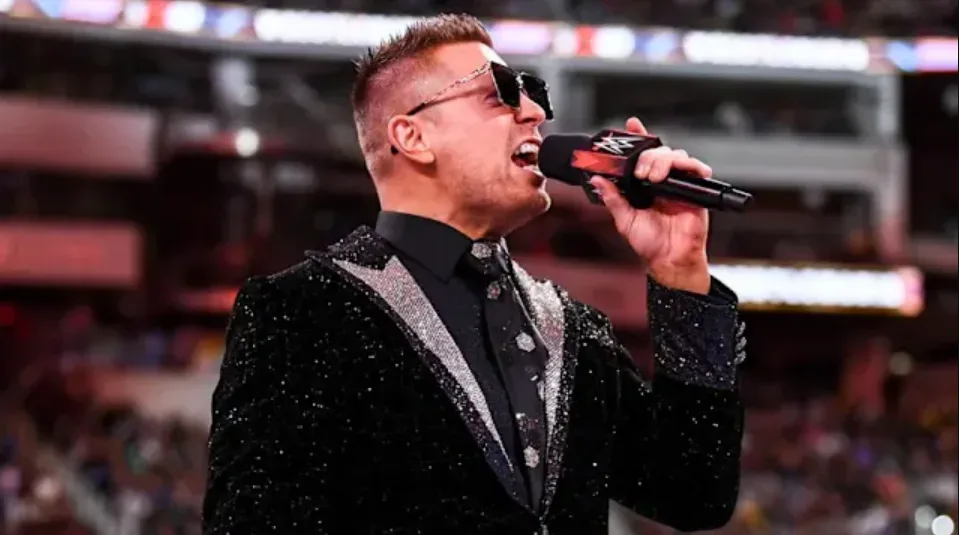
The Miz has spent more than two decades building a WWE career defined by persistence, adaptability and an unwavering belief in his own potential. Yet before he became one of the company’s most decorated performers, he saw WWE superstardom as something meant for somebody else.
Speaking in a new interview with Q104.3 New York, Miz reflected on the gap between being a wrestling fan as a kid and believing he could actually become part of the industry. He explained that the larger-than-life physical presence of WWE’s biggest stars made the dream seem unrealistic during his childhood.
“Well, as a kid, I never thought I could be a WWE superstar,” Miz said. “Like, the guys back then, Hulk Hogan, 6’7”, you know… pythons, he had huge muscles and I didn’t have that. I wasn’t big by any means. So there was, that was out of the question. I wanted to be a baseball player, basketball player, football player. Like that was the dream, right?”
That perspective is particularly notable considering the path Miz eventually carved out in WWE. After first becoming known through his appearance on The Real World, he entered WWE in the mid-2000s and faced skepticism from fans and peers who associated him with reality television rather than professional wrestling. Over time, he developed into a reliable featured performer and became a two-time Grand Slam Champion in WWE.
For more background on this topic, read Seth Rollins and Becky Lynch Attend Bears’ Monday Night Football Win in Seattle.
His journey is a reminder that a wrestler’s earliest image is not always the one that defines their career. Miz did not begin with the physical profile he associated with the industry’s iconic stars, nor did he enter WWE through the conventional path fans may have expected. What he did have was a deep interest in the full presentation of wrestling: the performance, the physical competition, the stories and the personalities.
From Fan to Aspirant
For Miz, sports were initially a more practical ambition. He said he competed in several sports while growing up and had confidence in what he brought to those teams. Still, he also acknowledged the difference between being capable and reaching the rare level needed to become a professional athlete.
“I was average. My dad would say I was average. I would say I was really good,” Miz said. “I was the captain of my baseball team, captain of my cross country team. I mean, I was very good at all sports, but I wasn’t exceptional. Like it takes the top, like 0.1% to become a professional in anything, correct?”
The answer illustrates the self-awareness that has often been part of Miz’s public persona. He did not portray himself as someone who immediately stood apart from every other athlete around him. Instead, he described a young person who loved sports, competed seriously and understood how difficult it was to reach the next level.
Professional wrestling, in his view at the time, presented an even more intimidating target. He had been a major fan, but fandom alone did not make the possibility feel tangible. The stars he watched appeared extraordinary in every sense: physically imposing, charismatic, athletic and built for massive arenas. That was the standard he measured himself against.
Then came the turning point. Miz’s involvement with The Real World, filmed in Greenwich Village, created a moment of perspective. Being selected for the reality series showed him that an opportunity that once seemed remote could become real. He began to apply that same thinking to WWE.
“So I got on The Real World, and from there, I said, you know what? If I could be on The Real World, maybe, just maybe, I could become a WWE superstar,” Miz said.
Why WWE Still Stood Out
Miz’s comments make clear that his interest in wrestling was never limited to one part of the product. He was drawn to the combination that has long made WWE distinct: elite athletic performances presented alongside theatrical characters and long-form rivalries.
“Because I always loved the theatrics. I loved the athleticism. I loved the storylines, the larger life characters. I loved everything about it. I just never thought I could do it, and until I said, I’m gonna try it.”
That final decision—to try—became the foundation of a career that has outlasted many initial perceptions. Miz’s WWE tenure has included enough accomplishments to place him among the promotion’s most decorated stars of the past 20 years, highlighted by his status as a two-time Grand Slam Champion.
His story also speaks to an aspect of wrestling that is often overlooked when fans assess a performer solely by their early presentation. WWE requires athletic ability, but it also demands a broad range of skills that go beyond the traditional measurements of a star. A performer needs to connect with an audience, sustain a character, tell a story in the ring and on the microphone, and adapt to changing circumstances across a long career.
Miz’s appreciation for theatrics and character work was not separate from his wrestling ambition. It was central to it. He recognized that WWE’s greatest performers were not simply athletes; they were personalities who could make audiences invest in a moment, a match or a rivalry. That understanding helped turn a childhood interest into a genuine professional pursuit.
A Career Built on Taking the Opening
There is a straightforward lesson in Miz’s reflection: a dream does not always arrive with immediate certainty. In his case, he did not grow up convinced that WWE was a realistic destination. He saw other sports as the more obvious route and viewed the wrestling stars of his era as being on a level he could not reach.
His experience on reality television changed that outlook. It did not guarantee a wrestling career, but it gave him proof that he could step into a demanding, public environment and make an impression. From there, the idea of pursuing WWE stopped being purely hypothetical.
That willingness to move from admiration to action remains a defining part of his career narrative. Miz did not say he suddenly believed success would be easy. His comments instead emphasize the moment he gave himself permission to pursue something he had previously ruled out.
It is also an especially relevant reflection for an industry where performers arrive from vastly different backgrounds. Some begin training with a singular focus on wrestling from an early age. Others first excel in different sports, entertainment fields or public-facing careers before deciding to enter the ring. Miz’s route through The Real World made his path distinctive, but the larger point is familiar throughout wrestling: opportunities can emerge when performers are willing to act on an ambition rather than leave it as a distant idea.
Hall of Fame Conversation Continues
Miz’s career achievements have increasingly prompted discussion about his eventual place in WWE history. Last month, Road Dogg addressed the possibility of Miz entering the WWE Hall of Fame, adding to a conversation that reflects how much his standing has evolved since his early days in the company.
For now, Miz’s latest comments focus less on legacy and more on the uncertainty that came before it. He remembered being the kid who watched WWE’s larger-than-life figures and assumed he did not fit the mold. He remembered being good at sports without believing he was destined to become a professional athlete. And he remembered the moment when one unexpected opportunity encouraged him to take another chance.
That choice ultimately changed the course of his life. What once felt out of the question became a WWE career that has lasted across generations of performers and produced a résumé few can match. For Miz, the dream did not begin with certainty. It began when he decided that “maybe, just maybe” was enough reason to try.

Darryl Polo
Darryl Polo is a passionate wrestling fan covering WWE, AEW, TNA and beyond. He loves great rivalries, breakout stars and the moments that keep fans talking long after the bell. How we work.