
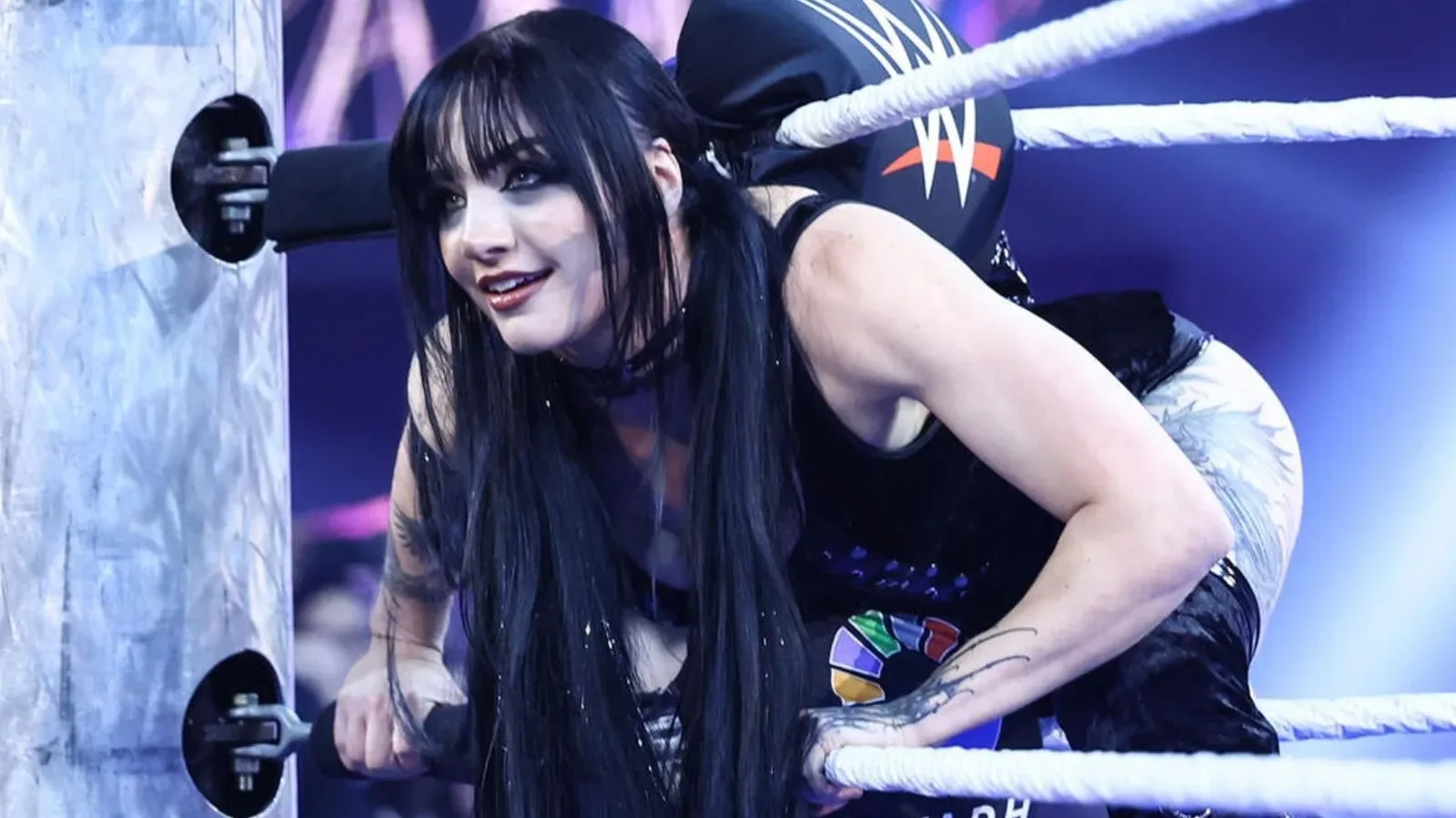
Tatum Paxley’s rise from WWE NXT standout to WWE Women’s Tag Team Champion has taken on an especially personal meaning through her current partnership with Alexa Bliss. Paxley has described Bliss as the performer who first sparked her interest in professional wrestling, making their present-day alliance—and championship success—a remarkable full-circle moment.
After making the transition to the WWE main roster and becoming a member of the SmackDown roster, Paxley has quickly found herself alongside two of the most accomplished women in the company: Bliss and Charlotte Flair. The trio’s connection began to take shape after Paxley’s earlier encounters with them in NXT, and it has since developed into a valuable support system for a performer navigating the biggest stage of her WWE career.
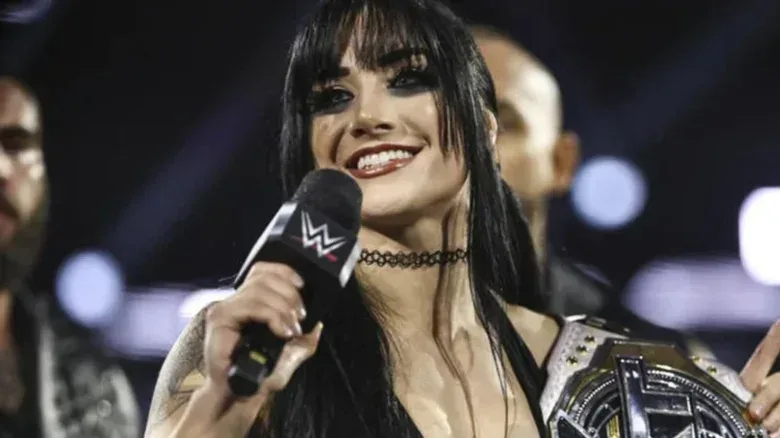
Paxley and Bliss captured the WWE Women’s Tag Team Championships earlier this month when they defeated Fatal Influence’s Fallon Henley and Lainey Reid on SmackDown. For Paxley, winning the titles was a major career accomplishment on its own. Sharing that achievement with Bliss, however, added another layer to the story.
Alexa Bliss Inspired Tatum Paxley’s Wrestling Journey
During an appearance on No Holds Barred, Paxley spoke about the influence Bliss has had on her journey, dating back to the point when she was simply discovering professional wrestling as a fan. Paxley said Bliss helped her understand that there was a place in WWE for distinctive personalities and for performers who could tell stories through their character work.
For more background on this topic, read WWE Crown Jewel Still Scheduled For Riyadh Following New U.S. Embassy Security Alert.
“Alexa Bliss has been a huge inspiration for me,” Paxley said. “She was the one that got me interested in pro wrestling and the one that kind of opened my eyes to seeing their story to be told here. She was a huge inspiration, so to be working alongside her now, there’s no word for it. It’s insane.”
That admiration has now evolved into a working relationship that has placed Paxley in one of WWE’s most prominent women’s divisions. The Women’s Tag Team Championships move across Raw, SmackDown, and NXT, meaning that champions are routinely called upon to represent the division in front of different audiences and against a broad range of opponents. It is a demanding role for any wrestler, particularly someone still relatively early in a main-roster run.
Bliss brings considerable experience to that responsibility. A former multi-time singles champion and tag team champion, she has spent years competing at the highest level in WWE. Paxley’s comments make clear that she views Bliss not merely as a partner, but as someone whose presence has helped make the adjustment to SmackDown feel more manageable.
The partnership also carries an interesting visual and creative parallel. Paxley’s darker presentation has prompted comparisons to an era of Bliss’ own career, particularly her twisted and supernatural-leaning character work in 2020 and 2021 alongside Bray Wyatt. During that period, Bliss incorporated dolls and an unsettling, otherworldly edge into her persona. Paxley’s current identity has its own distinct foundation, but the shared appreciation for unconventional character presentation gives their pairing a natural thematic fit.
Charlotte Flair And Bliss Have Helped Ease The Main-Roster Transition
Paxley first crossed paths with Bliss and Flair in 2025, when she challenged the pair for the WWE Women’s Tag Team Titles at NXT Homecoming. Less than a year later, she was formally aligned with both wrestlers following her WWE main-roster debut.
That change in circumstances illustrates just how rapidly Paxley’s status has shifted. What began as an NXT title challenge eventually led to Paxley standing alongside the same established names she had once faced from across the ring. She now considers both Bliss and Flair important mentors during the formative months of her time on SmackDown.
“I have the best people that have kind of taken me under their wing,” Paxley said. “Charlotte Flair, Alexa Bliss. So even though two months is a pretty short time, I just feel like I’ve been there a lot longer, I just feel like that’s where I was meant to be. I’m with the right people.”
Flair’s role is significant in its own right. As one of WWE’s most decorated stars, Flair has operated in top-level championship programs across multiple eras and has experience in virtually every major environment WWE can offer. For Paxley, being surrounded by both Flair and Bliss gives her access to two very different but equally proven perspectives on succeeding under the pressure of national television, championship expectations, and a constantly shifting locker-room landscape.
Paxley’s wording also reflects the importance of belonging after a call-up. Main-roster success is not determined solely by athletic ability. Wrestlers must adapt to a larger production environment, a different travel routine, more frequent television exposure, and the need to establish their identity quickly before a wider audience. Paxley has said that, despite having been on SmackDown for only two months, the support around her has made the move feel natural.
With the tag titles now in their possession, Paxley and Bliss have the opportunity to define their partnership beyond its emotional backstory. The championships place them at the center of a division that requires regular defenses and creates possible matchups across WWE’s brands. Their reign will ultimately be judged by the opponents they face and the moments they create as a team, but the personal significance behind the alliance has already given it a strong foundation.
Paxley Found Her Identity By Moving Beyond Her Powerlifting Background
Before arriving at her current persona, Paxley’s WWE presentation was closely connected to her athletic background. A former powerlifter, she initially appeared as part of Diamond Mine, a group built around formidable in-ring competitors and athletic credibility. The role made sense on paper, given Paxley’s legitimate strength, but she has explained that it did not fully represent the character she wanted to show audiences.
Paxley felt drawn to something darker and stranger, an identity that could better express the sides of herself she believed had not yet been seen. She repeatedly pushed for the opportunity to develop that idea, though she acknowledged that knowing what she wanted and understanding how to execute it were two different challenges.
“They were hearing me like, ‘Okay, you want to be this dark stalker character.’ It’s what I kept asking to present. I always knew it’s what I wanted. It’s how I visualized myself. But at the time, I didn’t really know how to present it,” Paxley said.
She contrasted that direction with her earliest WWE identity, explaining that the “strong” presentation was rooted in reality but did not reach the core of her personality. Paxley did not dismiss the fact that she was legitimately strong; rather, she recognized that athletic credentials alone were not enough to give her the kind of connection she sought with the audience.
In professional wrestling, the most durable characters often begin with an element of truth and then amplify it. Paxley has described that process in especially personal terms. She said she had struggled throughout her life with presenting who she really was, and WWE’s creative environment challenged her to put that authenticity on display at a heightened level.
“Something I struggled with my whole life was presenting who I really am,” Paxley said. “WWE gave me the platform to actually find myself because it’s also, hey, if you don’t show us who you are times one million, see you [bye]. You got it or you don’t, so I knew I had to really find that. I was able to really dig deep and start showing these weird sides of myself.”
That willingness to embrace the unusual has become a defining part of Paxley’s appeal. Her dark makeup, heavy eyeliner, black hair, and eerie energy stand in clear contrast to the more straightforward powerhouse role she held at the start of her WWE run. The shift allowed her to play into a more theatrical and emotionally unpredictable presence, qualities that can be particularly valuable in a division filled with highly skilled athletes.
The Black Hair Marked A Turning Point
Paxley has identified a seemingly simple aesthetic decision as an important milestone in her evolution: dyeing her hair black. When she first appeared before WWE audiences, her natural brown hair was part of her look. While elements of the darker presentation were already beginning to emerge through her makeup and demeanor, she believes fully committing to the black hair helped her confidence and strengthened her bond with fans.
The change was not merely cosmetic. In wrestling, appearance is a crucial part of communicating a character before a bell rings or a promo begins. For Paxley, the darker hair helped bring the complete vision into focus. It signaled that she was no longer trying to fit into an identity that only partially suited her and was instead committing to the version of the character she had long wanted to portray.
That confidence has carried into her main-roster role. Paxley now has championship gold, a high-profile partner in Bliss, and guidance from Bliss and Flair as she continues to find her footing on SmackDown. Her story is still in its early stages, but the path from powerlifting prospect to darkly charismatic champion has already been a dramatic one.
For Paxley, the opportunity to stand beside Bliss is more than a career milestone. It is proof that the kind of character work that first made her believe wrestling could be for her has helped shape the performer she is becoming. As WWE Women’s Tag Team Champion, she now has the chance to turn that inspiration into a defining run of her own.
In pictures

Darryl Polo
Darryl Polo is a passionate wrestling fan covering WWE, AEW, TNA and beyond. He loves great rivalries, breakout stars and the moments that keep fans talking long after the bell. How we work.