
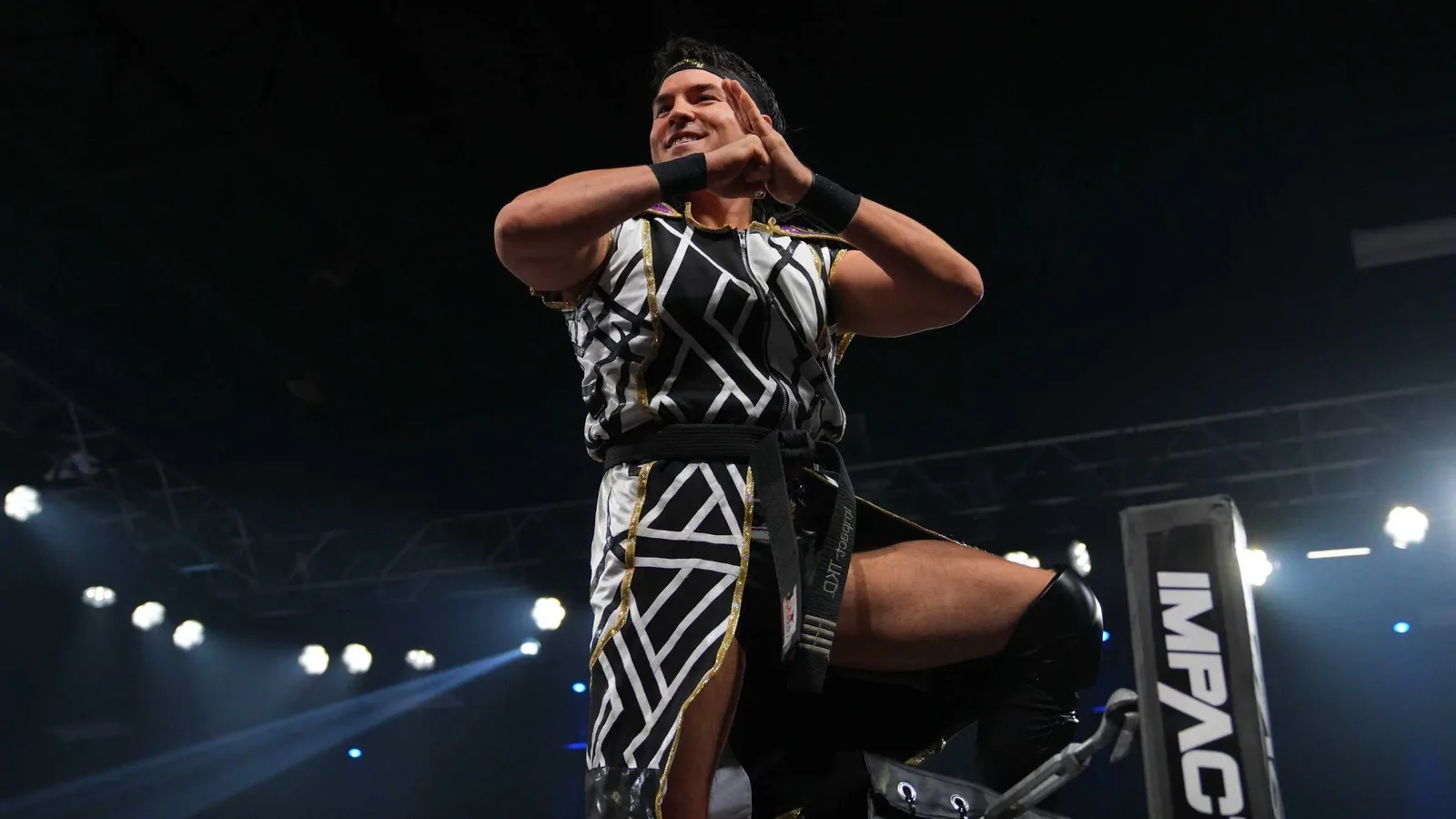
Speedball Mike Bailey has recalled a painful and unsettling incident from a GCW main event against Blake Christian, revealing that they sliced their big toe open after broken glass from an earlier match unexpectedly made its way back into the ringside area.
The story is a vivid example of the unusual risks presented by cards that mix conventional professional wrestling bouts with deathmatch-style violence. Glass spots, doors, and other extreme elements can create considerable cleanup demands, particularly when the show continues with matches that are not built around those same weapons. In Bailey’s case, the cleanup process from one match appears to have created a hazard that did not fully reveal itself until much later in the night.
Bailey discussed the experience while looking back on a GCW show where they were scheduled to headline against Christian. At the time, Christian had not yet adopted the “Vanilla Baby” presentation associated with a later stage of his career. Bailey humorously described him as “but a vanilla zygote” during the recollection, but the story quickly shifted toward the difficult circumstances surrounding their match.
Glass From Earlier Match Became a Problem
Before Bailey and Christian went out for the main event, the card had featured a scramble match involving panes of glass. The broken pieces needed to be cleared before subsequent bouts could continue. Bailey explained that the apparent solution was to sweep the glass underneath the ring during the scramble participants’ entrances.
For more background on this topic, read Bollywood Boyz Confirm No Recent WWE or AEW Offers as They Continue Independent Run.
“The match before us did a bunch of panes of glass,” Bailey said. “Their solution for the cleanup was going to be to just, during the entrances to the scramble, sweep it out. All under the ring. Where else are you gonna put the glass?”
Putting debris beneath the ring may have removed it from immediate view, but it did not eliminate it from the building. The danger resurfaced when the scramble match later included a door spot. As the door was retrieved from beneath the ring, the glass that had been pushed underneath spilled back out onto the floor.
The moment was especially unfortunate because it happened shortly before Bailey and Christian reached the defining sequence of their main event. GCW has long cultivated a reputation for presenting a wide range of wrestling, from fast-paced independent-style contests to matches involving violent stipulations and unconventional weapons. That variety is part of what makes the promotion distinctive, but it can also make transitions between bouts more complicated when remnants of one match remain present for the next.
For Bailey, the consequences were not immediately clear. Christian hit a dive during the finishing stretch, and Bailey was thrown back into the ring for the conclusion. It was during that dive sequence that Bailey’s big toe was cut open.
Bailey Finished the Match Despite Heavy Bleeding
Even after suffering the cut, Bailey completed the planned finish. Christian covered Bailey, the referee counted the fall, and the match ended with the one-two-three. Bailey then remained down in the ring for a period of time, initially trying to determine why their foot felt wet.
“As I took the dive, I sliced my big toe open,” Bailey recalled. “So I took the finish, one, two, three, lay there for a while, feel like, ‘Why is my foot wet?’”
What Bailey discovered was more serious than a small amount of blood from a superficial scrape. They described seeing a significant pool of blood collecting beneath their foot and spreading in the ring. The image underscored just how quickly a toe injury can become difficult to manage in a wrestling environment, where performers are barefoot or wearing minimal footwear, constantly moving across canvas and ringside surfaces, and often completing physically demanding sequences after an injury occurs.
“Then realize that there is a just gigantic puddle of blood seeping under my foot and literally pooling in the ring,” Bailey said. “It wasn’t just like, ‘Oh, there’s some blood dripping.’ No, like a literal pool of blood.”
Bailey also found some dark humor in the setting and the uncertainty created by a card that had already involved violent spots. Given GCW’s association with bloody and weapon-heavy matches, Bailey joked that there was a moment of uncertainty over whether the blood was theirs or whether it had been left behind from what had happened earlier on the show.
That comment is humorous in delivery, but the underlying issue is serious. Wrestling rings and the areas immediately surrounding them are shared workspaces throughout an event. When a match includes glass, thumbtacks, doors, or other dangerous objects, the promotion’s crew and performers face the difficult task of making the venue safe for the next match while managing the flow of a live show. Even a small amount of overlooked debris can become a serious problem when wrestlers are diving, sliding, or landing at speed.
The Hidden Risks of a Mixed-Style Wrestling Card
Bailey’s recollection does not suggest that the injury was part of the match’s design. Instead, it highlights an unintended risk created by the aftermath of an earlier glass spot. The main event itself was Bailey versus Christian, but the circumstances surrounding it were shaped by the scramble match that preceded it and the decision to move broken glass under the ring rather than fully remove it from the area.
Door spots are a familiar feature of deathmatch and hardcore-influenced wrestling, and Bailey made a lighthearted reference to that reality while explaining why the glass came back into play. When the door was pulled out from under the ring, the stored debris fell to the floor. That sequence turned an incomplete cleanup issue into a direct ringside hazard.
The incident also reflects the level of composure wrestlers can be required to maintain when something goes wrong during a bout. Bailey did not stop the match before the finish and instead took Christian’s dive, returned to the ring, and stayed in position for the closing pinfall. Only once the sequence had ended did the full extent of the bleeding become obvious.
That willingness to finish is common in wrestling, where performers often make real-time decisions while attempting to preserve the match structure, protect an opponent, satisfy the audience, and avoid escalating an injury. Still, Bailey’s story provides a reminder that the dramatic moments fans see in the ring can be accompanied by hazards that are neither advertised nor intended.
Bailey Continues to Share Stories From an Eventful Career
Bailey has built a reputation as one of the most distinctive wrestlers of their generation, combining rapid striking, innovative movement, martial arts influence, and a willingness to compete across a wide range of independent and major-promotion environments. Their career has included matches under traditional rules as well as appearances on cards where the atmosphere and stipulations can be far more unpredictable.
The match with Christian is now remembered not only for the pairing of two prominent independent wrestling talents, but also for the bizarre circumstances around its finish. The story carries the kind of absurdity that can emerge from a wrestling event with glass, a scramble match, a door spot, a main-event dive, and an injury that was only recognized after the final bell.
Bailey’s description of the incident ultimately serves as a cautionary account about the practical side of extreme wrestling. Broken glass does not cease to be dangerous simply because the match involving it has ended. It has to be removed carefully and completely, especially when other wrestlers are about to work in the same ring and at the same ringside area.
For Bailey, one leftover piece was enough to transform the finish of a GCW main event into a bloody and memorable ordeal. The match ended as planned with Christian scoring the pinfall, but Bailey’s big toe injury ensured that the night left a much more literal mark than either performer likely expected.

Darryl Polo
Darryl Polo is a passionate wrestling fan covering WWE, AEW, TNA and beyond. He loves great rivalries, breakout stars and the moments that keep fans talking long after the bell. How we work.