
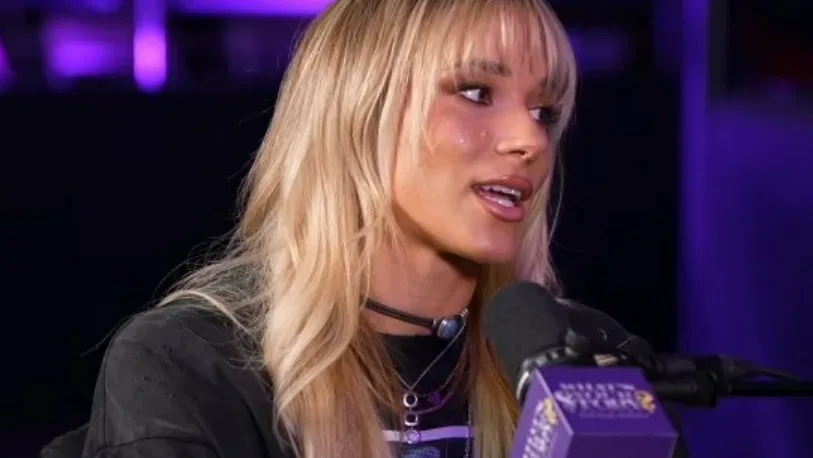
Sol Ruca has identified the most satisfying part of creating her own ring gear: seeing something she designed with her own hands become part of her WWE presentation across multiple platforms.
Speaking in a video interview with AidenaChong, Ruca discussed the appeal and difficulty of taking responsibility for her wrestling attire. While she acknowledged that the process can be stressful, she said the chance to experiment creatively and maintain control over the finished product is what makes the work worthwhile.
“I think just having control and being able to just, like, try new stuff. It is very stressful and very hard, but it’s very rewarding being able to, like, see myself on TV or action figures or, like, the video game and being like, I made that. So probably that.”
View the referenced post on Instagram
For Ruca, the answer is not simply about having a distinct look in the ring. It is about ownership. A wrestler’s gear is among the clearest visual statements they can make before a match even begins, and Ruca takes particular pride in being able to look at a finished design on WWE programming, merchandise, or a digital roster and know that she was directly involved in its creation.
For more background on this topic, read Damian Priest Sets Out His Singles Championship Ambitions After R-Truth Split.
Gear Is a Major Part of a Wrestler’s Identity
Ring attire has always been a fundamental piece of professional wrestling presentation. Long before a performer speaks on the microphone or establishes a strategy in the ring, their colors, materials, entrance jacket, boots, and overall silhouette help tell the audience who they are. Some wrestlers rely on a consistent signature style, while others use gear changes to reflect new moments in their careers, major events, changing alliances, or a more evolved character.
That visual element can be particularly important in WWE, where a performer’s image travels far beyond a live arena. The same gear can be seen by fans watching weekly television, replayed in clips, reproduced in action-figure form, and included in video games. Ruca’s comments highlighted that wider life cycle of a design. What begins as a personal creative project can ultimately become the version of the wrestler that fans recognize in several different formats.
That is why the ability to say, “I made that,” carries added weight. Ruca is not only discussing an outfit for a single appearance. She is describing the gratification that comes from seeing her creative work become part of her on-screen WWE identity.
Creative Freedom Comes With Pressure
Ruca was equally clear that designing and making gear is not an easy shortcut. Her description of the process as “very stressful and very hard” reflects the demands involved in creating attire that must function under the physical conditions of a wrestling match while also looking strong under arena lighting and on camera.
Wrestling gear has to do much more than appear visually appealing. It must allow a performer to move freely, withstand contact, remain secure during athletic sequences, and support the overall character presentation. For someone taking a hands-on role in the process, those concerns exist alongside the more artistic decisions involving shape, color, embellishments, and new concepts.
Ruca specifically pointed to the ability to “try new stuff” as a key benefit of having control over her gear. That willingness to experiment is valuable for any wrestler seeking to develop a recognizable presentation. A design can be an opportunity to introduce a fresh detail, test a different visual direction, or refine what already works. The creative freedom is appealing, but it also means the performer is accepting greater responsibility for the end result.
Her remarks capture the balance that comes with that responsibility. The labor can be demanding, but the finished gear carries a more personal meaning because it represents her own ideas and work.
From the Ring to WWE Video Games
Ruca’s reference to television, action figures, and video games underlines how wrestling gear now reaches fans in several distinct ways. A televised appearance is often the first place a new design receives broad attention. Once that look is associated with a wrestler, it can become part of the imagery fans remember from a particular period, match, or event.
Action figures add another dimension. They turn a wrestler’s television presentation into a physical collectible, preserving specific details of attire in miniature form. For a performer who has worked on that gear personally, seeing it translated into a figure is a unique form of validation. It means the design has moved beyond the immediate setting of a match and into an item fans can display and keep.
Video games provide an additional form of permanence. Digital models allow players to select a wrestler and experience a representation of their current look in a different medium. Ruca’s point was that this is especially rewarding when the gear was made by the person wearing it. The outfit is no longer only something viewers see from ringside or on a broadcast; it becomes part of a playable version of her WWE persona.
Those appearances also place a premium on detail. Elements that may be difficult to notice in a quick live entrance can be examined more closely on a figure or within a game. That makes a distinctive, well-considered design even more meaningful for a performer who values hands-on creative involvement.
A Growing Tradition of Wrestlers Making Their Own Attire
Ruca is part of a wider tradition of wrestlers who have taken an active role in producing their own gear. The reasons vary from performer to performer. For some, it can help manage costs. For others, it offers a creative outlet and a chance to maintain closer control over their presentation.
Bianca Belair stands as one of the most prominent recent examples of a WWE talent associated with creating her own ring attire. That kind of work demonstrates that gear can be far more than a wardrobe decision. It can be a hands-on extension of the performer’s personality, skill set, and professional brand.
For Ruca, the emphasis in this interview was firmly on the creative side. She enjoys being able to make choices and test ideas for herself. The stress of that work has not diminished the satisfaction she takes from it; if anything, the difficulty appears to make the final result more rewarding.
In an industry where presentation is constantly scrutinized and every visual choice can contribute to audience perception, that level of direct involvement can give a wrestler’s look an added sense of authenticity. Fans may see the finished gear as part of Ruca’s WWE image. Ruca sees the effort, experimentation, and personal work that went into it.
Ruca Previously Faced a Royal Rumble Gear Deadline
Earlier in 2026, Ruca also addressed why she had to move quickly when creating her gear for the 2026 Women’s Royal Rumble match. That experience further illustrated the practical pressure that can accompany designing wrestling attire. A major event creates a major stage, but it can also leave little room for delay when a new look needs to be completed and ready for competition.
The Royal Rumble is one of WWE’s most visible annual events, making gear selection especially notable for anyone involved. For a performer who creates her own attire, a tight turnaround adds another challenge to an already demanding process. Ruca’s recent comments help explain why completing such work can be stressful even when the performer enjoys the creative opportunity.
Still, her latest explanation makes clear that the finished result is what stays with her. Whether the gear is appearing on WWE television, recreated as an action figure, or represented in a video game, Ruca gets to see an idea that began with her become a visible part of her career.
That personal connection is what separates the process from simply choosing an outfit. Sol Ruca’s gear is an extension of her presentation, but it is also a project she can claim as her own. For her, the most rewarding moment arrives when the work leaves the design process and reaches the audience: a reminder that the look fans associate with her is one she helped bring to life.

Darryl Polo
Darryl Polo is a passionate wrestling fan covering WWE, AEW, TNA and beyond. He loves great rivalries, breakout stars and the moments that keep fans talking long after the bell. How we work.