
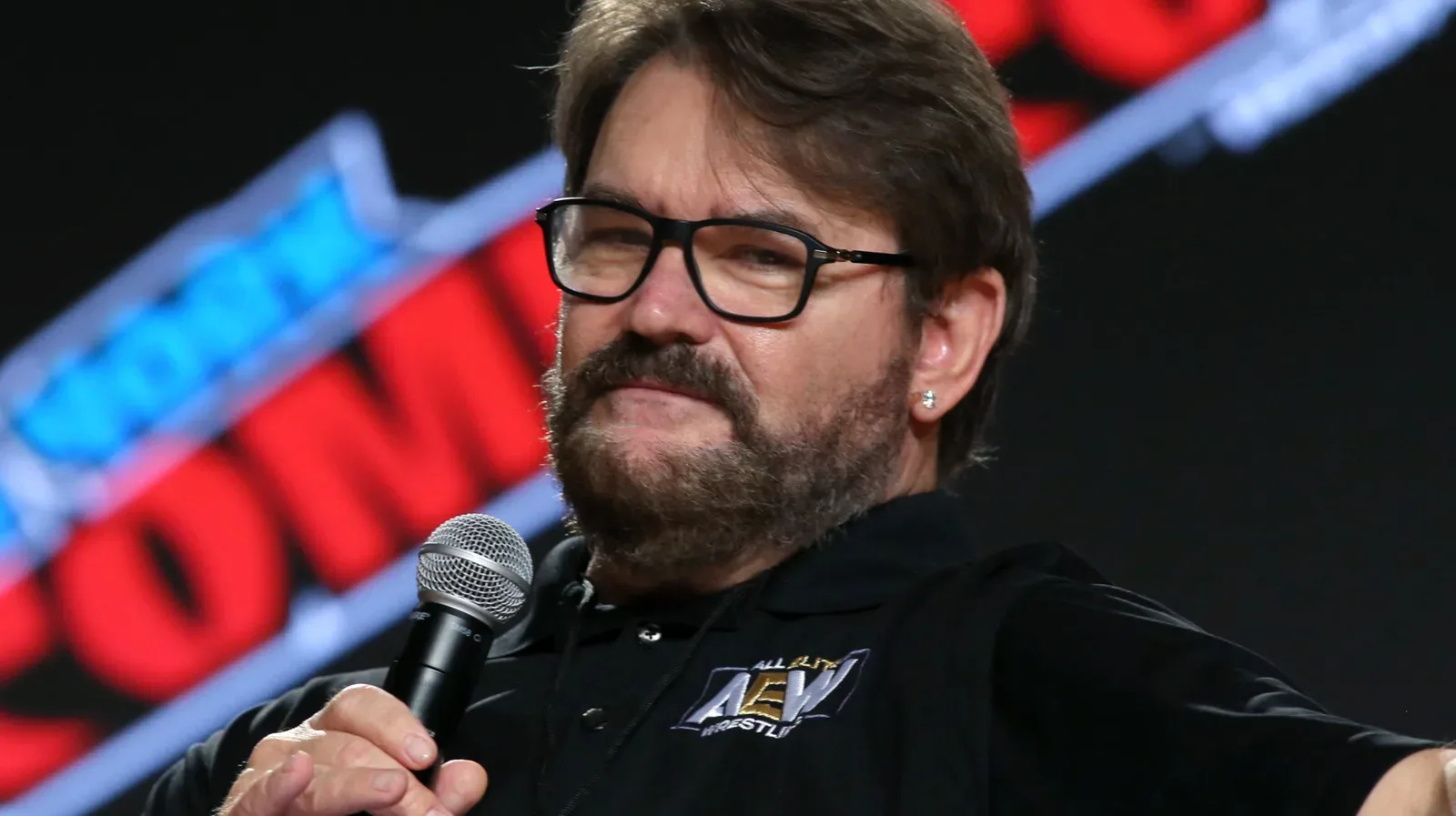
Tony Schiavone has shared a restrained and compassionate reaction following the death of former World Championship Wrestling executive vice president Jim Herd.
Herd died in October at the age of 87, with news of his passing becoming widely known in November. His tenure as WCW’s top executive remains one of the more heavily debated periods in the promotion’s history, but Schiavone chose to focus on the human impact of a death rather than revisit old disagreements in harsh terms.
Speaking on What Happened When, Schiavone explained that he did not want to speak negatively about someone who had died, particularly because a loss affects the people closest to that person. The veteran broadcaster worked under Herd during the early 1990s, when Schiavone was an important voice on WCW programming as both a play-by-play announcer and an on-screen interviewer.
“I’m never ever going to say something bad about somebody who has just died, because a death of somebody impacts family,” Schiavone said. “And it goes back to what I was saying at the beginning, that it is really very important to be friendly and be nice to people not only in a time like this, but moving forward.”
For more background on this topic, read Bully Ray Says Seth Rollins Must Deepen Character Connection for WrestleMania Night Two Spot.
Schiavone’s comments did not erase the fact that Herd’s decisions were controversial, either at the time or in the decades since. Instead, he made clear that he and Herd did not see eye to eye on every issue while working together. Still, Schiavone said he believed there was value in taking a more considerate view of their professional relationship in the wake of Herd’s death.
“Jim didn’t always do things that I liked and that I agreed with,” Schiavone continued. “But you just need to rise above it and be a better person, that’s all. I worked for him. He paid me handsomely. He was fair to me. I’m very sorry for his passing.”
Herd Led WCW Through A Defining Transitional Period
Jim Herd served as WCW executive vice president from 1988 until his resignation in January 1992. That stretch came during a difficult and consequential stage for the company. WCW was attempting to establish a stronger identity while competing with the rapidly growing World Wrestling Federation, now known as WWE.
Herd was tasked with overseeing a promotion operating within the larger Turner corporate structure. The challenge was not simply to produce wrestling events or sign talent. WCW was also trying to modernize its television presentation, make its product more competitive on a national level, and position itself against a rival that was becoming increasingly hot with audiences.
As an on-air personality, Schiavone saw that process from close range. He was not merely a distant observer of the executive office. His voice and presence were central parts of WCW’s television output, making his recollections of the company’s direction under Herd especially notable.
That does not mean Schiavone is presenting Herd’s leadership as beyond criticism. His remarks specifically acknowledge that there were decisions he did not like or agree with. But Schiavone also emphasized his own treatment as an employee: he said Herd paid him well and treated him fairly. For Schiavone, that personal experience matters when reflecting on their working relationship.
A Career Remembered Through Competing Perspectives
Herd’s name has long prompted strong reactions among wrestling fans and people who followed WCW closely. His time in charge covered a period when the promotion was seeking a clearer path forward, and decisions from that era have continued to be analyzed years later. Those debates often focus on the enormous pressures surrounding WCW’s business, its creative direction, and the wider environment in which the company operated.
Schiavone’s response adds another perspective to that discussion. Rather than use the moment to relitigate every management decision from the late 1980s and early 1990s, he drew a distinction between disagreeing with a boss and denying that person basic grace after death.
It is a stance that reflects the long-term relationships built in professional wrestling. The business can create enduring professional disputes, especially when decisions affect jobs, television roles, creative plans, or a promotion’s future. Yet Schiavone stressed that people can recognize those disagreements without allowing them to dictate everything said about a former colleague after his passing.
His remarks were also rooted in a broader point about how people treat one another while they are still here. Schiavone said it is important to be friendly and kind not only at a time of loss, but in everyday life moving forward. That message became the central theme of his reaction.
Schiavone Rejects A Simple Explanation For WCW’s Collapse
In discussing Herd and WCW’s larger history, Schiavone also pushed back against the idea that one executive or authority figure should carry the blame for WCW’s eventual downfall.
“The failing of WCW was the fault of the system,” Schiavone said.
That assessment is significant because WCW’s history is frequently reduced to individual personalities and singular decisions. Herd’s tenure ended in January 1992, years before WCW ultimately closed, but the company’s most difficult periods have often been discussed through the actions of various leaders and decision-makers. Schiavone’s view is that the deeper problem was structural.
He pointed to WCW’s place within a television company that, in his view, generally looked down on professional wrestling. Schiavone identified former WCW owner Ted Turner as the apparent exception to that attitude. Turner’s relationship with wrestling was crucial to WCW’s existence, but Schiavone’s comments suggest that support was not necessarily shared throughout the broader corporate system.
The distinction matters. A wrestling promotion’s fortunes are shaped by far more than the person in the lead executive role. Television priorities, corporate support, business expectations, internal culture, and the level of belief in the product can all affect what a company is able to do. Schiavone’s comments frame WCW’s eventual failure through that wider lens.
It is also a reminder that Herd’s stint at the top of WCW should be viewed within the specific circumstances of 1988 through early 1992. He was leading a company trying to compete with the WWF while navigating the demands of a major television organization. The decisions of that era remain part of the promotion’s legacy, but Schiavone does not see them as a complete explanation for where WCW ultimately ended up.
A Personal Reflection From A Defining WCW Voice
Schiavone remains one of the most recognizable voices associated with WCW, and his history with the company spans some of its most important years. His work as a commentator and interviewer placed him at the center of the promotion’s television identity. That history gives additional weight to his decision to speak about Herd with balance rather than bitterness.
His comments do not ask listeners to forget disagreements or pretend that every business decision was popular. In fact, Schiavone plainly said there were things Herd did that he disliked and did not agree with. What he rejected was the impulse to let those old conflicts become the sole focus immediately after Herd’s death.
For Schiavone, the most relevant facts were personal as well as professional. Herd was his boss. Herd compensated him well. Herd was fair to him. And, despite the differences that existed, Schiavone said he was sorry to hear of Herd’s passing.
That perspective offers a sober conclusion to a complicated chapter of WCW history. Jim Herd’s time as executive vice president will continue to invite debate among wrestling fans because of the role he held and the period in which he held it. But Schiavone’s reflection centers on a different point: professional disagreements do not remove the need for decency, especially when a family is grieving.
As news of Herd’s death continues to prompt discussion of his legacy, Schiavone’s message is clear. He can acknowledge that he did not agree with everything Herd did, remain thankful for the fairness he received as an employee, and express sincere sympathy for those affected by Herd’s death—all at the same time.
In pictures

Darryl Polo
Darryl Polo is a passionate wrestling fan covering WWE, AEW, TNA and beyond. He loves great rivalries, breakout stars and the moments that keep fans talking long after the bell. How we work.