
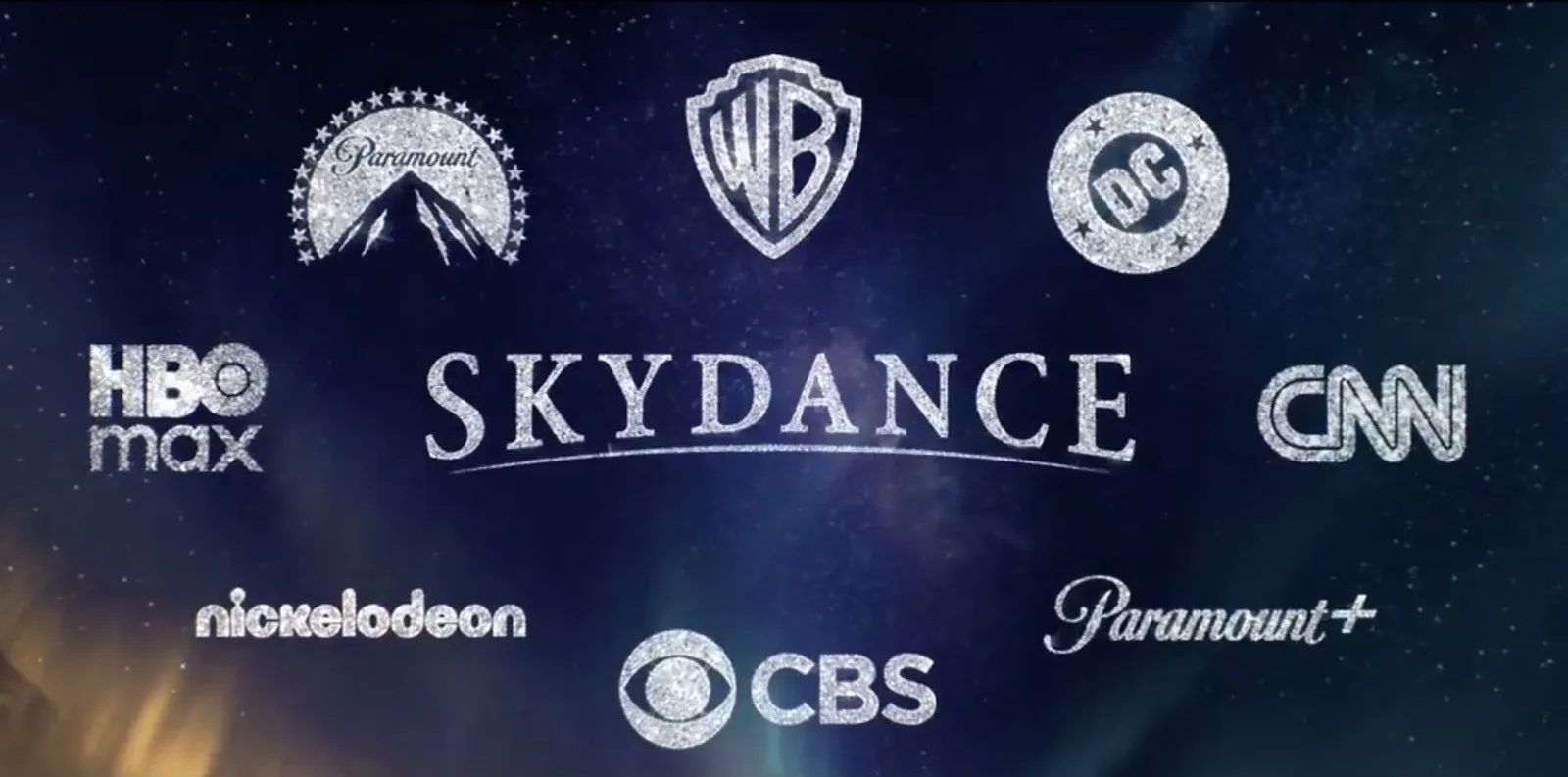
Skydance has completed its acquisition of Warner Bros. Discovery, formally creating a combined entertainment company under the Skydance name. The October 6 transaction brings together Paramount’s holdings and Warner Bros. Discovery’s extensive film, television, streaming, sports and cable portfolio, placing AEW’s longtime U.S. television home inside a dramatically reshaped media organization.
AEW was not mentioned in the corporate announcement. That omission does not itself establish any immediate change to AEW programming, its existing relationship with Warner Bros. Discovery assets, or its distribution plans. Still, the deal is a major development for the company because AEW programming has been tied to WBD networks and platforms, including TBS, TNT and streaming distribution. The merger places those outlets within a new corporate hierarchy that will be led by Skydance Chairman and CEO David Ellison.
The newly combined company will operate as Skydance, with Class B shares beginning trading on the New York Stock Exchange under the ticker symbol SKYD. Warner Bros. Discovery shares ceased trading on Nasdaq when the transaction closed. WBD shareholders received $31.01666668 in cash per share under the terms of the agreement.
A New Corporate Home for TNT, TBS and Max
For wrestling viewers, the most immediate relevance is the collection of television and streaming properties now gathered under one corporate umbrella. The deal joins CBS, HBO, Paramount’s cable networks, Warner Bros. Discovery’s cable networks, CBS News, CNN, CBS Sports and TNT Sports. It also combines the Paramount+ and Max streaming businesses, though the company said those direct-to-consumer services will unify into a single service over time rather than outlining an immediate rollout.
For more background on this topic, read Speedball Mike Bailey Believes Mistico Would Be a Natural Fit for United Empire.
AEW’s current programming footprint has made the Warner Bros. Discovery side of the equation especially important. Dynamite has aired on TBS, while Collision has aired on TNT, with other AEW programming and special events also connected to the broader WBD ecosystem. Any integration of channel brands, sports priorities, streaming strategy or programming budgets could be meaningful to wrestling, but Skydance did not announce AEW-specific plans.
That distinction is important. A major merger often leads to broad speculation about individual programs and rights relationships, especially when companies own high-profile linear networks and streaming services. At this stage, the announcement confirms the ownership change and lays out the broad goals of the combined company. It does not announce alterations to AEW’s television schedule, an AEW streaming expansion, new event rights, a renewal, or an end to any existing arrangement.
What is clear is that AEW now sits adjacent to a much larger collection of entertainment and sports properties. Skydance described the combined business as one of the world’s largest media and entertainment companies, with nearly $70 billion in revenue, more than 200 million streaming subscribers across its platforms, a major broadcast network, and a portfolio that includes live sports and major film and television franchises.
Skydance Outlines Scale, Content Commitments and Integration Plans
The company positioned the merger as an attempt to create a global entertainment operation built around creative output, technology and broad distribution. Skydance said it intends to release at least 30 theatrical films each year, with a minimum 45-day theatrical window for each release, while operating more than 180 television shows and series.
It also stated that it will continue commissioning programming from independent studios and licensing its own content to third parties. That portion of the strategy could be relevant across the television business, although no specific connection to wrestling content was made. AEW has historically been an outside content partner rather than a company-owned wrestling promotion, making the stated support for external production noteworthy in the wider context of the merger without providing a definitive answer about future rights decisions.
Ellison called the closing a significant moment for both Skydance and the entertainment industry.
“Today is a historic day, not just for Skydance but for our entire industry,” Ellison said. “From the start, our ambition was to bring these two storied studios together and create a stronger competitor, with the talent, resources, and reach to tell great stories in every genre, on every platform, for audiences everywhere. Now that ambition is a reality.”
Ellison said the company’s focus now moves toward building an operation that supports creatives, entertains audiences and produces shareholder value. The statement presents the merger as a creative and technological expansion, though the company is also pursuing substantial cost savings as part of the integration.
Skydance is targeting at least $6 billion in run-rate synergies within three years. The company identified technology, corporate integration, procurement, marketing and real-estate rationalization as the principal areas for those savings. It expects the changes to make the business leaner while allowing further investment in stories, creators and technology.
The Sports Question Remains Central
The combined company’s sports holdings are one of the biggest points of interest for AEW and for the television industry more broadly. CBS Sports and TNT Sports will now operate within the same overall business, alongside a deep roster of entertainment channels and streaming brands. Live sports remain a powerful driver of both linear television viewership and streaming subscriptions, and Skydance repeatedly highlighted sports as a key part of the company it has assembled.
Professional wrestling occupies an unusual space in that environment. It is weekly live-style programming with a loyal audience, recurring content needs and a schedule that can help define cable-network identity. It is not conventional league sports, but it competes for many of the same programming hours, promotional resources and viewer attention. The eventual direction of TNT Sports, TBS, TNT and the unified streaming service will therefore be closely watched by AEW fans.
There is no announced indication that AEW will be shifted among networks, folded into a particular sports strategy, or placed on a future combined streaming platform. Those questions remain unresolved. The merger announcement instead stresses the new company’s scale and the possibility of a more unified approach to direct-to-consumer products over time.
For now, the practical takeaway is that the Warner Bros. Discovery assets associated with AEW are no longer part of a standalone WBD. They are components of Skydance, a company whose leadership will be balancing entertainment franchises, news operations, broadcast television, cable networks, theatrical production, streaming businesses and sports rights.
Ownership, Financing and the Road Ahead
The Ellison Family holds the largest equity stake in Skydance. The Ellison Family and RedBird Capital Partners are the sole holders of Paramount Class A common stock and control all of the combined company’s voting shares. The transaction included $47 billion in new Class B equity investment, led by the Ellison Family, RedBird, the Public Investment Fund, L’IMAD, Qatar Investment Authority and LionTree.
Gerry Cardinale, the founder and managing partner of RedBird Capital and a Skydance board director, described the completion as a defining industry moment. He said the company intends to use an owner-operator model around the newly combined catalogue of franchises, premium programming and sports rights while navigating broad changes in media.
“By applying our owner-operator model to Paramount and WBD’s unmatched portfolio of iconic franchises, premium original programming, and live sports rights, we can protect that legacy while building for a media landscape that’s undergoing transformational change,” Cardinale said.
Skydance has projected more than $10 billion in free cash flow by 2030 and said it will take a disciplined approach to content spending. Its pro forma content spending over the last 12 months exceeded $30 billion. The company is targeting a net-leverage ratio of 3.0 times by the end of 2029.
Those financial goals give the integration an obvious business dimension alongside its public emphasis on creativity. Large-scale mergers can bring expanded reach and greater promotional capacity, but they can also lead to consolidation and changing priorities across individual networks and programming categories. Whether any of those outcomes eventually affect AEW remains unknown.
Skydance said the transaction received unanimous approval from competition authorities in nearly 70 jurisdictions and that all required regulatory approvals and customary closing conditions had been met. With the sale now complete, attention turns from the merger process to execution: how the company combines its streaming services, organizes its network portfolio, manages its sports properties and determines where individual programs fit in the new structure.
AEW was not part of the public announcement, and there is no confirmed immediate change for Dynamite, Collision or the promotion’s other WBD-connected programming. But the completion of the acquisition ensures that AEW’s key media environment has changed in a fundamental way. As Skydance begins integrating Paramount and Warner Bros. Discovery, its eventual decisions around cable, sports, streaming and outside content partnerships will be developments worth monitoring across the wrestling landscape.

Darryl Polo
Darryl Polo is a passionate wrestling fan covering WWE, AEW, TNA and beyond. He loves great rivalries, breakout stars and the moments that keep fans talking long after the bell. How we work.