
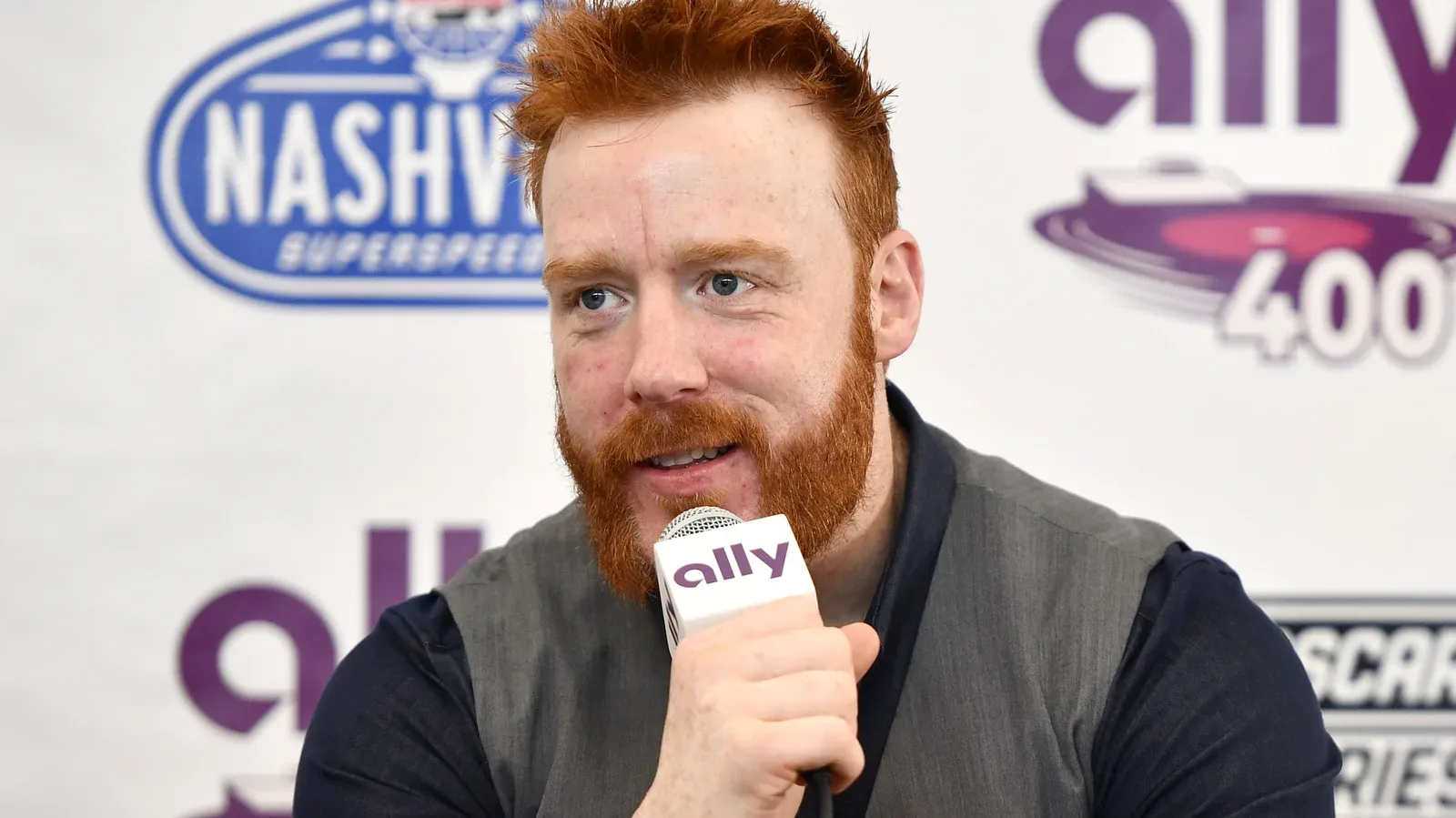
Sheamus’ WWE career began in a setting far removed from the modern main-roster launch pads available to emerging talent. Today, wrestlers commonly arrive on Raw or SmackDown, often following weeks of video packages, mystery teases, or carefully plotted introductions. In 2009, however, WWE still had a third televised brand in ECW, and it was there that the future WWE Champion made his first official main-roster appearance.
Speaking on The Cooligans, Sheamus looked back on the June 30, 2009 edition of ECW, where he faced Oliver John in his debut match. The contest was brief, but the moment carried considerable pressure for the then-newcomer. Sheamus defeated John with a backbreaker and a Brogue Kick, establishing several signature traits that would remain central to his presentation for the next several years: power, aggression, and the sense that every strike could end a match.
For Sheamus, though, the lasting memory was not simply getting his hand raised. It was having to perform live in a situation where there would be no chance for production to soften any rough edges afterward.
“I remember my debut was in ’09. I remember it was on ECW, and we’re on the West Coast, so normally ECW is taped so if anything happens they were able to quickly edit in post before it goes live,” Sheamus said. “It was on Syfy at the time, but because we’re on the West Coast, it had to go live because we’re three hours behind the East Coast. So basically 5:00 when it went on, so there was no time to edit.”
For more background on this topic, read WWE’s Early WrestleMania 43 Direction Reportedly Includes Roman Reigns vs. Oba Femi.
The circumstances made an already important debut feel even more consequential. A taped program can offer a degree of comfort to a performer making one of the biggest entrances of his career. A live broadcast demands that the wrestler trust the preparation, execute through the nerves, and immediately connect with a national audience. Sheamus said that he had only one opportunity to make the first impression count.
“I was one and done man. I got out there. I had a guy called Oliver John in there and he was great. We went through it and I had a promo. I spoke in Gaelic. You could tell in my voice I’m a little nervous about it.”
That acknowledgment offers a revealing contrast with the imposing figure Sheamus soon became. By the end of 2009, less than six months after his ECW bow, he had defeated John Cena to win the WWE Championship. The speed of that rise made him one of the company’s most notable breakout stars of that era. Yet the confidence associated with his later work was built through a process that started long before the title win, in developmental training and matches held away from the television spotlight.
Nerves Were Part Of The Early WWE Learning Process
Sheamus explained that nerves were an especially significant factor during his early WWE years. The fear was not necessarily about performing in front of a crowd by itself; it was the concern of making a mistake in an environment where mistakes could affect a wrestler’s standing and opportunities. For a talent trying to establish himself in a deeply competitive system, every match and every promo could feel like an audition.
He said the time spent in WWE’s developmental structure, along with dark matches, helped him gain the necessary comfort. Those experiences allowed him to find his timing, understand the expectations attached to television wrestling, and become more accustomed to performing under pressure. By the time WWE put him in front of ECW viewers, the company had seen enough to believe he could deliver, even if he was still feeling the nerves internally.
The ECW presentation also showed the early outline of Sheamus’ character. The Gaelic promo immediately emphasized his Irish identity, while the decisive victory gave viewers a clear indication that he was not being introduced as a tentative prospect. WWE’s creative direction rapidly accelerated from there. His ascent ultimately led to the match with Cena, where Sheamus captured the WWE Championship and moved from promising newcomer to a featured name at the very top of the card.
Over nearly 20 years under the WWE banner, Sheamus compiled a résumé filled with major accomplishments and high-profile opponents. His career included rivalries with Cena, Triple H, Daniel Bryan, Randy Orton, and GUNTHER, among others. He became a multi-time world champion and remained a prominent in-ring presence across multiple eras of WWE programming.
Still, Sheamus believes there was an important creative element that often eluded him: a major long-form storyline with enough substance for him to fully explore.
Sheamus Says The Matches Had To Carry The Message
While discussing the body of his WWE work, Sheamus said he did not feel he received many substantial storylines. His response, he explained, was to make his matches the central vehicle for conveying intensity and character. Rather than waiting for a detailed narrative to define his role, he tried to create the emotional stakes once the bell rang.
“I didn’t really get many storylines. I didn’t have the luxury. So I went out there and I just put on the best match I possibly could,” Sheamus said. “I would get something out of my opponents that nobody else could get out of them. And after they went through me, it was up to them to keep that intensity, but nobody could match my intensity. Nobody could match my physicality.”
It is a perspective that aligns with how Sheamus has long been regarded by peers and viewers. His style has been defined by forceful offense, a willingness to absorb punishment, and a belief that a physical match should look and feel like a genuine fight. Across his WWE tenure, many current and former stars have identified him as one of the hardest hitters they have faced.
Sheamus did not present that reputation as a one-sided approach. He said he welcomed opponents returning that same kind of physicality. In his view, the exchange is vital to presenting a compelling contest. If one wrestler is dishing out punishment without ever appearing vulnerable or challenged, the audience has less reason to become invested in the conflict. A fight needs resistance, escalation, and the visible sense that both competitors are being pushed beyond their comfort zones.
“People love to see a fight,” Sheamus said. “They want to see a person give something, a character, wrestler, whatever it is you want to call it, they want to see something different. An internal hunger and fight in them. I prided myself in getting that out of them. That was my forte.”
That philosophy has helped make Sheamus a dependable opponent for a broad range of wrestlers. His physicality can establish the seriousness of a feud, while his willingness to engage in hard-hitting exchanges can bring a different edge out of an opponent. Whether he was working against an established top star or someone looking to prove they belonged at the same level, the matches were expected to have weight.
However, Sheamus’ comments make clear that professional pride in his in-ring output does not erase his desire for stronger narrative material. Major programs and memorable adversaries are not automatically the same thing as having a complete story. A wrestler can compete in important matches, win championships, and work with elite talent while still feeling that the creative framework never quite offered the depth needed to reveal every side of the character.
“Would I have loved a lot more storylines and stuff like that? Of course, I would have,” Sheamus said. “I never really got a really great story that I could sink my teeth into.”
A New Phase After WWE
Sheamus’ reflection comes during a major transition in his career. The multi-time world champion has departed WWE after reportedly declining a restructured contract extension offer. He officially entered the free-agent market earlier this month, closing a remarkably long chapter with the company where he rose from an anxious ECW debutant to one of WWE’s most decorated and physical performers.
His comments do not diminish the scale of what he achieved in WWE. The journey from a live ECW match against Oliver John to WWE Championship victories and clashes with some of the industry’s biggest names is an extraordinary one. Instead, they provide insight into the standards Sheamus has set for himself. Championships, opponents, and acclaim matter, but so does the opportunity to inhabit a story with real depth and sustained purpose.
As Sheamus enters free agency, that desire could be one of the most compelling aspects of whatever comes next. He remains associated with intensity, durability, and the ability to turn a match into a fight the audience believes in. At the same time, he has openly identified the one element he feels was missing: a defining story in which he could truly sink his teeth. For a performer with his experience and credibility, the search for that kind of material may now be as significant as any title pursuit.
In pictures

Darryl Polo
Darryl Polo is a passionate wrestling fan covering WWE, AEW, TNA and beyond. He loves great rivalries, breakout stars and the moments that keep fans talking long after the bell. How we work.