
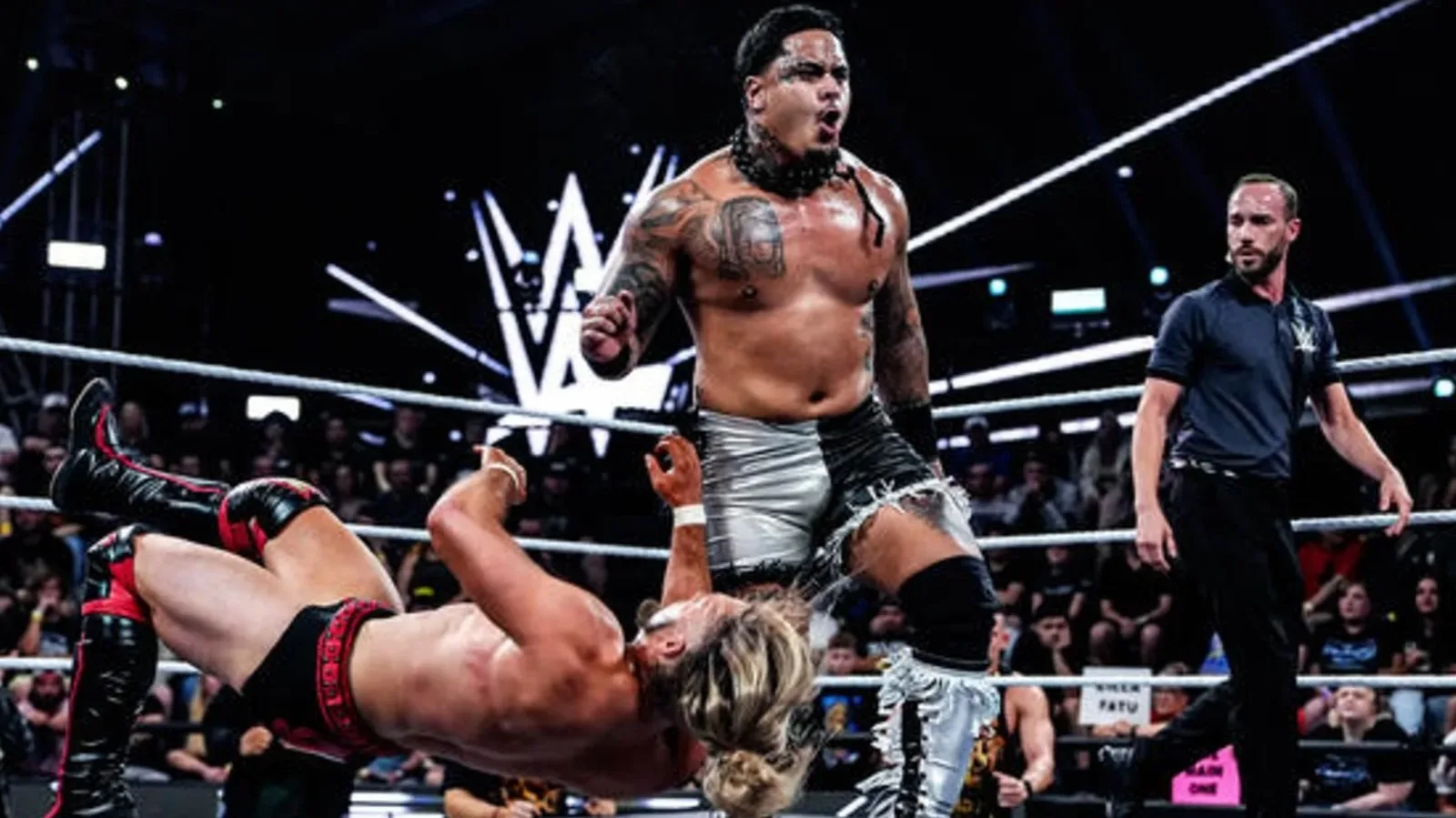
Shawn Michaels has offered a detailed look at WWE’s thinking behind bringing Zilla Fatu into NXT, framing the young talent’s arrival as a move built on patience, strong recommendations and belief in the traits that run through one of wrestling’s most prominent families.
Speaking on Busted Open, Michaels explained that he had known of Fatu for some time before the wrestler joined WWE. The NXT executive said Booker T, who trained Fatu, had spoken highly of him roughly a couple of years earlier. That endorsement mattered, but it was only part of a longer process that required WWE to assess Fatu’s development and work through matters that delayed his path to the company.
“Well, so I knew about him from Booker T, it was probably a couple years ago, you know, Booker had mentioned him, and obviously everything has to, you know, run through a big chain of command around here,” Michaels said. “But there were some issues up front, and we needed to obviously also to give him time and see his development.”
Michaels did not specify the nature of the issues he referenced, and there is no indication that he intended to detail them publicly. His comments instead emphasized the measured approach WWE took before Fatu entered the NXT system. For Michaels, the decision was not simply based on a famous surname or short-form highlights. It was about allowing time for a prospect to develop, then determining what WWE could build on once he arrived.
For more background on this topic, read WWE Sets Avengers: Doomsday-Themed Worlds Collide Special for December 15.
Booker T’s Recommendation Helped Put Fatu on WWE’s Radar
Booker T’s role in Fatu’s early development is a significant part of the story. As both an established WWE personality and a trainer who worked directly with Fatu, Booker had an opportunity to offer a firsthand assessment of the wrestler’s ability, personality and potential. Michaels made clear that Booker was the person who initially brought Fatu to his attention.
That does not mean an endorsement alone leads to a WWE signing. Michaels described a system with several levels of evaluation and approval, one where talent decisions move through a “big chain of command.” Still, a recommendation from a respected trainer can give decision-makers a reason to monitor someone more closely, particularly when that athlete has a recognizable connection to WWE history.
Fatu’s background naturally brings expectations. He comes from the Anoa’i/Fatu wrestling family, a lineage associated with generations of performers and now closely connected in WWE viewers’ minds to The Bloodline. Michaels did not present that connection as a shortcut to success. Instead, he identified characteristics he believes are common throughout that family: ability, passion, fire, tenacity and a quick sense of humor.
Those qualities, Michaels suggested, are visible beyond the ring. They are part of a personality base that WWE can potentially shape into an on-screen identity. That is an important distinction for a developing NXT talent. Athleticism and family history can create attention, but television wrestling also demands the ability to communicate, react, entertain and sustain an audience’s interest through every part of a show.
Michaels Saw Energy and Personality Before Fatu Arrived
Michaels acknowledged that, before Fatu’s WWE move, he had not had the chance to watch a large body of his work firsthand. Like many modern talent evaluators, he often sees prospective wrestlers through limited material: social-media clips, short videos and other brief snapshots of their performances. Those glimpses are not the same as following a wrestler closely over an extended period, but Michaels said they gave him an early impression of Fatu’s presence.
“I will see social clips and things like that, and you could see the personality, you could see, I don’t know, the energy that he had,” Michaels said. “But I think, now that he’s here, I think we can really help him for the long haul in this.”
The phrase “for the long haul” is central to Michaels’ outlook. NXT is designed to provide an environment where performers can add layers to their game before the demands of broader WWE television exposure become even greater. In Fatu’s case, Michaels sees a prospect with elements that already stand out, while also identifying areas where the NXT structure can offer meaningful guidance.
Personality and energy are difficult qualities to manufacture. A wrestler can be taught elements of match construction, television timing and promotional structure, but natural charisma often provides the foundation that makes those lessons matter. Michaels’ comments indicate that Fatu had already displayed enough of that intangible spark to make WWE believe additional training could turn it into something more complete.
At the same time, Michaels did not make sweeping promises about how quickly Fatu will reach a certain level or what his eventual WWE role will be. His assessment was more grounded: there is visible potential, and NXT can help cultivate it. That approach fits a developmental brand that is meant to prepare performers not just for a debut, but for durability in a demanding industry.
The Family Legacy Brings Talent, Fire and Humor
Michaels spoke warmly about the broader family Fatu represents, saying he sees more than one recurring trait among its members. He pointed to the talent and passion within the group, but he also highlighted something that can be especially valuable on WWE programming: humor.
“As far as what I see in him, in that family, I don’t care, there’s talent there, and there is passion, and look, there’s a humor there,” Michaels said. “That is something that a lot of times we don’t see. I don’t know anybody in that dynasty, who behind the scenes, are not pretty funny and really witty people.”
In-ring intensity is a major part of the identity associated with Fatu’s family, but Michaels’ comments suggest he also sees range. A performer who can project intensity while retaining timing, charm and wit has more options on television. That versatility can affect promos, backstage segments, interviews, interactions with rivals and the ability to make a character feel more human.
Michaels described passion, fire and tenacity as traits that are “rampant” throughout what he referred to as the Samoan dynasty, also invoking the modern Bloodline label familiar to WWE audiences. The comparison should not be read as a declaration that Fatu will be presented exactly like other members of that extended family. Rather, Michaels was discussing the broad qualities he sees in the lineage and why those characteristics give Fatu a promising base.
For any wrestler connected to such a celebrated family, finding an individual voice is essential. The legacy can open conversations and draw curiosity, but it can also create immediate comparisons. Fatu’s NXT development will therefore involve taking the attributes Michaels praised and applying them in a way that establishes him as his own performer.
Promo Work and Segment Experience Are Major Parts of the Next Step
Michaels was also direct about where NXT can help Fatu grow. He wants to assist him in improving his promotional ability and in learning how to carry multiple segments of a television program. Those responsibilities can sound straightforward from the outside, but Michaels stressed that they are more difficult than they appear.
Cutting a compelling promo requires more than confidence in front of a camera. A wrestler must understand character motivation, communicate a story clearly, respond to crowd energy, work within allotted time and deliver lines in a way that feels natural rather than rehearsed. The challenge becomes greater when a talent is asked to appear repeatedly throughout a show, advancing separate pieces of a story while maintaining a consistent persona.
That is the kind of experience Michaels believes Fatu needs as he develops in NXT. Being able to handle “two or three segments” is a different skill from making a single entrance, delivering one statement or wrestling one match. It calls for endurance, timing and an awareness of how each appearance serves the larger program.
For a prospect with a recognizable family name, a recommendation from Booker T and the personality Michaels has observed, that work represents the path from promise to polish. WWE’s interest is rooted in what Fatu already brings: energy, presence, passion and the traits Michaels associates with his family. The next stage is turning those instincts into a well-rounded television performer capable of succeeding over the long term.
Michaels’ message was ultimately one of optimism tempered by development. He sees substantial upside in Zilla Fatu, but he also sees the value of giving him the time, coaching and on-camera repetitions required to make that upside meaningful. NXT now has the opportunity to help Fatu refine his voice, strengthen his promotional skills and learn the demands of carrying a story across an entire WWE broadcast.
In pictures

Darryl Polo
Darryl Polo is a passionate wrestling fan covering WWE, AEW, TNA and beyond. He loves great rivalries, breakout stars and the moments that keep fans talking long after the bell. How we work.