
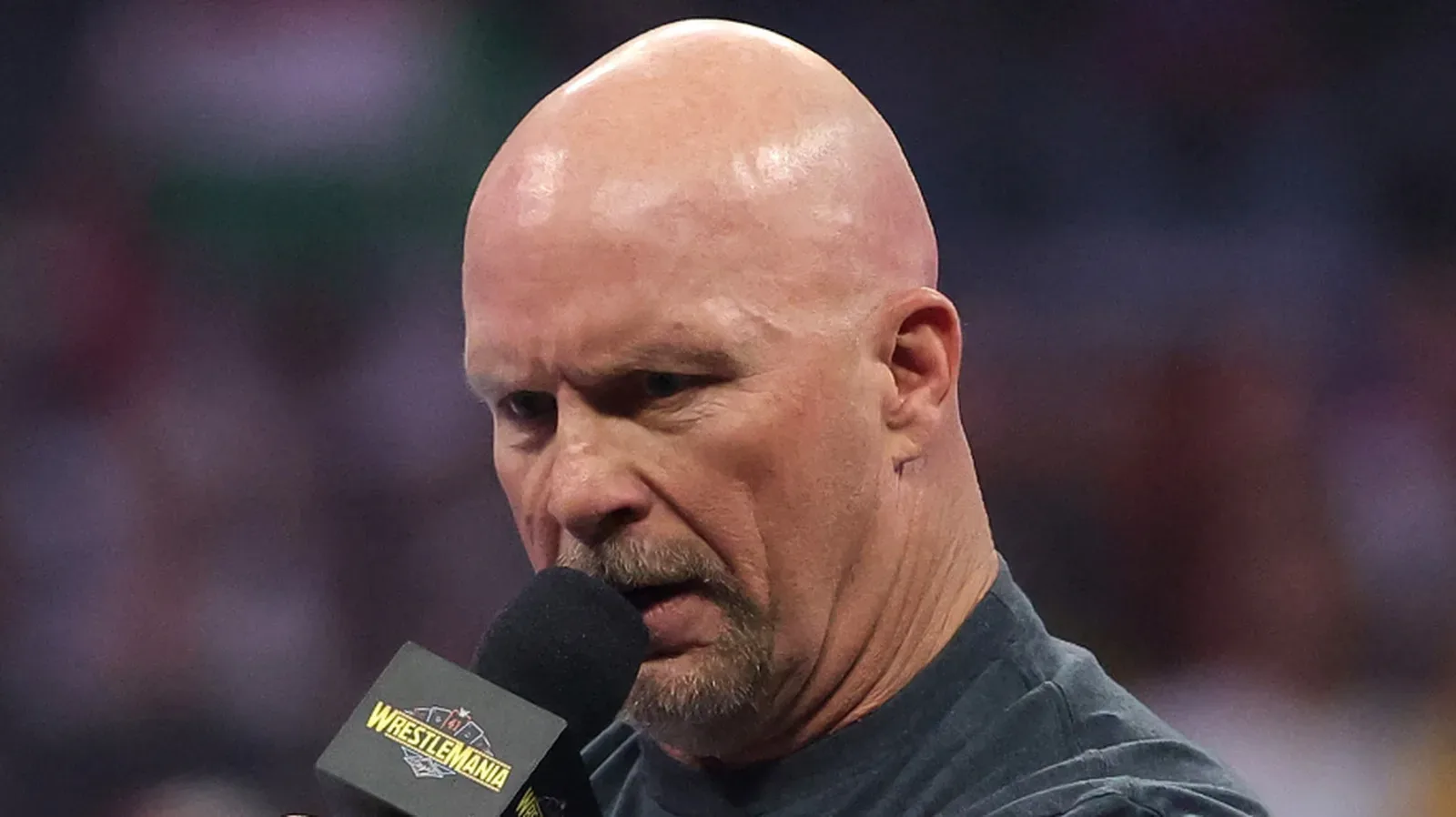
Scotty 2 Hotty has reflected on a serious medical chapter from his wrestling career, revealing that Stone Cold Steve Austin accompanied him to his first doctor’s appointment as he faced the prospect of cervical fusion surgery.
During an appearance on Insight with Chris Van Vliet, the former WWE Tag Team Champion was asked about the visible scar on his neck. That led Scotty to explain that the mark came from cervical fusion surgery performed by Dr. Youngblood in San Antonio. While his Too Cool persona was built around dancing, comedy, and crowd-pleasing energy, Scotty said the condition of his neck ultimately required a major medical decision.
“I had cervical fusion by Dr. Youngblood in San Antonio,” Scotty said. “Stone Cold went first, and then everybody [went]. Edge went, Lita went, Bob Holly, Benoit went...I think that Angle may have ended up going, but I don’t think so. But there were a bunch of us. Yeah, cervical fusion. 5, 6, 7.”
Scotty’s comments underline just how common severe neck wear could become for performers working the demanding WWE schedule of that era. The physical accumulation of bumps, travel, training, and matches did not always announce itself through one devastating accident. In Scotty’s case, he made clear that the fusion was not the result of breaking his neck. Instead, the discs in his neck had deteriorated to the point that surgery became necessary.
For more background on this topic, read Michael Cole Eyes WWE Retirement Around Age 65 While Prioritizing a Strong Finish.
The procedure involved levels five, six, and seven of his cervical spine. It was a pivotal moment because the surgical plan carried direct consequences for his ability to continue wrestling. Scotty explained that there was a possibility of fusing four levels rather than the three that were ultimately addressed. That option, however, would have brought his in-ring career to an end.
A Career-Altering Decision
For any wrestler, a neck fusion is a life-changing matter. Beyond the immediate concern of getting healthy, performers must weigh mobility, pain management, long-term safety, and whether they will ever be medically capable of returning to the ring. Scotty’s situation was especially difficult because a more extensive fusion would have closed the door on his career as an active wrestler.
He chose the lesser fusion, a decision that gave him a path to continue performing after recovery. The distinction is important: Scotty was not describing a minor procedure or a cosmetic scar. He was explaining a serious medical issue that forced him to consider where the line stood between preserving his future in wrestling and protecting his health.
Neck injuries and neck-related procedures have long been among the most sobering realities in professional wrestling. Every style carries risk, and even performers whose characters are associated with entertainment rather than hard-hitting presentation absorb repeated physical punishment over years in the industry. Scotty’s recollection serves as another reminder that the toll of a wrestling career is often not immediately visible to fans.
His comments also place his experience within a broader group of WWE talent who sought treatment in San Antonio. Austin, Edge, Lita, Bob Holly, Chris Benoit, and possibly Kurt Angle were among the names Scotty mentioned while discussing others who went to Dr. Youngblood. The list reflects how frequently neck health became a major issue for top-level wrestlers from that period.
Steve Austin’s Support Stood Out
What Scotty remembered most warmly was Austin’s personal support before the operation. Austin had undergone treatment himself, but Scotty’s story was not simply about a fellow wrestler offering general advice after having a similar experience. Austin physically went with him to the first appointment, sharing a tense and deeply personal moment before Scotty had even met with the doctor.
“Actually, Austin went to my first doctor’s appointment with me, which is wild,” Scotty said. “I remember him being in the room before the doctor came in and he takes the x-rays out of the envelope, he sits them on the table...turns on the light, and he starts looking at them and goes, what was the line, ‘I’m not a doctor, but I did stay in a Holiday Inn Express last night.’ But how cool is that that he went with me to that? So cool man.”
The memory captures both Austin’s familiar sense of humor and the significance of the gesture. Before the doctor entered the room, Austin looked over Scotty’s X-rays and made the joke that Scotty still recalls. Yet beneath the punch line was an act of friendship from someone who understood the fear and uncertainty involved in dealing with a serious neck issue.
For Scotty, Austin’s presence clearly mattered. Medical appointments involving a potential career-threatening condition can be isolating, especially when the patient is confronting unfamiliar terminology and life-changing choices. Having a colleague who had already gone through a similar process in the room offered a form of support that extended beyond the usual locker-room encouragement.
It also adds a more personal dimension to Austin’s legacy among his peers. Fans know Austin primarily for his status as one of WWE’s defining stars, but Scotty’s account focuses on an off-camera moment. There was no audience, no storyline, and no benefit to Austin’s public image in accompanying him. It was simply a veteran wrestler showing up for another wrestler at an important appointment.
More Than the Too Cool Image
Scotty 2 Hotty became widely recognizable through Too Cool, where his charisma, dance moves, and connection with the audience helped make the act one of the era’s most memorable. That presentation could make it easy to overlook the physical demands behind his career. His new comments offer a more serious perspective on what he endured away from the ring.
The contrast is striking. The Scotty 2 Hotty character was synonymous with fun and spontaneity, but the real person behind it had to confront X-rays, damaged discs, surgical options, and the possibility that his career could be over depending on the path he selected. Professional wrestling often celebrates resilience once a performer returns, but stories such as this show the difficult judgment that comes before any comeback can even be considered.
Scotty has since moved into a producer role with AEW, allowing him to remain involved in professional wrestling from behind the scenes. His perspective now spans both the in-ring and production sides of the business, but his account of the surgery comes from an especially vulnerable stage of his active career.
There is no indication in Scotty’s comments that he takes the experience lightly. He spoke plainly about the poor condition of his discs and the limitations imposed by the surgical choices available to him. At the same time, the story was marked by appreciation—both for the medical care he received and for Austin taking time to be there when the uncertainty was at its highest.
A Lasting Reminder of Wrestling’s Physical Cost
Scotty’s recollection does not change the enduring image fans have of Too Cool, but it does deepen it. The same career that produced memorable entrances, dances, and tag team success also required him to make a difficult decision about his neck and his future. The scar that prompted the conversation represents a moment when wrestling’s physical risks became impossible to ignore.
His story also highlights the value of support among wrestlers who have navigated similar health challenges. Austin’s presence at that first appointment may have been a small moment in the larger history of WWE, but it was clearly meaningful to Scotty years later. In an industry where performers are often expected to project toughness, the gesture showed another kind of strength: being present for someone facing a frightening medical reality.
For Scotty 2 Hotty, the cervical fusion was not merely a medical footnote. It was a turning point that could have ended his career if the procedure had gone one level further. Instead, he found a route forward—and he did not have to face the first step of that journey alone.
In pictures

Darryl Polo
Darryl Polo is a passionate wrestling fan covering WWE, AEW, TNA and beyond. He loves great rivalries, breakout stars and the moments that keep fans talking long after the bell. How we work.