
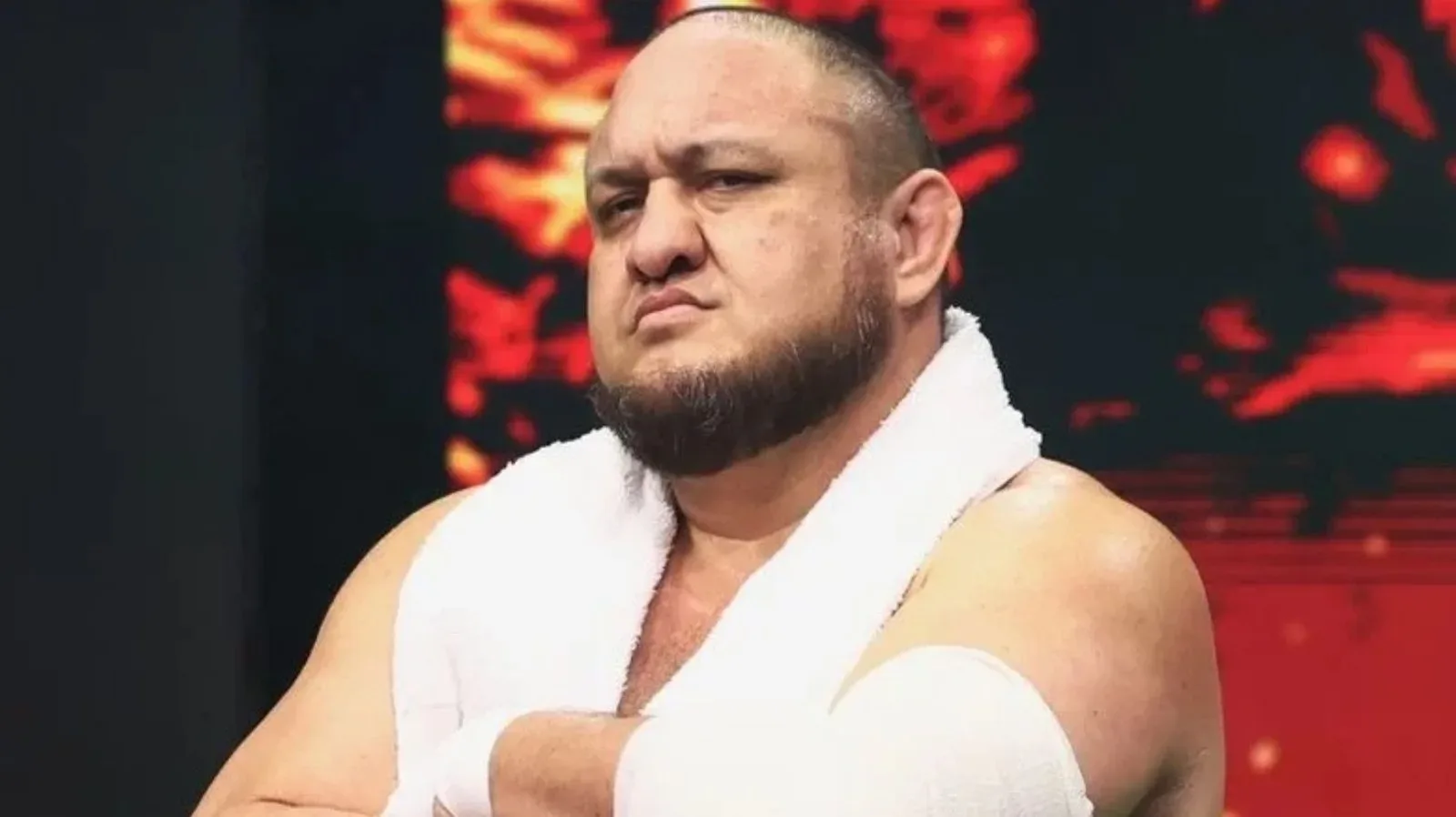
Samoa Joe’s perspective on professional wrestling carries the weight of a career that has stretched across nearly three decades. The AEW star has competed alongside and against performers from multiple eras, worked in environments that emphasized hard-hitting heavyweight physicality as well as technical precision, and remained relevant as the expectations placed on wrestlers have continued to evolve.
With Joe back in AEW following his latest filming commitment for Twisted Metal, he has offered a clear assessment of what he believes the current generation is doing better than the wrestlers who came before them. His answer was not centered on a single move, style or training system. Instead, Joe identified two broader traits that he sees as having made significant strides: adaptability and coordination.
Those qualities matter because modern wrestling asks performers to operate in a wider variety of situations than ever before. A wrestler may need to work a fast-paced television match, communicate intricate sequences with an unfamiliar opponent, tell a character-driven story, perform in a multi-person bout and adjust immediately when a crowd responds differently than expected. Joe’s view is that today’s talent is especially equipped for those demands.
Joe’s View of the Current Generation
Joe discussed the changing nature of wrestling while addressing newer names such as Hook and Action Andretti. In AEW, Joe has a particularly direct connection to the subject through The Opps. The faction was formed in February 2025, and the storyline has positioned Joe as a guiding presence for Hook and Katsuyori Shibata.
For more background on this topic, read AEW Fright Night Collision Preview: Full October 31 Lineup, Start Time and How To Watch.
That role naturally places Joe in a position to observe younger wrestlers closely. He is not simply discussing how performers look from the outside; he is also working within a group built around protecting, elevating and sharpening the presentation of other talent. Hook, in particular, has been portrayed as someone under Joe’s wing, while Shibata brings his own accomplished technical background to the unit.
Joe’s assessment does not suggest that every previous generation lacked ability, nor does it reduce wrestling history to a simple argument that newer is automatically better. Rather, he drew a distinction between the kinds of strengths that were more common in earlier eras and the abilities that are increasingly visible now. In his view, many contemporary wrestlers show a stronger instinct for adapting and an improved level of coordination in the ring.
That coordination can mean a great deal in professional wrestling. It is reflected in timing, footwork, positioning, transitions and the ability to execute difficult sequences safely. It also applies to the cooperation required to make an athletic contest look fluid without exposing the communication and preparation that help produce it. As wrestling has become more technically layered, those details have become increasingly central to how audiences evaluate in-ring performance.
A Changing Athletic Profile
Joe also connected the evolution in wrestling to a trend he sees in mixed martial arts. He noted that lighter weight classes can often showcase more technical depth and a greater range of skill. Applying that idea to wrestling, Joe suggested that the modern landscape is producing performers who may possess a natural aptitude for the craft even when they do not fit the imposing physical mold that once dominated many major wrestling scenes.
The point is not that size has ceased to matter. Wrestling remains a visual medium, and physical presence can still shape a performer’s credibility, style and presentation. Joe himself has built much of his reputation on being a powerful, dangerous heavyweight with the conditioning and technical foundation to match. His career is evidence that a larger wrestler can be versatile, fast-moving and highly skilled.
Still, the industry’s definition of what a top-level wrestler can look like has expanded. More performers now enter the ring with backgrounds, body types and offensive approaches that might not have received the same level of opportunity in an earlier heavyweight-focused environment. The result is a broader spread of match styles, including more contests driven by speed, counters, technical exchanges and layered sequences.
Joe’s comments identify a possible reason that some modern matchups feel so even. When wrestlers have comparable technical knowledge, similar movement skills and an ability to absorb punishment while maintaining pace, the margin between them can narrow. That can create bouts in which momentum shifts frequently and where neither competitor needs to rely solely on a major size advantage.
For AEW, a promotion known for presenting a broad range of wrestling styles, that observation is especially relevant. Its roster includes heavyweights, technical specialists, high-flyers, strikers and younger performers still establishing their identities. Joe’s place within that environment allows him to function both as an active competitor and as a veteran voice whose experience reaches back to a time when heavyweight wrestling occupied an even more dominant place in the industry.
Heavyweight Wrestling Still Defines Part of Joe’s Legacy
While Joe praised the technical and adaptive strengths of current wrestlers, his comments also acknowledged the influence of the heavyweight style that defined much of the past. Earlier eras frequently placed greater emphasis on larger bodies, visible toughness and punishing offense. Those qualities remain valuable, but they are now part of a wider set of expectations rather than the sole standard for success.
Joe’s own experience illustrates the meeting point between those approaches. Across his career, he has shared the ring with highly technical competitors, including Bryan Danielson, while also facing some of wrestling’s most physically overwhelming heavyweights. That range gives him a useful basis for comparing differing styles and generations without treating either one as inherently inferior.
During the same discussion, Joe identified Brock Lesnar as the opponent who struck him the hardest during his career. It is a notable detail from a wrestler who has faced an enormous number of hard-hitting opponents over the years. Lesnar’s reputation as a rare combination of size, explosiveness and legitimate athletic force fits directly into Joe’s broader discussion of heavyweight wrestling’s historic influence.
The contrast is instructive. Lesnar represents the intimidating physical potential associated with major heavyweight attractions, while Joe’s praise for the current generation centers on the ability to adapt and coordinate at a sophisticated level. Wrestling has room for both, and Joe’s comments suggest that the strongest performers are often those capable of blending elements from different eras.
The Value of Veteran Leadership in The Opps
Joe’s return to AEW also brings added attention to The Opps and the direction of Hook and Shibata within the group. A veteran-led faction can provide younger wrestlers with more than storyline protection. It can give them an opportunity to stand beside an established name, develop their presence in a different setting and learn how to carry themselves within a larger television presentation.
That does not mean veteran leadership is a substitute for individual growth. Hook, Shibata and any wrestler attached to a group still have to establish their own identities in matches and in front of the audience. But Joe’s observations about adaptability are relevant here as well. Young wrestlers must learn to adjust not only bell to bell, but also to changing roles, opponents, alliances and expectations.
For Joe, the evolution of wrestling is not merely an abstract topic. It is part of his current position in AEW. He is a veteran with a long history of high-level competition, an active presence in The Opps and a performer returning from outside commitments to a locker room filled with athletes shaped by a different version of the industry.
His conclusion is ultimately a measured one. The modern generation has made clear gains in coordination and adaptability, while past generations produced the heavyweight physicality and toughness that remain fundamental parts of wrestling’s identity. Joe has experienced both worlds firsthand, and his career continues to sit at the intersection of them.
In pictures

Darryl Polo
Darryl Polo is a passionate wrestling fan covering WWE, AEW, TNA and beyond. He loves great rivalries, breakout stars and the moments that keep fans talking long after the bell. How we work.