
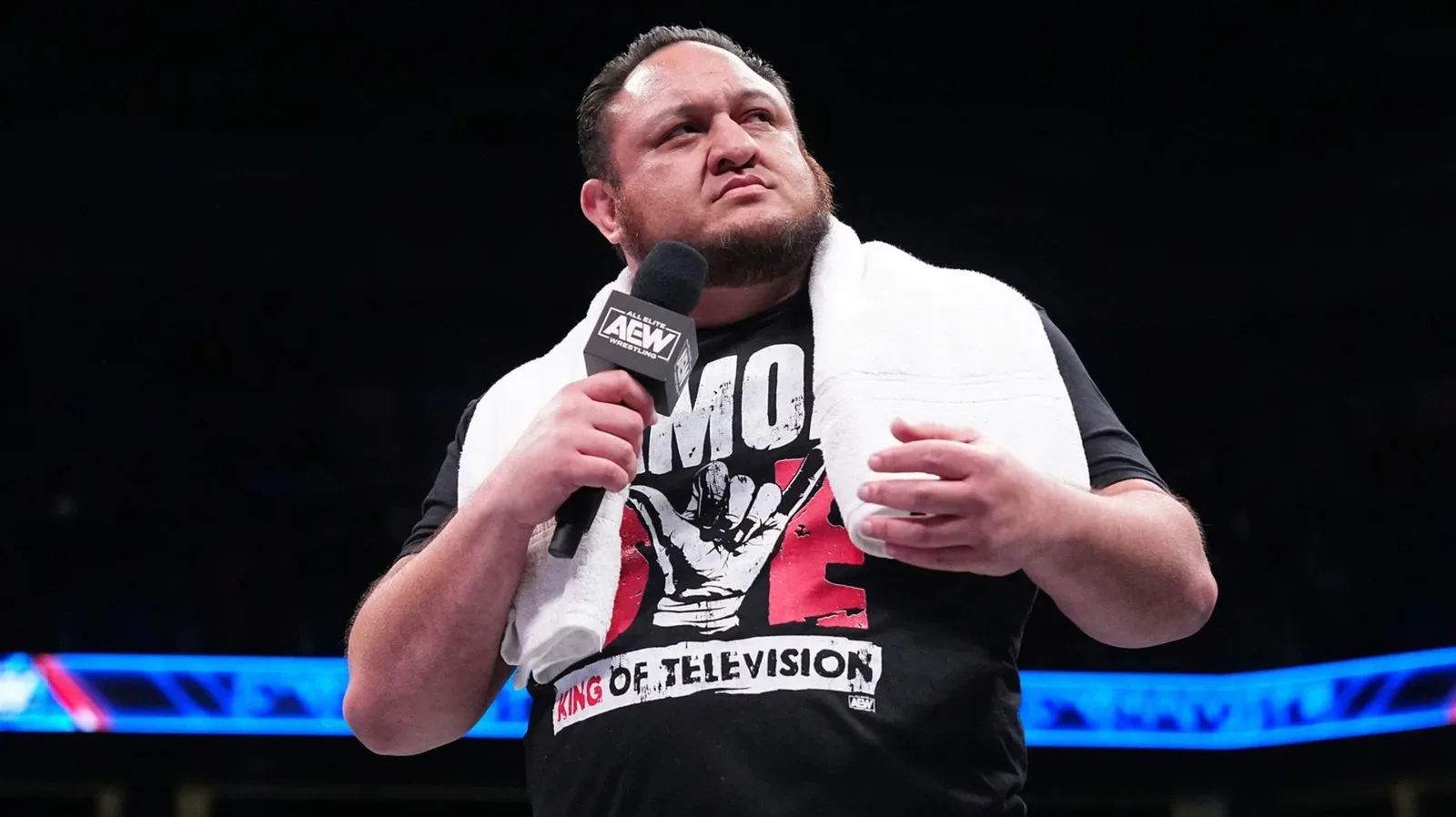
Samoa Joe is not putting a firm date on the end of his in-ring career, but the AEW star has made clear what will guide him through the remaining chapter of a remarkable wrestling journey: making matches that matter to fans and leaving the industry in a stronger place than he found it.
Speaking with SHAK Wrestling, Joe addressed the subject of retirement at a time when several defining names of his generation are openly discussing their own final runs. John Cena has been on a farewell tour, AJ Styles has spoken about the later stage of his career, and Adam Copeland has announced that 2027 will be his final year as an active in-ring competitor. For Joe, however, the calendar is still not completely settled.
“Really just, putting on fun matches for the fans [is my priority], you know?” Joe said. “Listen, what my time frame is? Kind of still... Not quite nailed down, but I will say this: I want to leave as many good memories I can while I [still] have the opportunity [to].”
That approach fits the career Joe has built across multiple eras and major promotions. He established himself as one of the most formidable performers of the 2000s through his work in TNA, where his matches and rivalries helped define a generation of wrestling outside the industry’s largest stage. His history with Styles remains one of the most notable connections from that period, with the two having shared intense battles during their TNA years.
For more background on this topic, read Samoa Joe Calls Brock Lesnar The Hardest-Hitting Opponent Of His Career.
Joe has since become a major figure in AEW, bringing the same physical authority, measured intensity and credibility that made him a standout long before he arrived in the company. The question of when a veteran will step away is often framed around a final match or a final opponent. Joe’s comments point to a broader perspective. Rather than publicly identifying one finish line, he is focused on maximizing the time that remains and ensuring that audiences have memorable performances to take with them.
A Career Defined by Presence and Longevity
Joe’s standing in wrestling has long been rooted in more than championships or career milestones. His work has consistently carried a particular sense of consequence. Whether positioned as a dominant champion, a relentless challenger or a dangerous veteran presence, Joe has been able to make a match feel important through his mannerisms, pacing and physical style.
That ability has allowed him to remain relevant through significant changes in the business. The wrestling landscape in which Joe initially made his name was very different from the one he occupies now in AEW. Promotions, media platforms and audience habits have evolved, while the demands placed on performers have continued to shift. Yet Joe has remained a recognizable and valued figure because the fundamentals of his presentation have translated across each setting.
His remarks also show an awareness of the privilege involved in having a long career. Retirement discussions in wrestling can carry a sense of sadness, particularly when they involve performers who have spent decades traveling, taking physical risks and connecting with audiences in different parts of the world. Joe did not describe his own path in those terms. Instead, he emphasized the positive side of his experiences and the relationships he has developed throughout his travels.
“It sounds super noble and all this stuff, but you know in reality I've had this amazing journey that – is really not fraught with a lot of heartache and despair,” Joe said.
For a wrestler who has worked across the United States and beyond during a long career, that perspective is significant. The travel, the constant adjustment and the physical toll are all commonly associated with professional wrestling. Joe’s comments do not ignore that the work is demanding, but they reflect gratitude for the places he has visited and the people who have supported him along the way.
Giving Something Back Before the End
Joe’s outlook on retirement is not solely about his own final matches. He also spoke about wanting to contribute to the wrestling business before he is done. That can take many forms for a veteran performer: sharing experience with younger talent, helping to raise the level of a locker room, participating in major matches that elevate opponents, or simply setting a professional example through preparation and performance.
He did not specify a particular role or plan for how he intends to make that contribution. Still, the central message was clear. Joe wants his departure from active competition to leave a positive mark on the industry that gave him so much.
“There's a lot of places that have a lot of love for you, as long as you have the best intentions and yeah, I'd like to sprinkle a little bit back before I'm done, and hopefully leave the pro wrestling industry a much better place than I found it,” Joe said.
Those words carry extra weight considering Joe’s experience in the business. He has been part of prominent wrestling environments, competed against many of the era’s most respected names and continued to operate at a high level as new generations have emerged. His perspective is not that of someone looking back from a distance. It is the perspective of an active wrestler who remains committed to performing while considering what kind of legacy he wants to leave.
There is also a practical side to Joe’s situation. His career has expanded beyond the ring in recent years. He has taken on acting work, most visibly serving as the physical performer for Sweet Tooth in the Twisted Metal television series. Joe has also worked in video games, including 2025’s Like a Dragon: Pirate Yakuza in Hawaii, and is involved with the upcoming Deadlock.
Opportunities in television, film and gaming often lead wrestlers to reevaluate how long they want to remain active between the ropes. Joe did not present those projects as a reason to immediately walk away from wrestling. Instead, his comments make clear that even as other doors open, he still sees value in continuing to give back to the profession that has defined so much of his life.
No Fixed End Date, But a Clear Standard
Joe’s lack of a confirmed retirement date leaves plenty of uncertainty about how much longer he will wrestle. That uncertainty is intentional. He said the timeframe is not “quite nailed down,” which means fans should not interpret his comments as an announcement of an imminent farewell. There was no stated final year, no named last opponent and no indication that a retirement match has been planned.
What Joe did establish is the standard he wants to meet while he remains active. He wants fun matches for the fans. He wants to create good memories. And he wants to use the experience he has gained during an extensive career to make a positive contribution to wrestling before he steps away.
That is a grounded way to approach a subject that can easily become sentimental or speculative. Wrestling careers rarely unfold in a straight line, and performers often have to adapt to changing circumstances. Joe is keeping his precise timetable private while making his broader intent public: he is still motivated by the chance to perform, connect with audiences and contribute to the business.
As more stars from Joe’s generation begin to map out their exits from active competition, his stance offers a reminder that retirement does not always arrive with a countdown clock. Sometimes it is a gradual process shaped by health, opportunity, personal goals and the desire to make every remaining appearance count. For Samoa Joe, the eventual ending remains unwritten. The goal, however, is already well defined.
In pictures

Darryl Polo
Darryl Polo is a passionate wrestling fan covering WWE, AEW, TNA and beyond. He loves great rivalries, breakout stars and the moments that keep fans talking long after the bell. How we work.