
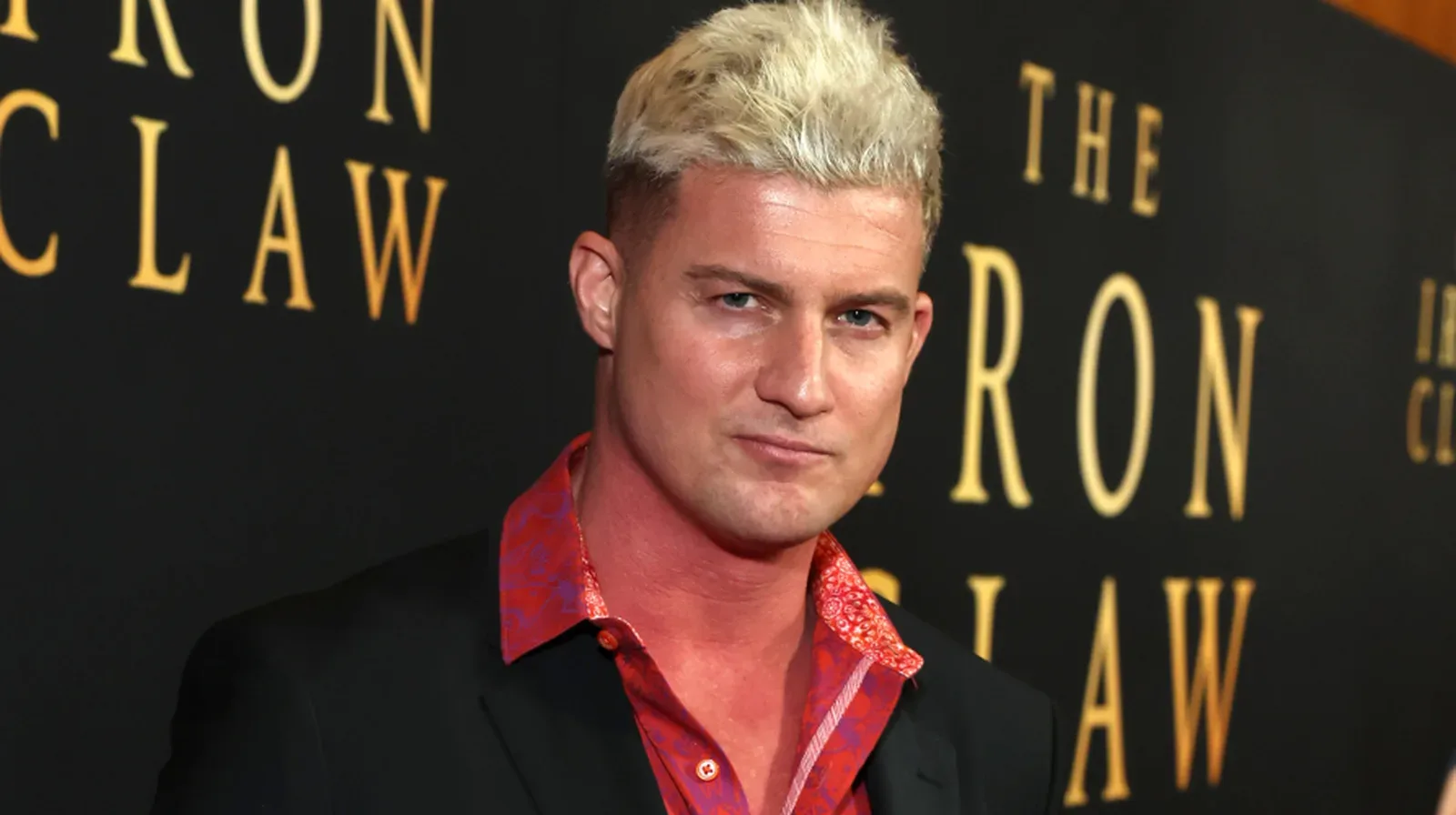
Ryan Nemeth has opened up about the uncertainty he felt after his AEW departure and why a return to professional wrestling was far from an automatic decision.
Nemeth, who worked for AEW from 2021 until his contract expired in 2024, is now part of TNA Wrestling alongside his brother, Nic Nemeth. But before arriving in TNA, Ryan says he had become deeply disillusioned with wrestling on a personal level and had considered walking away from the industry altogether.
Speaking with Death Arts Xiii By Ash, Nemeth said TNA had contacted him more than once following his AEW exit. His first instinct, however, was to decline. He described being in a place where the experiences surrounding his departure had made the idea of re-entering the business unappealing.
“I had politely said ‘no thank you’ a few times,” Nemeth said.
For more background on this topic, read Maria Kanellis Says Wrestling Exit Was Abrupt, But She Has Found New Purpose Beyond the Ring.
His hesitation came after a turbulent period that followed the end of his AEW run. Nemeth has made allegations concerning locker-room harassment, leading to a lengthy legal dispute involving CM Punk and AEW President Tony Khan. While he acknowledged that there are “half-facts” circulating around the situation, Nemeth emphasized that the broader effect on him was a loss of enthusiasm for pro wrestling itself.
“I was a little turned off by everything in wrestling in my personal life, which made it seem like I don’t want to have anything to do with this [business] any more ever again,” Nemeth said.
That reaction helps explain why TNA’s interest did not immediately result in a deal. For a wrestler coming off a difficult departure, returning simply to take whatever role was available was not enough. Nemeth said the discussions with TNA developed over a significant period rather than being resolved in a single conversation.
“That conversation went on for a few weeks or months,” Nemeth said.
Nemeth Wanted a Purposeful Role
Nemeth’s eventual willingness to consider TNA came with clear expectations. He did not want to be used as an interchangeable supporting player or placed in matches that lacked meaningful creative direction. The distinction mattered because he was not merely seeking another booking; he wanted evidence that a company had a plan for him as a television character.
Nemeth said he expressed conditions about how he would be used, including his desire to avoid being placed in “random eight-man tag matches on the internet that nobody watches” or functioning as a jobber. Those comments were not simply about wins and losses. They reflected his larger concern about whether a return would feel worthwhile after he had seriously contemplated leaving the profession.
For performers, the decision to sign with a promotion often involves more than the opportunity to appear on television. A role can shape how a wrestler is perceived by audiences, how consistently they are featured, and whether they have room to establish momentum. Nemeth’s comments indicate that those considerations were central to his talks with TNA.
TNA’s response was what changed his outlook. Rather than presenting a vague invitation to join the roster, the company pitched an angle involving Ryan and Nic Nemeth. Nic, a former WWE World Heavyweight Champion known as Dolph Ziggler during his WWE career, has become one of TNA’s prominent names. The chance to work within a story connected to his brother offered Ryan a more defined creative foundation than the one he feared might await him elsewhere.
“This actually sounds cool, to have a company have an idea versus ‘Would you like to be cannon fodder for the people we really care about?’” Nemeth said.
That pitch gave Nemeth the kind of reassurance he needed. He said the appeal was not merely the chance to share screen time with Nic, but the feeling that TNA viewed him as someone who could contribute to ongoing television narratives.
“It was the company saying ‘You are special, and we’d like to utilize that in our TV storylines,’” Nemeth said. “That was exciting to me.”
A Different Mindset From His AEW Exit
Nemeth’s remarks present his TNA move as a decision shaped by creative trust as much as career opportunity. His AEW tenure began in 2021 after years on the independent scene, and he remained with the company for roughly three years. When that run ended in 2024 following the expiration of his contract, the aftermath became more complicated than a standard free-agent transition.
Nemeth has since spoken publicly about the impact of that period, including how it altered his relationship with the business. His latest comments make clear that he was not immediately looking for a fresh wrestling platform. In fact, he says he was reluctant to have anything to do with wrestling when TNA initially reached out.
That context makes the eventual agreement notable. TNA was not simply bringing in a former AEW wrestler who was actively looking for a new home. The promotion had to convince Nemeth that it could offer an experience materially different from the one that had left him discouraged.
The proposed story with Nic appears to have provided that difference. Wrestling promotions commonly lean on real-life relationships when they can enhance a character or create an instant emotional connection for viewers. In this case, the brothers’ shared presence created a ready-made element for television, while also giving Ryan a reason to believe he would be treated as part of a deliberate plan.
Nemeth’s comments also underline the value wrestlers can place on communication before signing. A direct explanation of how a performer could fit into programming can carry more weight than a general promise of matches or appearances. For Nemeth, the key was hearing that TNA had an idea and intended to use it, rather than asking him to fill a short-term or undefined role.
The Importance of Creative Clarity
Professional wrestling is built around competition in the ring, but the careers of television performers are also heavily influenced by creative positioning. A wrestler may be technically skilled and experienced, yet still struggle to gain traction if they are not connected to a storyline or consistent character direction. Nemeth’s stated conditions show that he was especially conscious of that reality as he weighed whether to come back.
His reference to not wanting to become “cannon fodder” was blunt, but it summarized the concern. After stepping away from AEW under difficult circumstances, he did not want to return only to occupy a role that suggested he was an afterthought. The TNA pitch, by contrast, gave him a chance to enter with a defined purpose.
It is also significant that Nemeth did not frame TNA solely as a fallback option after AEW. His account describes a gradual process in which he first turned the company down, then continued talking, set boundaries, and ultimately heard an idea that rekindled some interest in participating in wrestling again.
That progression speaks to the personal nature of a wrestler’s decision to remain in the industry. The physical demands, public scrutiny, travel, and creative uncertainty that come with the profession can all affect whether someone wants to continue. Nemeth’s experience illustrates how strongly a performer’s confidence in a promotion’s vision can influence that choice.
Ryan and Nic Nemeth’s TNA Connection
The opportunity to work with Nic was clearly a major part of TNA’s proposal, though Ryan’s comments make equally clear that he did not want the connection to be superficial. The concept needed to be part of a real storyline and not just a one-off association based on their family relationship.
For TNA, incorporating Ryan Nemeth into programming alongside Nic gives the promotion another way to build around an established act while introducing Ryan within a recognizable context. For Ryan, it offered a return on terms that felt more creatively respectful and personally manageable after a period when he had become wary of the entire industry.
Nemeth’s story is ultimately less about one contract negotiation than it is about why he needed a convincing reason to come back. His words suggest that TNA’s interest became meaningful only when it was matched by a specific plan, a sense of value, and an opportunity to be involved in television stories that mattered.
After initially saying no, Nemeth found enough in that approach to reconsider wrestling. The TNA role did not erase the frustrations that led him to step back, but it gave him a reason to believe a new chapter could be different.
Quotes credited to Death Arts Xiii By Ash.
In pictures

Darryl Polo
Darryl Polo is a passionate wrestling fan covering WWE, AEW, TNA and beyond. He loves great rivalries, breakout stars and the moments that keep fans talking long after the bell. How we work.