
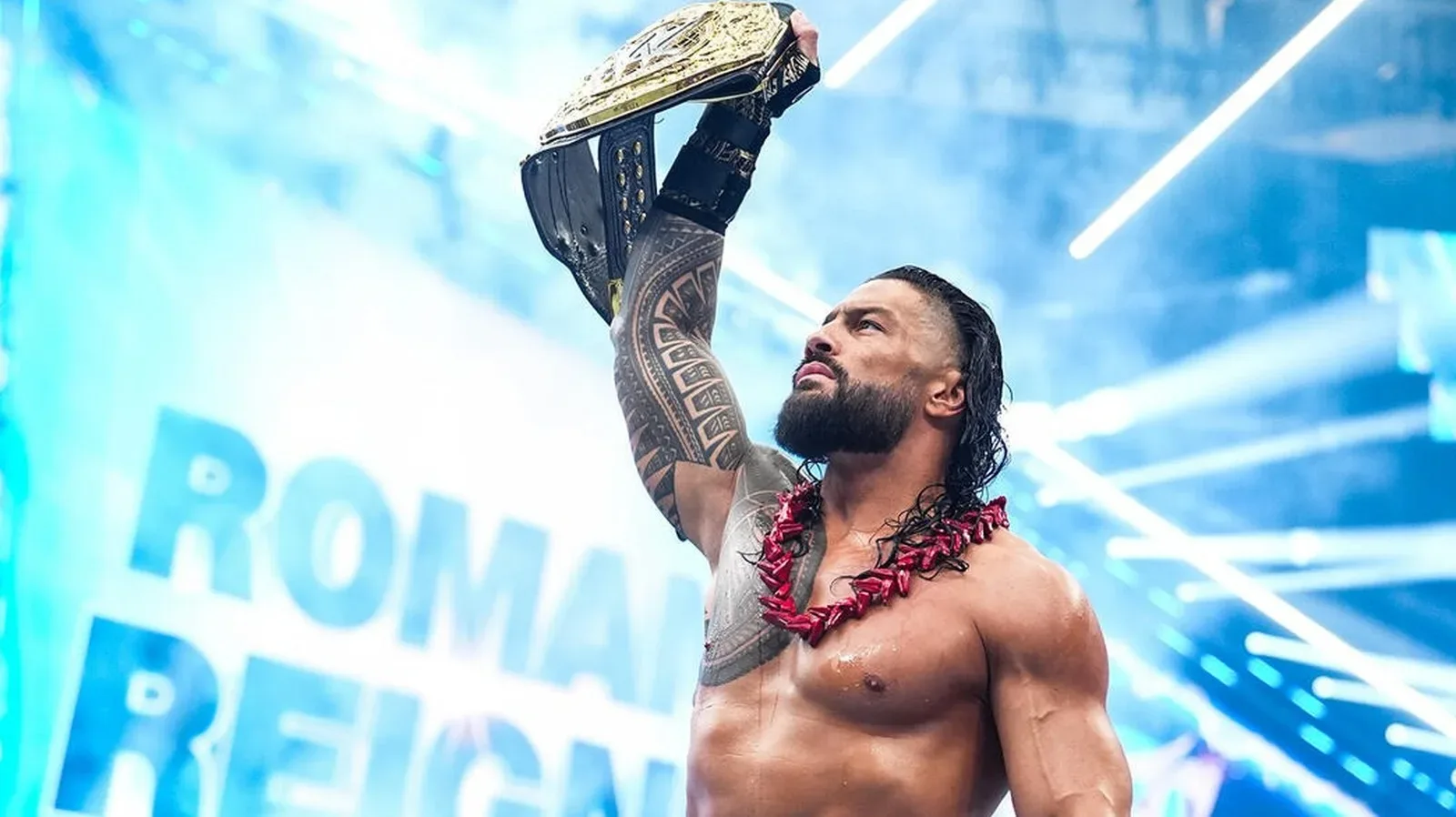
Roman Reigns has spent years occupying the kind of position in WWE that comes with enormous visibility. He has headlined major events, held championship records, carried the presentation of “The OTC” and “The Head of the Table,” and become one of the promotion’s defining attractions. From the outside, that combination of championship success, presence, physique and mainstream opportunities can appear close to untouchable.
But Reigns has offered a more candid perspective on the pressures that can come with working in professional wrestling. Speaking with Men’s Health, the current World Heavyweight Champion addressed body image, the mental self-criticism that accompanies an appearance-driven profession, and the reality that maintaining a certain look is not always simple even for someone with his experience.
“We all got a little bit of body dysmorphia, right? We’re all fighting this little critic in our head. So, luckily, I have a lot of time in, so I will always carry some muscle mass, but I’m in an aesthetic business and this is what I signed up for,” Reigns said.
The comment is notable because it strips away part of the larger-than-life image associated with Reigns’ WWE character. On television, he is presented as an authoritative champion whose confidence and control are central to everything he does. The Roman Reigns seen in an interview is speaking to a challenge that is much more familiar and personal: the feeling that an individual can scrutinize their own appearance more harshly than anyone else does.
For more background on this topic, read Brock Lesnar Inducted Into University of Minnesota M Club Hall of Fame.
Professional wrestling is an especially visual line of work. A performer’s physical condition is frequently assessed in real time by fans, commentators, promotional materials and social media discussion. The athletic requirements are substantial, but WWE Superstars are also expected to project a particular image while appearing on weekly programming, premium live events, photo shoots, promotional appearances and, in Reigns’ case, film projects. It is a profession in which strength, conditioning and aesthetics can all become public subjects.
Reigns did not frame that reality as someone else’s fault. Instead, he acknowledged that it is part of the career he chose and part of the pressure attached to being in the public eye.
“So, there’s nobody to blame. This is the troublemaker here. But yeah, it’s not always perfect. The demands that we’re asked, it is hard to stay unless that’s just the way you are.”
That distinction matters. Reigns is not suggesting that elite conditioning is unimportant in WWE. Rather, he is identifying the difficult balance between the demands of the job and the internal expectations performers can place on themselves. Even an athlete who has spent years building and retaining muscle mass can still feel the strain of pursuing a look that may be difficult to sustain at all times.
His comments also arrive during a particularly busy stretch for the champion. Reigns is set to make a significant move into a new arena of entertainment when the live-action adaptation of Street Fighter reaches theaters on October 16. He will appear in the film as Akuma, adding a major movie role to a résumé already built around his status as one of WWE’s most recognizable stars.
The role creates another layer to the conversation around appearance. Film work can bring a different kind of public attention, particularly when an actor is portraying an established character with a recognizable visual identity. Reigns has long been accustomed to the visual demands of wrestling, but a high-profile adaptation such as Street Fighter places him before an audience that extends beyond WWE’s usual weekly viewership.
Before that release, however, Reigns has major WWE business ahead of him. He is scheduled to make his fifth title defense at Money in the Bank against LA Knight, a longtime opponent of Reigns and the Bloodline family dynasty. The match brings together two performers whose rivalry has been shaped by Knight’s willingness to confront Reigns directly and challenge the influence surrounding the champion’s reign.
For Reigns, the defense is another opportunity to reinforce the championship standing that has defined much of his current era. For Knight, it is a chance to defeat one of WWE’s most formidable champions and do so in a match carrying significant personal and competitive history. The Bloodline’s presence has loomed over Reigns’ most important stories, while Knight has repeatedly positioned himself as someone unwilling to be intimidated by the group’s legacy or the champion’s aura.
Reigns Discusses a Pressure That Extends Beyond the Ring
Wrestlers are often celebrated for extraordinary physiques, and that praise can be closely tied to audience expectations. Yet the admiration a performer receives does not necessarily eliminate insecurity. Reigns’ willingness to use the phrase “body dysmorphia” underscores how a person can receive external validation while still confronting a difficult inner voice.
His observation about having “a lot of time in” speaks to the long-term work behind his physique. Reigns has spent years performing at the highest level of WWE, and he noted that the physical foundation he has built means he will retain muscle mass. Still, his broader point is that a foundation does not remove the challenge. The standards of an aesthetic business can be relentless, especially when the individual feels responsible for meeting them every time they appear.
That is a reality with which many athletes and performers can identify. Conditioning can fluctuate. Travel, schedules, recovery and the ordinary limits of a human body can affect how someone feels about their appearance. In wrestling, where the body is both an athletic tool and a major component of a performer’s presentation, those concerns can become particularly pronounced.
Reigns’ remarks are therefore more than a passing note about fitness. They offer a grounded look at the less visible side of being a top WWE attraction. The image of a champion is designed to look assured, powerful and consistent. The person portraying that champion can still be navigating the same insecurities that affect people in and outside of entertainment.
A Major Two Weeks Ahead
The immediate calendar makes Reigns’ comments especially timely. Money in the Bank will put his World Heavyweight Championship on the line against LA Knight, and the outcome will shape the next stage of his WWE run. A successful defense would mark his sixth victory as champion in this current stretch, while a Knight win would represent a defining breakthrough against Reigns and the larger Bloodline history around him.
Then comes October 16 and the theatrical debut of Street Fighter. Reigns’ portrayal of Akuma is a major crossover moment, one that could introduce his work to viewers who know the character from the game franchise but may not follow WWE. It also continues a long tradition of wrestling stars pursuing entertainment opportunities outside the ring, though the timing is particularly significant for a performer who remains active at the championship level.
There is an obvious contrast between the imposing figure Reigns presents in WWE and the vulnerability of his comments about self-image. That contrast does not weaken his on-screen persona. If anything, it provides a reminder that the physical ideals celebrated in wrestling do not make performers immune to self-doubt. Reigns’ honesty acknowledges the work, scrutiny and internal pressure that can exist behind the presentation.
As he prepares to face LA Knight at Money in the Bank and take on a prominent film role as Akuma, Reigns remains at the center of two demanding worlds. WWE requires him to defend his championship and sustain the aura of its top stars. Hollywood adds another highly visible responsibility. His recent comments make clear that even amid those accomplishments, the pursuit of physical perfection is not something he views as effortless or permanent.
For now, Reigns heads into a pivotal period with the World Heavyweight Championship still in his possession, a familiar challenger waiting at Money in the Bank, and a movie debut set to follow shortly after. The accomplishments are substantial. So is the pressure he says comes with an industry built, in part, on how its stars are seen.
In pictures

Darryl Polo
Darryl Polo is a passionate wrestling fan covering WWE, AEW, TNA and beyond. He loves great rivalries, breakout stars and the moments that keep fans talking long after the bell. How we work.