
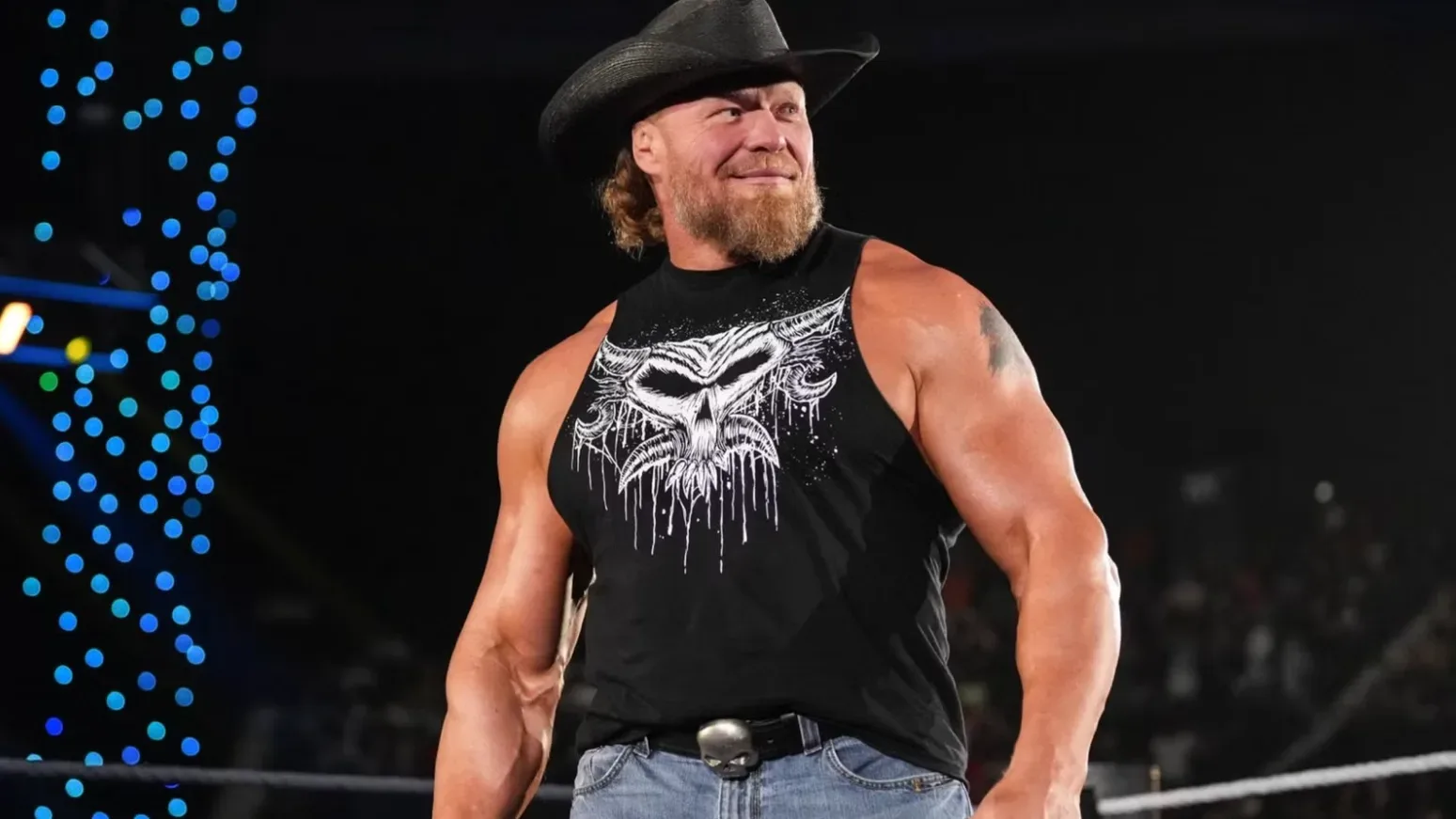
Brock Lesnar has added another major honor to his decorated athletic career, entering the University of Minnesota’s M Club Hall of Fame as part of its 2026 class.
Lesnar was formally recognized during a ceremony held October 2 at Huntington Bank Stadium. The University of Minnesota celebrated 10 new members of the M Club Hall of Fame, honoring accomplished former athletes from a wide range of Gophers programs. Lesnar joined the class for his collegiate wrestling achievements, which came years before he became one of the most recognizable names in WWE and combat sports.
The Hall of Fame weekend continued around Minnesota athletics, with the new class also set to be celebrated in connection with the Gopher football game against Michigan. For Lesnar, the induction represents a return to the program that helped establish his reputation as an elite heavyweight wrestler.
View the referenced post on Instagram
Lesnar honored alongside nine fellow Gophers greats
Minnesota’s 2026 M Club Hall of Fame class includes athletes and former standouts from gymnastics, baseball, swimming and diving, volleyball, women’s hockey, wrestling, football, men’s hockey, and softball. The full class is comprised of Guillermo Alvarez for gymnastics, Luke Appert for baseball, Daniel Croaston for swimming and diving, Lauren Gibbemeyer-Mendes for volleyball, Jody Horak for women’s hockey, Lesnar for wrestling, Sean Lumpkin for football, Larry Olimb for men’s hockey, Sarah Wilhite Parsons for volleyball, and Lezlie Weiss for softball.
For more background on this topic, read Chris Jericho Says WWE Hall Of Fame Recognition Would Be Welcome, But Not Necessary.
The group was first announced earlier in July, and the October 2 ceremony marked the official Hall of Fame celebration. The class spans multiple generations of Minnesota sports history, but Lesnar’s name brings a particularly distinctive profile because of everything he accomplished after his time with the Gophers.
Long before becoming a WWE world champion and a central attraction in professional wrestling, Lesnar was a dominant collegiate competitor in Minnesota’s wrestling room. His success at the university remains a foundational part of his athletic story. While his later professional accomplishments made him famous on an international level, the M Club Hall of Fame honor specifically recognizes the impact of his time representing the Golden Gophers.
A dominant run for Minnesota wrestling
Lesnar competed for the University of Minnesota from 1998 through 2000. Across that stretch, he compiled a 55-3 record and recorded 23 pins. Those numbers reflect both his winning consistency and the power-based style that would later become familiar to wrestling audiences around the world.
His college record is especially notable given the short period covered by his Minnesota career. Lesnar became one of the program’s most successful heavyweight competitors, and his results placed him among the most accomplished wrestlers associated with the university. The Hall of Fame induction now gives that chapter of his career a permanent place within Minnesota athletics history.
For professional wrestling fans, Lesnar’s collegiate credentials have always been central to his presentation. WWE frequently highlighted his amateur background as part of the aura around “The Beast Incarnate.” His physicality, explosiveness, takedowns, throws, and wrestling-based offense all connected naturally to the credentials he built before entering sports entertainment.
That background also separated Lesnar from many other performers who reached the top of WWE. He arrived in the company with legitimate high-level amateur experience, and that history helped establish the credibility of his character from the beginning. Whether he was portrayed as a conquering champion, an outsider returning to WWE, or a special-attraction force, his Minnesota wrestling past remained an important piece of the narrative.
Recognition for a career that reached far beyond college sports
Lesnar’s path after Minnesota took him into professional wrestling, where he became one of WWE’s most prominent stars. His rise and long-term place in the industry turned him into a crossover-level name, but his Hall of Fame recognition is centered on the work he put in as a Gopher.
The induction also arrives at a meaningful point in Lesnar’s wrestling career. His most recent WWE match took place on Night 1 of SummerSlam, where he was defeated by Oba Femi. Following that match, Lesnar officially announced his retirement from wrestling.
That retirement announcement gave added weight to the Minnesota ceremony. The M Club Hall of Fame honor does not function as a professional wrestling farewell, nor is it tied to a WWE storyline. Instead, it recognizes an earlier era of Lesnar’s life, one defined by his success in collegiate competition. Still, the timing means the ceremony stands as a significant public acknowledgment of the athletic roots behind a career that ultimately extended well beyond NCAA wrestling.
Lesnar’s journey has always been unusual in its range. His name carries immediate meaning for WWE viewers, but his résumé also includes elite amateur wrestling accomplishments. The M Club Hall of Fame induction highlights that his legacy cannot be reduced to just one arena or one version of his career.
What the M Club Hall of Fame moment represents
Hall of Fame honors in college athletics often serve as a bridge between a university’s present and its past. They recognize the athletes whose performances helped shape a program’s history while also giving current students and fans a chance to appreciate accomplishments from prior eras. Minnesota’s 2026 class brings together athletes from many sports, and Lesnar’s selection ensures wrestling is prominently represented.
For the university, celebrating Lesnar means acknowledging one of the most widely known former athletes connected to Minnesota wrestling. His professional fame may make him immediately recognizable beyond college sports, but the honor is grounded in the achievements that came before that global visibility.
His 55 victories, only three defeats, and 23 pins provide the clearest statistical snapshot of why he belongs in the class. Those figures speak to a wrestler who was not merely successful, but consistently difficult to beat and capable of ending matches decisively. The Hall of Fame selection places those results in the proper historical context.
It is also a reminder that Lesnar’s eventual WWE identity was built on more than size and spectacle. The traits that later made him such a compelling presence in the ring were developed through competitive wrestling: intensity, explosiveness, control, and a comfort with physical confrontation. Minnesota was an important stage in that development.
Lesnar’s legacy returns to where it began
Lesnar’s retirement from wrestling following his SummerSlam loss to Oba Femi closes the active in-ring portion of a career that reached extraordinary heights. His induction into the M Club Hall of Fame, meanwhile, turns attention back to the formative period that set the rest of that journey in motion.
The October 2 ceremony at Huntington Bank Stadium was therefore more than a routine recognition for a famous former athlete. It was an opportunity to honor Lesnar in the environment where he established himself as a dominant wrestler before the WWE championships, major-event matches, and worldwide attention that followed.
With the 2026 class now formally inducted, Lesnar takes his place alongside nine other Minnesota greats whose contributions came in different sports and different eras. The common thread is excellence while wearing the Gophers colors.
For Lesnar, that excellence included a 55-3 record, 23 pins, and a lasting connection to one of college wrestling’s most significant programs. Whatever comes next after his announced retirement, his place in Minnesota athletics history is now officially secure.

Darryl Polo
Darryl Polo is a passionate wrestling fan covering WWE, AEW, TNA and beyond. He loves great rivalries, breakout stars and the moments that keep fans talking long after the bell. How we work.