
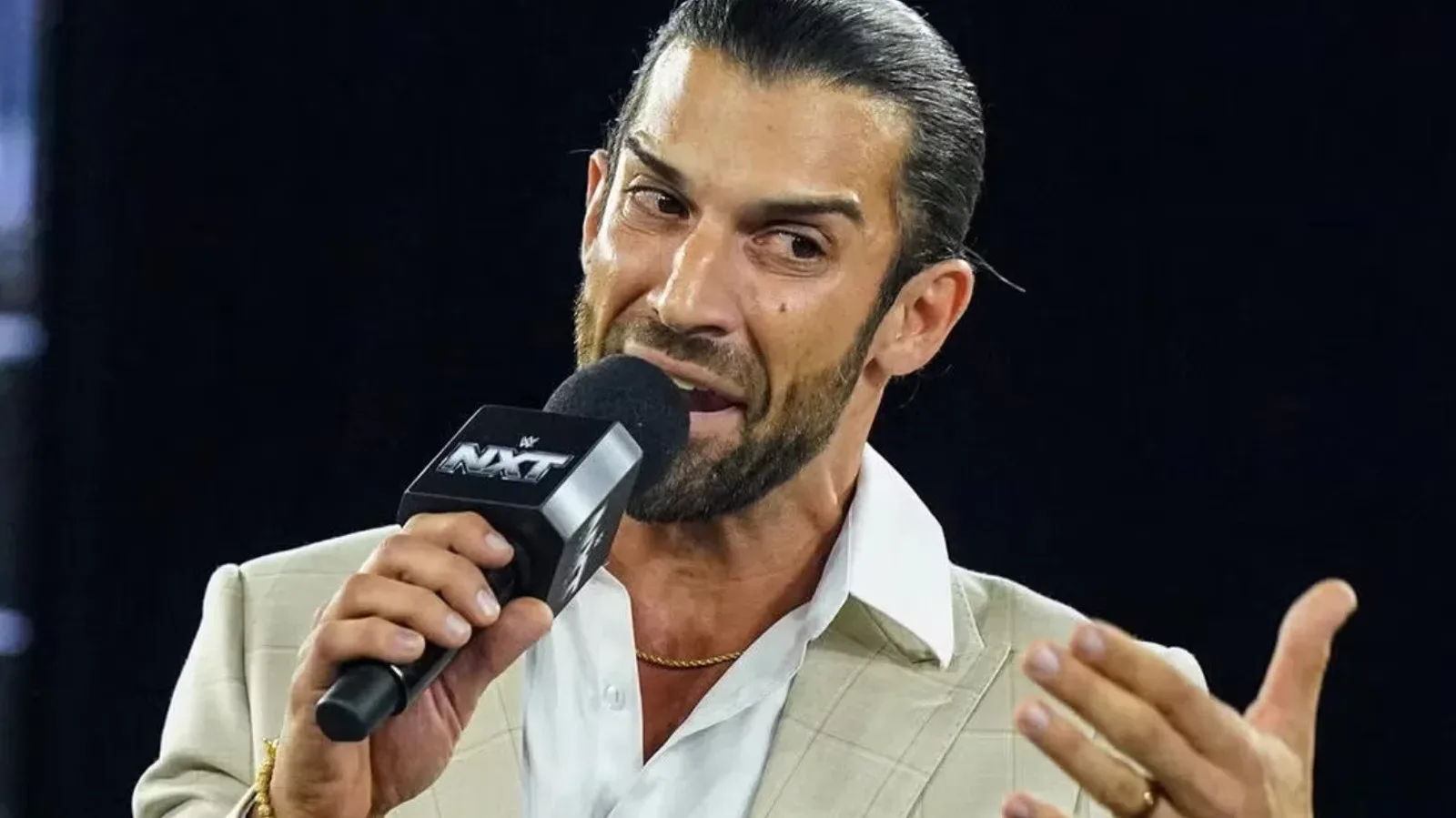
WWE NXT General Manager Robert Stone has added his voice to one of the longest-running discussions surrounding the Tuesday night brand: whether NXT should be viewed primarily as WWE’s developmental system or as a full-fledged third brand alongside Raw and SmackDown.
Stone’s answer leaves room for both sides of that debate. He acknowledged that developing performers is an essential part of NXT’s purpose, but he rejected the idea that the label should define the entire show. In Stone’s view, NXT has built a distinct presentation and a level of in-ring performance that makes it its own brand within WWE rather than simply a training ground shown on television.
Speaking on Busted Open Radio, Stone explained that the developmental process remains important, particularly for wrestlers aiming to reach Raw or SmackDown. However, he argued that the overall product should not be reduced to that function alone.
“I think NXT develops talent. Clearly that's the point of it for them to become 110%, hone their craft before they go to the next level. But I don't feel like it is a developmental brand,” Stone said. “It is its own brand with its own unique style, different from Raw, SmackDown and every other brand in WWE, everything else in wrestling.”
For more background on this topic, read Lacey Evans Returns To In-Ring Training At D-Von Dudley’s School.
The distinction is significant because NXT has long occupied an unusual position in WWE’s structure. It serves as the place where emerging wrestlers gain television experience, develop characters and learn how to perform under the expectations of a national WWE audience. At the same time, NXT presents weekly championships, major premium live events, established stars and storylines designed to stand on their own rather than merely set up eventual call-ups.
Stone’s comments reflect the balancing act at the center of NXT’s identity. The brand can be a pathway toward WWE’s larger main-roster platforms while still being presented as a destination worth following in its own right. For performers, that means success in NXT is not simply measured by the speed of a move to Raw or SmackDown. It can also mean becoming a champion, headlining a major NXT event and helping define the current direction of the brand.
Stone points to Parker vs. Jordan as an example
Stone specifically pointed to the previous night’s opening match between Jaida Parker and Kelani Jordan as evidence for his stance. He praised the match as one that could compare favorably with bouts taking place on either of WWE’s other major weekly programs.
“But yes, it does develop talent and that's the point of it. And kicking off the show last night with a match like that, Jaida [Parker] and Kelani [Jordan], I'll put that match up against any match right now on Raw or SmackDown,” Stone said. “It's just as good or even better, proving that it's really not a developmental show.”
The Parker-Jordan match gave Stone a timely example of the argument he was making. Both wrestlers represent the kind of talent NXT is expected to cultivate, but their placement at the top of the program also illustrates how the brand asks its roster to perform at a high level in the present. NXT does not merely showcase potential; it relies on its wrestlers to deliver meaningful matches and maintain the weekly momentum of a nationally televised product.
That is the core of Stone’s position. Development may be one of NXT’s missions, but the existence of development does not, in his estimation, make the show lesser than Raw or SmackDown. Instead, it is part of what makes NXT different. The brand has a roster that can include performers at various points in their WWE journeys, from athletes refining their television presence to wrestlers already capable of producing standout main-event-level work.
A debate with different answers inside WWE
There is no shortage of historical context behind the disagreement. WWE Chief Content Officer Paul “Triple H” Levesque has previously referred to NXT as one of WWE’s three primary brands, putting it in the same broad company structure as Raw and SmackDown. That language emphasizes NXT’s status as a major weekly WWE property with its own championships, personalities and fan base.
Shawn Michaels, who continues to oversee NXT’s creative direction, has approached the question differently. In 2022, Michaels maintained that NXT was indeed a developmental program. That description is also grounded in the brand’s established role. NXT has regularly provided wrestlers with an environment to gain experience before potentially moving to Raw or SmackDown, a process that remains central to WWE’s talent pipeline.
Stone’s comments do not necessarily erase that role. In fact, he directly recognized it. His pushback is aimed at the implication that “developmental” means the show cannot also be a complete and competitive WWE brand. The difference may be more about emphasis than a fundamental contradiction: NXT can develop performers while presenting them in matches and stories meant to meet the standards of WWE’s broader programming.
That conversation has become especially relevant as NXT continues its Tuesday night run on The CW. The weekly television platform gives the brand a prominent stage, and it also increases the scrutiny placed on its roster, champions and creative direction. Each episode must function as more than a collection of auditions. It has to offer an engaging show to viewers while allowing performers to continue building experience.
Championship picture reinforces NXT’s standalone identity
NXT’s current championship landscape also supports the idea of a brand with its own ongoing stakes. Grayson Waller is the reigning NXT Champion, while Kelani Jordan holds the NXT Women’s Championship. Both champions captured their titles at NXT Heatwave on August 30.
Those title reigns give NXT a defined competitive center at a time when Stone is arguing for the brand’s standing. The NXT Championship and NXT Women’s Championship are not treated as incidental pieces of a training process. They are the top prizes of a program built around rivalries, title pursuits and major event payoffs. Wrestlers seeking those championships are working to become the leading figures of the NXT roster in the moment, regardless of what may happen later in their careers.
Jordan’s position is particularly relevant to Stone’s praise of her match with Parker. As NXT Women’s Champion, Jordan is carrying the responsibilities associated with being one of the faces of the brand. A featured bout involving the champion and Parker can help establish both the title’s importance and the depth of the women’s division. Stone’s willingness to compare that match to Raw and SmackDown competition underscores his belief that NXT’s strongest work deserves to be judged on equal terms.
Waller’s championship reign creates a similar focal point on the men’s side. The NXT Champion is expected to set the pace for the brand’s central stories, and the title helps reinforce that NXT has its own hierarchy. While Raw and SmackDown remain WWE’s larger main-roster destinations, NXT’s top champions still occupy major roles on a distinct weekly show.
NXT’s identity remains rooted in both growth and competition
Ultimately, Stone’s remarks highlight why the NXT debate continues. Calling it developmental accurately describes part of its mission, particularly when wrestlers are learning the rhythms of WWE television and preparing for opportunities beyond the brand. Yet NXT’s fans are also asked to invest in its current roster, its championships and its weekly stories as meaningful entertainment now, not only as a preview of the future.
Stone believes the quality displayed by performers such as Parker and Jordan makes that second point impossible to ignore. His perspective is that NXT should be recognized for its unique style and its ability to produce matches that belong in the same conversation as bouts on Raw and SmackDown.
Whether WWE personnel use the word “developmental,” “third brand,” or a combination of both, NXT’s role remains clear: it is a place where talent is expected to improve, but also a place where talent is expected to deliver. With Michaels still guiding the brand, Stone serving as its on-screen General Manager, and Waller and Jordan leading the current championship picture following Heatwave, NXT continues to operate at the intersection of potential and performance.
In pictures

Darryl Polo
Darryl Polo is a passionate wrestling fan covering WWE, AEW, TNA and beyond. He loves great rivalries, breakout stars and the moments that keep fans talking long after the bell. How we work.