
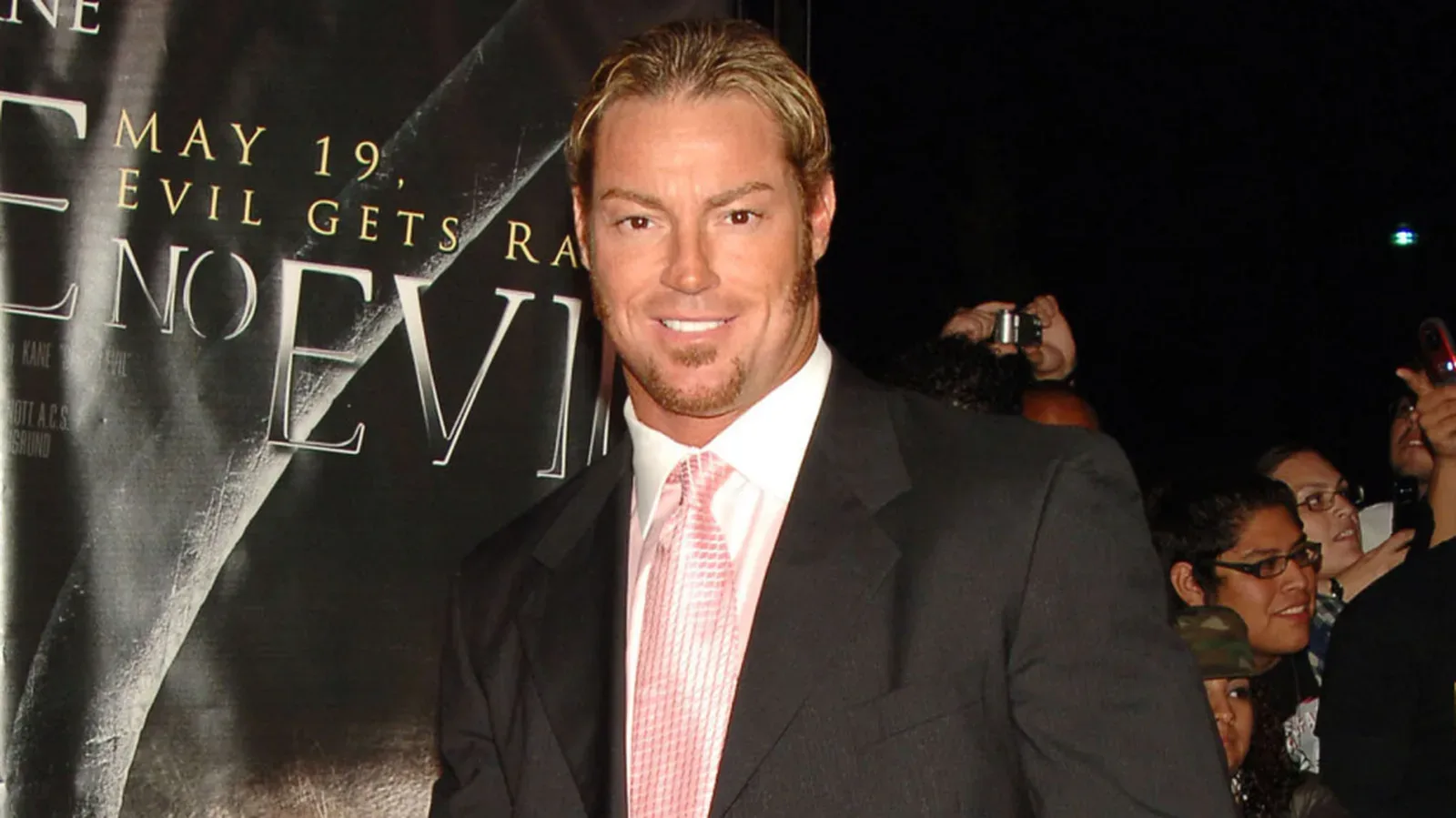
Before John Cena became one of WWE’s most recognizable stars, he was developing his craft in Ohio Valley Wrestling alongside a generation of talent hoping to earn a place on the main roster. Rob Conway was among the wrestlers who shared that environment with Cena, and he has offered a detailed perspective on the future WWE icon’s approach to training, his confidence as a heel, and the abrupt transition from OVW’s “Prototype” to the Cena audiences first met on WWE television.
Conway, who later reached WWE’s main roster as part of La Résistance with Sylvain Grenier and René Duprée, looked back on his time with Cena during an appearance on INSIGHT with Chris Van Vliet. His recollections painted a picture of a performer who was already separated from the pack through consistency, discipline, and an unusually advanced command of the microphone.
Cena’s status in WWE history is unquestioned. His championship record, longevity, crossover fame, and role as the face of the company during a major era have made him one of the promotion’s defining performers. Yet the path to that spot began in WWE’s then-developmental system, where he worked as The Prototype. Conway’s comments emphasize how much of Cena’s eventual success was visible well before his rise to the top of the industry.
Conway remembers Cena’s commitment in OVW
OVW was a proving ground for numerous future WWE stars, providing wrestlers a place to learn the in-ring style, television expectations, character work, and promotional demands associated with the company. For Conway, one of the strongest memories of Cena from that period was his commitment to putting in more work than anyone around him.
For more background on this topic, read WWE SmackDown Preview: CM Punk, Gunther and Finn Balor Collide in Money in the Bank Qualifier.
“He was the first one at practice, and the last one to leave,” Conway said on INSIGHT with Chris Van Vliet.
That type of reputation has long followed Cena. During his WWE career, he became associated with a demanding schedule and a willingness to carry major responsibilities inside and outside the ring. Conway’s account suggests that mindset was already firmly in place during the OVW years, when Cena was still trying to establish the version of himself that could break through at the national level.
Conway was also direct in his assessment of Cena’s strengths at the time. While he did not position Cena as the most naturally gifted athlete in the training group, he made a much more emphatic statement about another essential aspect of professional wrestling.
“Not the most talented athlete, by far the most talented promo guy I’ve ever seen,” Conway said.
That distinction is significant because Cena’s verbal ability became a cornerstone of his WWE identity. Whether trading insults with opponents, rallying crowds as a leading babyface, or delivering more serious and personal material in high-stakes programs, Cena’s capacity to communicate was central to his connection with audiences. Conway’s remarks indicate that Cena’s feel for promos was not something developed only after he received extensive national television exposure. It was already apparent to the wrestlers working alongside him in OVW.
The Prototype was a heel before Cena became WWE’s franchise babyface
One of Conway’s most interesting observations involved the contrast between Cena’s developmental persona and the character that eventually carried WWE for years. In OVW, Cena performed as The Prototype, a physically imposing heel character built around an athletic, nearly mechanical presentation. On WWE’s main roster, Cena quickly evolved through the early stages of his debut run and eventually became a hugely popular babyface.
Conway believes that change affected how much of Cena’s promotional range the audience ultimately witnessed. He noted that Cena worked as a heel throughout his OVW time, while the overwhelming majority of his WWE run placed him in the babyface role. The suggestion is not that Cena was limited as a heroic character; his success in that position speaks for itself. Rather, Conway’s point was that Cena’s heel work in developmental showed another side of his instincts, particularly when it came to promos.
Heel performers and babyfaces are often asked to approach both matches and interviews differently. A villain can project dominance, arrogance, and invulnerability, while a fan favorite frequently has to absorb punishment, show vulnerability, and fight from underneath. That contrast can alter a wrestler’s move selection, body language, pacing, and the entire tone of a performance.
Conway connected that difference to Cena’s in-ring work as well. As The Prototype, Cena’s presence was rooted in being a major physical obstacle for opponents. Once he arrived as John Cena and became a top babyface, the formula changed. He had to make opponents look dangerous and give fans the dramatic comebacks that are commonly expected from a leading hero.
“Heels don’t do those moves,” Conway said. “As Prototype, he wrestled a lot bigger than he did as John Cena, because as John Cena he had to sell. As a heel you’re pretty indestructible when you look like him.”
The comment captures the practical effect of Cena’s character evolution. The Prototype could be presented as a dominant powerhouse who dictated the action. John Cena, particularly once he became WWE’s central babyface, needed to endure setbacks and sell adversity before launching the signature comebacks that became familiar to fans around the world. Neither approach is inherently better, but each asks for a different kind of performance.
The night Cena received his WWE call-up
Conway also recalled being present on the night Cena learned he would be called up for his WWE SmackDown debut in 2002. Cena’s first main-roster appearance remains a memorable moment: he answered Kurt Angle’s open challenge, stepped into the ring with one of WWE’s premier stars, and immediately introduced himself as someone willing to test his limits against elite competition.
That debut did not look like a direct continuation of The Prototype. Cena’s presentation changed dramatically from the OVW character, including the haircut that helped mark the visual transition into the version WWE planned to introduce on SmackDown.
“I had to give him the rental car keys so he’d get his hair cut,” Conway recalled on INSIGHT with Chris Van Vliet.
It is a small but revealing detail from a pivotal moment. Wrestlers in developmental can spend months or years refining a character, only to receive a main-roster opportunity that requires a completely revised appearance, name, motivation, or style. In Cena’s case, his move from The Prototype to John Cena was part of a transformation that would continue rapidly after the debut.
Conway further said that Cena did not know he was scheduled to wrestle Angle that night. Facing Angle in a first WWE television match was an enormous assignment. Angle was already an established main-event talent with a reputation for extraordinary in-ring ability, and the segment was designed to give a new face immediate credibility by placing him across the ring from a top-level opponent.
Conway said Cena even used moves during that match that he had not previously performed. That claim adds to the sense of uncertainty surrounding the call-up and the pressure Cena was under. A wrestler can train extensively for an opportunity, but there is a major difference between working in a developmental setting and debuting on WWE television against a star of Angle’s stature.
The moment also demonstrated why WWE saw potential in Cena. The company had not yet found the final character that would make him a generational attraction, but placing him opposite Angle gave viewers a simple and effective introduction: this was a confident newcomer who believed he belonged in the ring with the best.
From developmental standout to WWE mainstay
Cena’s path after that debut was not instantly identical to the persona that later became synonymous with WWE. He moved through early character adjustments before the rapper-influenced “Doctor of Thuganomics” persona gave him a clearer voice and a stronger connection with the crowd. From there, Cena developed into WWE’s top babyface and a fixture in championship programs, major events, and high-profile rivalries.
Conway’s reflections are especially notable because they focus on the qualities that existed before the accolades. The training habits, the promo ability, the comfort as an antagonist, and the readiness to adapt all stood out to someone who was in the same developmental system at the time. They offer a reminder that Cena’s ascent was not simply the product of being placed in a major television opportunity. He had built a reputation in OVW that made the opportunity possible.
Conway would have his own run on WWE’s main roster, becoming best known as a member of La Résistance. Alongside Grenier and Duprée, he worked in a prominent tag team act before later continuing in other roles within the company. He departed WWE in 2007, but his OVW experience put him in proximity to several performers who would shape WWE’s future, with Cena standing as the most commercially successful of that group.
For Cena, the move from OVW to SmackDown was the beginning of a career that far exceeded the initial Prototype concept. For Conway, it remains a vivid example of seeing a future star at the earliest stage of his ascent. His assessment is clear: Cena’s work ethic was exceptional, his ability to speak was extraordinary, and the heel version of Cena in developmental may have displayed dimensions of his talent that WWE audiences only briefly had the chance to see.
In pictures

Darryl Polo
Darryl Polo is a passionate wrestling fan covering WWE, AEW, TNA and beyond. He loves great rivalries, breakout stars and the moments that keep fans talking long after the bell. How we work.