
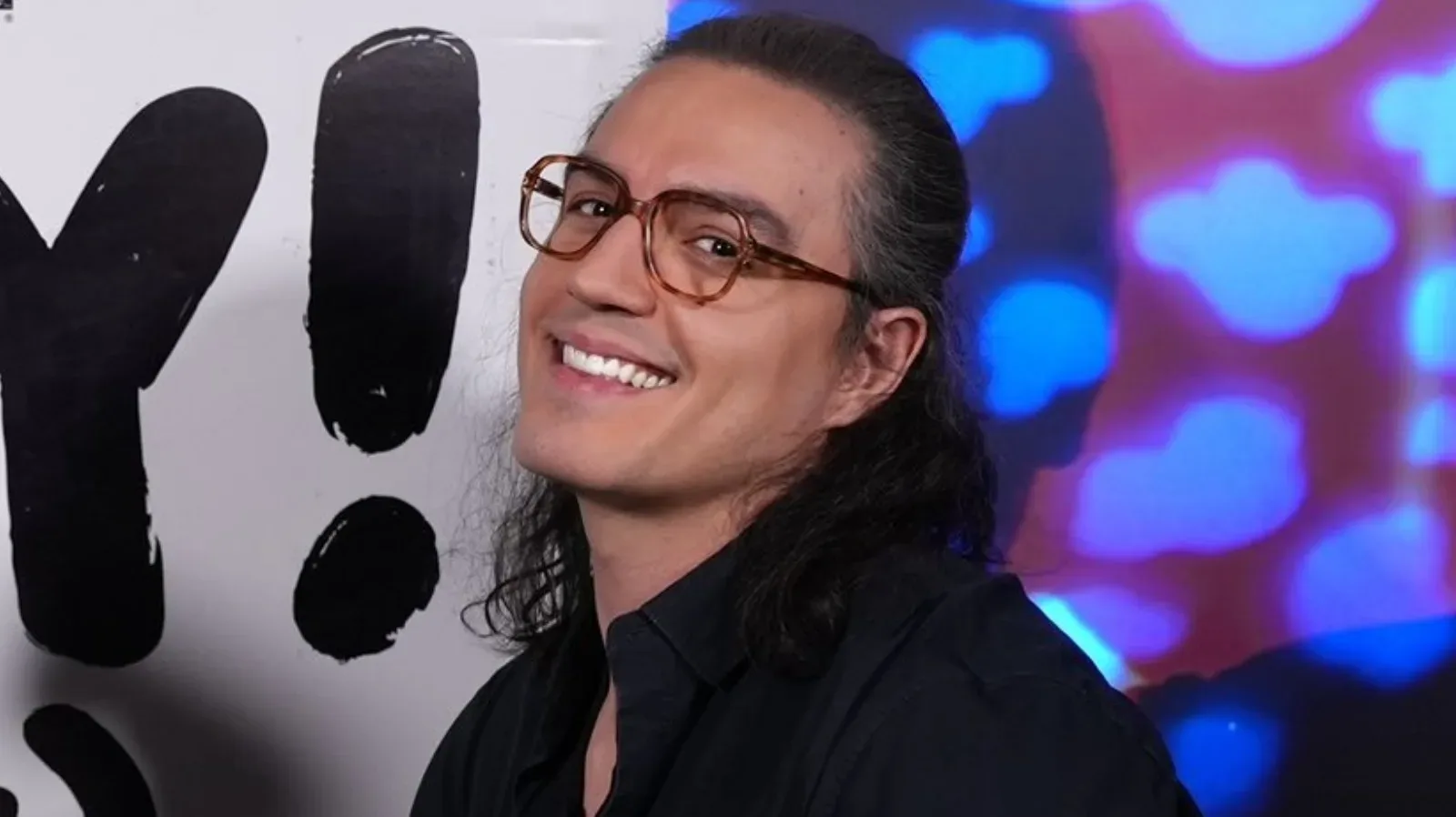
RJ City is calling on professional wrestling to take a more honest look at itself.
During a recent interview, City was asked about comparisons between some of his earlier work and a more masculine version of Blanche Devereaux. The conversation prompted City to address a subject that has often existed in plain sight across wrestling culture, while rarely being openly discussed by the industry itself: the homoerotic undertones present in the presentation, physicality and larger-than-life masculinity of pro wrestling.
“Is the business not gay enough? Acknowledge it, it’s there. We just need to acknowledge it,” City said. “Let me put it this way, it’s need to be more self-aware of how homoerotic it is. It’s there. Someone tell JBL what is up, you know what I mean?”
City’s point was not framed as a demand to fundamentally change what wrestling is. Instead, it was a call for the business to recognize the implications of what it has always put in front of audiences. Wrestling is a performance art built around imposing physiques, flamboyant personalities, carefully cultivated rivalries, intimate physical struggle and the dramatic framing of relationships between men. The genre routinely emphasizes bodies, fashion, beauty, power, dominance and emotional obsession. Those elements can coexist with wrestling’s traditions of toughness and athletic competition, even if promotions and performers have not always been comfortable acknowledging that reality.
For more background on this topic, read AEW Announces ‘The Toni Storm Tapes’ Five-Part Limited Series.
A long-visible part of wrestling’s presentation
Wrestling has traditionally sold larger-than-life versions of masculinity. That masculinity can be intimidating, glamorous, campy, absurd, heroic or villainous, sometimes all within the same segment. Wrestlers are presented in elaborate gear, given stylized entrances and asked to project an image powerful enough to fill an arena. Their stories often center on personal fixation: a rival who cannot let go of another rival, a tag team partnership that becomes emotionally charged, or a betrayal treated with the intensity of a major breakup.
The in-ring side of the business adds another dimension. Wrestling requires competitors to work in close physical proximity while trusting each other with demanding athletic maneuvers. The visual language of the sport has always involved holds, poses, strength displays and prolonged confrontations. Fans understand that these are the conventions of wrestling. City’s comments suggest the industry should be more willing to understand the additional meanings viewers can take from those conventions rather than reflexively treating the subject as off limits.
That self-awareness matters because audiences are more diverse and more media-literate than ever. Many fans already recognize the theatricality inherent in wrestling and appreciate performers who can engage with it intelligently. Comedy, character work and sincerity all have a place in the genre. Being aware of homoerotic subtext does not require a wrestler or promotion to turn every story into a joke, nor does it lessen the athletic legitimacy of a match. It can simply mean being more honest about the many ways wrestling can be read and enjoyed.
City’s perspective fits his character-driven approach
City has made a career of operating comfortably in spaces where wrestling, pop culture and comedy overlap. His public persona has often leaned into heightened delivery, sharp observations and an ability to find humor in the presentation of the business. That makes his response especially consistent with the kind of character-driven work for which he is known.
The Blanche Devereaux comparison offered a fitting opening for the discussion. Blanche, a central character from The Golden Girls, is remembered for her confidence, glamour and unapologetically flirtatious persona. City did not reject the comparison. Instead, he used it to widen the conversation toward wrestling’s own relationship with sexuality, performance and masculine image-making.
There is a significant difference between laughing at queer-coded material and recognizing it with intention. City’s comments lean toward the latter. His argument is that the business does not need to pretend these themes are absent. Wrestling has enough range to allow performers and audiences to engage with those themes without reducing them to an insult or a punchline.
For a long time, wrestling has often treated anything outside a narrow conception of masculinity as a source of ridicule. Yet the same industry has regularly embraced excess, flamboyance and melodrama when those traits help a character connect with the crowd. City’s remarks identify that contradiction. The business has frequently benefited from the theatrical qualities that make its biggest personalities compelling, while hesitating to acknowledge that those qualities can carry queer resonance.
Self-awareness can strengthen character work
Modern wrestling thrives when its performers understand what makes their characters distinct. A wrestler does not need to be presented as realistic in every detail to feel authentic. In fact, the strongest personalities often work because they know exactly how much to heighten their mannerisms, wardrobe, voice and emotional reactions. Audiences respond when a performer commits to a character and understands the tone of the material.
City’s call for self-awareness can be viewed through that lens. If wrestling recognizes its own theatrical vocabulary, it gives performers more tools rather than fewer. Characters can be vain, magnetic, flamboyant, seductive, intimidating or deeply invested in their rivalries without the presentation automatically becoming a joke at someone else’s expense. A promotion can tell a serious story while admitting that wrestling, at its core, is an expressive and highly stylized form of entertainment.
That does not mean every fan will interpret a match or storyline in the same way. Wrestling has always supported multiple readings. One viewer may see a contest of athletic superiority. Another may be focused on the personal story. Someone else may be drawn to the visual spectacle, costumes or comedy. The ability to accommodate those perspectives is one of wrestling’s enduring strengths.
The key issue in City’s comments is not that every aspect of wrestling must be labeled one way. It is that the business should be mature enough to recognize the elements already present in its own presentation. Avoidance can make a company or performer seem less confident. Acknowledgment, handled thoughtfully, can make the product feel more current and more open to the full range of its audience.
What the conversation means for AEW and wrestling at large
Although City is associated with AEW, his observation reaches beyond any one company. The question of representation and self-awareness applies throughout professional wrestling. Every promotion makes choices about what kinds of characters it highlights, what forms of humor it uses and how it frames performers who do not fit conventional expectations. Those choices shape whether viewers feel welcomed, dismissed or recognized.
AEW recently referenced City in a playful way through his website bio, showing that his on-screen and off-screen sensibility remains part of the company’s broader sense of humor. But City’s latest remarks carry a larger point than a single gag or profile update. He is arguing for an industry that can look at itself without discomfort.
Wrestling is often at its best when it embraces its contradictions. It can be brutal and theatrical, sincere and ridiculous, traditional and constantly evolving. It asks fans to believe in competition while also inviting them to enjoy the spectacle of it all. City’s comments add another challenge to that list: the business can continue to celebrate its physicality and heightened masculinity while being candid about the homoerotic dimension that has long existed alongside them.
For City, the issue is straightforward. It is already there. The next step, in his view, is for wrestling to acknowledge it.

Darryl Polo
Darryl Polo is a passionate wrestling fan covering WWE, AEW, TNA and beyond. He loves great rivalries, breakout stars and the moments that keep fans talking long after the bell. How we work.