
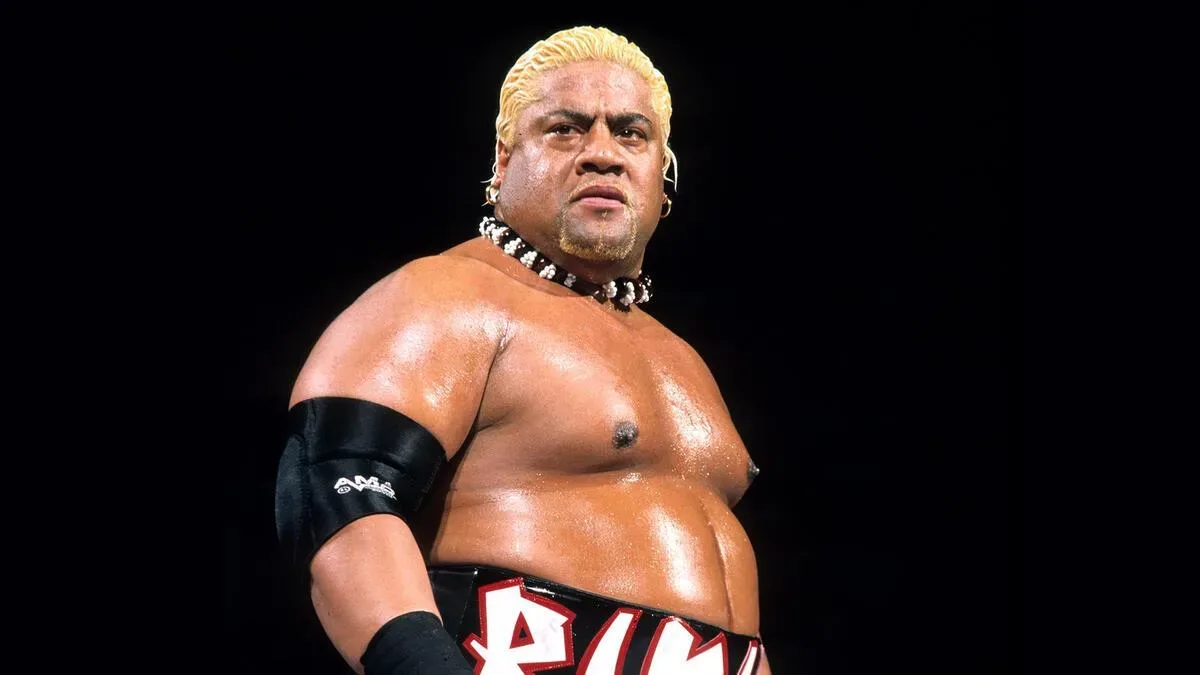
Rikishi has offered a straightforward explanation for one of the most recognizable and unconventional maneuvers of his WWE career: the Stinkface was designed to entertain.
For many wrestling fans, the move remains inseparable from Rikishi’s on-screen identity. The imposing Samoan star had the size and physicality expected of a major heavyweight, but he also leaned into comedy in a way few performers could. The Stinkface became the clearest expression of that approach, turning his ring gear, body language and larger-than-life charisma into a crowd-pleasing moment that opponents feared and audiences anticipated.
Speaking during a recent interview with The Ring Rundown, Rikishi was asked what led him to begin using the maneuver. He stressed that there was no personal motivation behind it and framed the decision as a natural extension of professional wrestling’s entertainment side.
“Well, no, it was not. It was just something fun in professional wrestling. Sometimes you stumble across certain moves, and at the time, my goodness, I’d like to say I was the baddest man to wear a thong in professional wrestling, and so I thought about, well, you got all my buttocks and my cheeks hanging out, why not beat them and feed them and give the fans something to smile about and be entertained about?”
For more background on this topic, read Je’Von Evans Wants Oba Femi Rematch After Claiming He Has ‘His Phone Number’.
Rikishi’s answer speaks to the particular balance that made his act work. The Stinkface was deliberately absurd, but it was never presented as disconnected from his character. His attire was already one of the most immediately identifiable parts of his look, and the move used that visual in a way that could generate a big response without requiring an elaborate explanation.
In wrestling, memorable acts frequently emerge when a performer recognizes what distinguishes them from the rest of the roster and amplifies it. Rikishi saw an opportunity in a presentation that was impossible to ignore. Rather than treating the thong as only a costume choice, he found a way to make it part of the match itself. The result was a spot that could be understood immediately by virtually any crowd.
Entertainment Was the Point
Rikishi made clear that the Stinkface was intended as a bit of sports entertainment, not a personal attack on the wrestlers who took it. That distinction was central to his explanation.
“It’s nothing ever like, you know, like personal to anybody, you know but we’re in front of people. We are sports entertainment, and so I thought why not put the emphasis on the entertainment.”
The wording reflects an important aspect of how comedic wrestling spots function. A maneuver can be built around humiliation or exaggerated disgust within the story of a match, while the actual goal remains eliciting laughter, surprise and audience involvement. In Rikishi’s case, the reaction was part of the move’s value. Fans knew what was coming, opponents sold the predicament, and the crowd had an instant reason to respond loudly.
That dynamic helped the Stinkface become more than a one-off gag. It was a reliable component of Rikishi’s matches and television appearances because it gave audiences a recognizable payoff. Wrestling crowds often embrace signature moments that invite a participatory reaction, whether that means cheering a catchphrase, anticipating a finishing move or reacting to an opponent’s misfortune. The Stinkface fit neatly into that tradition.
Rikishi’s comments also underline that creativity in wrestling does not always come from complex technique or a dramatic reinvention. Sometimes it comes from identifying a simple idea that suits a performer’s personality and committing to it fully. The move was bold, instantly visual and tailored to Rikishi in a way that would not have translated to another wrestler.
A Distinctive Place in Rikishi’s WWE Persona
Rikishi is widely remembered as one of WWE’s most distinctive big men, and the Stinkface was a major reason his persona stood apart. Big wrestlers are often presented primarily through power and intimidation. Rikishi could certainly bring that presence, but his act also had a playful quality. That range made him especially useful in an environment where performers needed to hold attention in different types of segments and matches.
The maneuver captured the contrast at the heart of the character. On one hand, it was comical and intentionally over-the-top. On the other, it put an opponent in an unmistakably vulnerable position and gave Rikishi control of the ring. The spot could generate laughter while still allowing him to remain the focal point of the action.
It also benefited from being visually clear. Wrestling is a medium in which a performer’s identity must often register quickly, whether someone is watching from the arena or following along on television. Rikishi’s entrance, gear and mannerisms made him immediately recognizable. The Stinkface extended that identity into a signature moment that did not need much setup to resonate.
His own description of being “the baddest man to wear a thong in professional wrestling” captures the confidence behind the concept. The presentation only works if the wrestler embraces it without hesitation. Rikishi did not present the attire or the move as something to apologize for; he made them central elements of his appeal.
Why Signature Spots Endure
Professional wrestling history is filled with signature moves and crowd interactions that endure because they communicate character as much as athletic ability. The most lasting examples are often not simply maneuvers. They are expressions of a wrestler’s personality, designed to make an audience feel that no one else could perform them in quite the same way.
The Stinkface belongs in that category because it was so closely associated with Rikishi’s overall act. Its comedic premise was obvious, but its effectiveness came from the performer executing it with timing and confidence. The move depended on the reaction of the opponent, the response of the crowd and Rikishi’s willingness to lean into the spectacle.
That is why his explanation matters beyond the novelty of the spot itself. Rikishi is describing an instinct that is vital in wrestling: performers have to find ways to connect with people. Some do that through intensity, others through technical excellence, others through emotional promos or dramatic rivalries. Rikishi found a highly individual route by placing emphasis on fun.
The move also illustrates the broad creative space within WWE presentation. The company’s performers are not only tasked with winning matches in storyline; they are asked to create moments. A successful moment can alter a crowd’s energy, strengthen a character’s identity and give viewers something they remember long after the match has ended. Rikishi’s Stinkface accomplished all three through a concept that was equal parts ridiculous and purposeful.
Rikishi’s View of Wrestling’s Role
At the center of Rikishi’s remarks is a belief that wrestling should give fans a reason to smile. He repeatedly returned to the idea of entertainment, emphasizing the live audience and the need to deliver something enjoyable in front of people.
That perspective is consistent with the appeal of performers whose work can reach fans beyond a single style of match. Wrestling audiences may appreciate a hard-hitting contest, a technical showcase or a major championship story, but comedy also has a lasting place on a wrestling card. When it is tied closely to a performer’s character, it can become a valuable part of the show rather than a distraction from it.
Rikishi’s Stinkface was never meant to be treated as a deeply personal statement or an attempt to target an opponent outside the boundaries of the performance. As he explained, it was a fun idea that grew from the elements already present in his act. He saw the visual, recognized the possible reaction and chose to put the focus on entertaining the crowd.
Years later, that remains the defining lesson from his recollection. The Stinkface became iconic not because it followed a conventional blueprint for a wrestling move, but because Rikishi understood the value of being unmistakably himself. By turning an unconventional look into an equally unconventional signature spot, he created a WWE memory that continues to be associated with his name.
For Rikishi, the reasoning was simple: professional wrestling is entertainment, and the Stinkface gave audiences exactly that.

Darryl Polo
Darryl Polo is a passionate wrestling fan covering WWE, AEW, TNA and beyond. He loves great rivalries, breakout stars and the moments that keep fans talking long after the bell. How we work.