

Ricky Saints has offered a measured response to the continuing conversation around the age of WWE's most prominently featured stars, arguing that fans can reasonably want fresh talent without treating a wrestler's age as the deciding factor in whether they belong at the top of the card.
WWE's main-event scene has frequently been discussed through that lens in recent years. A number of the company's most recognizable television acts and premium live event headliners are over 40, while emerging names in their twenties continue working to establish themselves as consistent featured players. That contrast has fueled criticism from fans who believe the company must accelerate the rise of younger talent in order to build its next long-term generation of stars.
Saints does not dismiss the appeal of seeing new performers receive bigger opportunities. However, he believes the discussion becomes too reductive when a wrestler's age is treated as an automatic negative rather than one part of a much broader evaluation of their ability, experience, presentation, and current level of performance.
Saints sees performers reaching their prime at different times
Speaking with HUGE POP!, Saints said he does not approach age in the same way many fans do, including when considering the women's division. In his view, performers can continue producing exceptional work well into their late thirties, and some may only be reaching the clearest version of their identity as a wrestler at that point.
For more background on this topic, read WWE Expected To Counter AEW Grand Slam France With Main Roster Presence On NXT.
“I really don't think about age in that way. Same thing with the women. I've seen women that are 38 that are still doing phenomenal work. And if anything, they're starting to get into their prime of who they are and what they are and things of that nature,” Saints said.
The comment speaks to a reality of professional wrestling that can make age-based comparisons difficult. A wrestler's career is not defined solely by the number of years they have lived. Training backgrounds vary, opportunities arrive at different stages, and the time needed to become a complete television performer is not the same for every talent.
Some wrestlers enter the business at a young age and accumulate extensive experience before they reach their thirties. Others arrive later after careers in amateur athletics, entertainment, or other fields, meaning their in-ring mileage and television exposure may be substantially different from someone of the same age. In WWE specifically, adapting to the demands of weekly live television, character work, promotional responsibilities, and major-event pressure requires a different kind of growth than simply having matches.
That is why Saints framed the issue around an individual's overall place in their career rather than the number attached to their biography. A 36-year-old wrestler, for example, may be a veteran in one sense but still be developing in another. They may have found the character, confidence, speaking style, or in-ring approach that makes them more compelling than they were earlier in their career.
Fans want fresh faces, but Saints questions the framing
Saints acknowledged that supporters who want WWE to spotlight newer names have a valid point. The desire for change is a natural part of following wrestling. Fans invest in prospects, track breakout performances, and want to see the next wave receive meaningful stories rather than remain permanently outside the biggest programs.
Still, Saints said the fixation on age can become strange, especially when it appears alongside the other measurements fans regularly use to judge promotions and performers.
“I just think it's so odd that the fans are so bent up on, if it's not ratings of a company, it's the age of the wrestlers that are on TV. And listen, I get it. I understand like, hey, these guys are old. We want to see some new faces. I'm with you. Totally get it ... But, if I was scouting someone, I wouldn't look at someone and be like, well, they're 36. See ya bye. Well, where are they at in the 36 years? Where are they at in their wrestling experience?”
His point is not that WWE should stop identifying and developing younger talent. The company has wrestlers in their twenties who have already attracted significant attention, including Oba Femi and Sol Ruca. Both represent the kind of younger performers fans often identify when discussing the importance of creating future main-event stars.
Rather, Saints' argument is that the presence of experienced stars should not itself be viewed as proof that WWE has failed to develop its roster. Established talent can still be among the strongest acts on the show, still deliver at a high level in the ring, and still help make major programs feel significant. Age alone does not determine whether an act is fresh, effective, or capable of drawing an audience into a story.
WWE's established stars remain central to weekly programming
The conversation persists because WWE's current landscape includes numerous major names over the age of 40 who remain regular fixtures on television. Roman Reigns, Cody Rhodes, Charlotte Flair, Nikki Bella, CM Punk, Sami Zayn, and Kevin Owens are among the stars cited in the debate. Their positions on the roster reflect not only their years of experience, but also their established connections with audiences and their ability to carry important segments and matches.
Each case is different. Some have spent years at the highest level in WWE, while others have built reputations across a longer wrestling career before returning or moving into a prominent role. Placing all of them under one broad age-related label risks overlooking the reasons they remain valuable to the product.
In wrestling, experience can show itself in ways that are not limited to athletic output. A veteran may understand how to structure a match around a crowd's reactions, how to make a rival look more dangerous, how to deliver a key promo with restraint, or how to bring credibility to a championship program. Those skills can be particularly important when WWE is positioning a less established wrestler against a widely known opponent.
That does not mean fans are wrong to ask what comes next. WWE's biggest challenge, as with any long-running wrestling company, is finding the right balance. It must continue presenting recognizable stars who can anchor its most important events while also giving rising performers enough meaningful wins, stories, and exposure to become credible successors.
The issue is opportunity, not simply birth dates
Saints' comments shift the focus from age itself to the opportunities available to talent at every stage. A younger wrestler is not automatically ready for the top of the card solely because they are younger, just as an older wrestler is not automatically past their prime because they have crossed an arbitrary age threshold.
The more useful questions concern performance and trajectory. Is a wrestler connecting with the audience? Do they have a clearly defined character? Are they improving with increased responsibility? Can they sustain momentum beyond one strong match or one viral moment? Do they have the experience required to thrive in a featured role? Those are the standards Saints appears to believe should carry greater weight.
For younger names, that means patience should not be confused with abandonment. Development can happen on television, in NXT, through tag teams, in rivalries with established names, and through gradual elevation. At the same time, WWE must recognize when a performer is ready and avoid allowing prospects to plateau simply because more familiar acts occupy the major spots.
For veteran names, the standard remains equally clear: they need to continue delivering. Longevity is valuable, but it is not a substitute for relevance. Saints' position is not an argument that every experienced wrestler should automatically remain in a featured role. It is an argument that the decision should be based on the work, not on a number.
A broader perspective on roster building
The age debate is likely to continue because fans are invested in WWE's future and understandably want to see the company prepare for the eventual transition away from every current headline act. Yet Saints' perspective offers an important reminder that wrestling careers do not progress on a single timetable.
A well-built roster needs multiple layers. It needs proven stars capable of anchoring the present, rising names prepared for larger assignments, and developmental prospects who can become the next class after that. The most productive version of the discussion is not whether WWE should choose older stars or younger stars. It is whether WWE is effectively connecting those generations and ensuring that its future headliners gain the credibility needed to take over when the moment arrives.
Saints believes age should be considered in context rather than used as a shortcut for judging a wrestler's value. Fans may continue calling for new faces, and he has made clear that he understands that impulse. But his view is that a wrestler's experience, current form, and ability to become the best version of their on-screen self should matter far more than a simple number.
In pictures
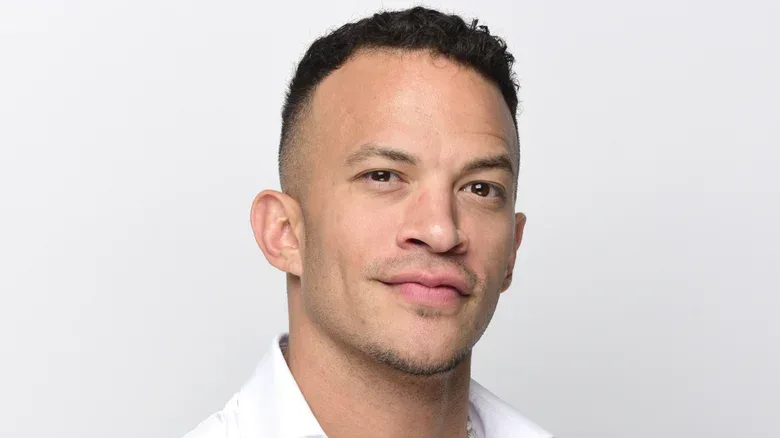

Darryl Polo
Darryl Polo is a passionate wrestling fan covering WWE, AEW, TNA and beyond. He loves great rivalries, breakout stars and the moments that keep fans talking long after the bell. How we work.