
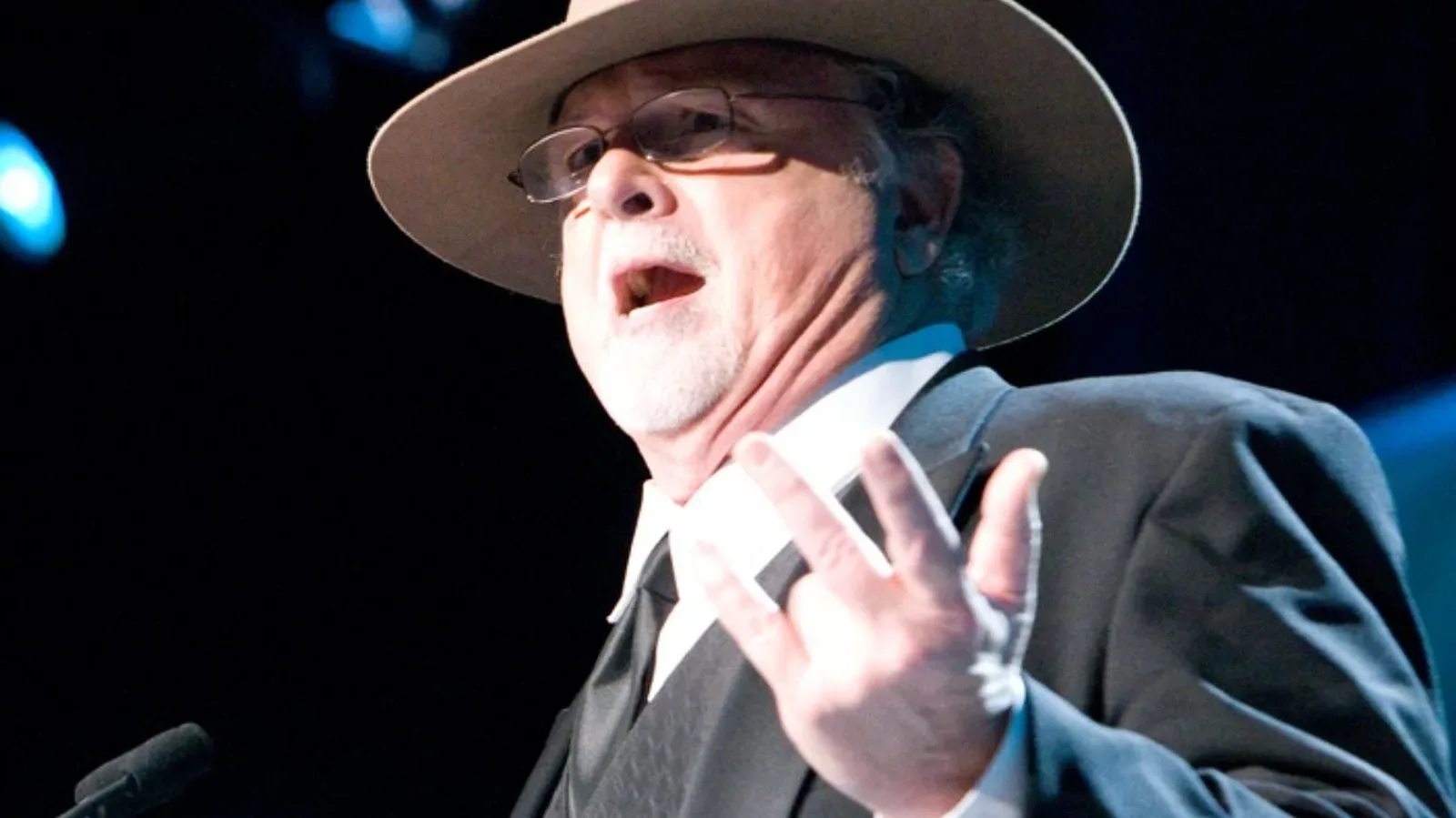
The wrestling business is mourning the loss of “Cowboy” Bill Watts, the influential promoter and former WCW executive whose impact reached far beyond any single territory or era. Among those paying tribute is WWE Hall of Famer Ricky Morton, who recalled Watts as the man who gave the Rock ’n’ Roll Express an opportunity to prove that they belonged at a much bigger level.
Morton and longtime partner Robert Gibson became one of professional wrestling’s defining tag teams, with their connection to audiences helping make the Rock ’n’ Roll Express a lasting attraction across the industry. But Morton has made clear that the road to that success included skepticism, blunt assessments, and the kind of pressure that came with working for Watts.
Speaking on Busted Open Radio, Morton remembered an early conversation in which Watts openly questioned whether the smaller-framed wrestler could make it in the business.
“I’ll never forget, Bill Watts told me, ‘Man, you’ll never make it in this business, you’re too little,’” Morton said. “I said, ‘Yes sir, but I’m going to try.’ When we went to Louisiana and did our thing, it was absolutely good.”
For more background on this topic, read John Cena Classic Tickets Go On Sale as TNA, GCW and WWE News Lead Friday’s Wrestling Briefing.
The memory captures an important part of Watts’ reputation. He was known as a demanding figure with firm ideas about what worked in professional wrestling, but he was also willing to recognize when performers connected with fans. For Morton, the initial doubt was not the end of the story. It became part of a bigger journey in which he and Gibson were given a stage to demonstrate their value as a team.
Morton’s comments focused on the importance of that chance. A promoter can create an environment, set standards, and identify potential, but performers still have to deliver when the moment arrives. Morton believes that was exactly what happened when the Rock ’n’ Roll Express worked under Watts’ banner.
“Bill Watts, he gave us an opportunity to prove ourselves, and we did,” Morton said on Busted Open Radio.
Watts’ name remains synonymous with Mid-South Wrestling, where he developed a promotion that carried a distinct identity and became a major part of the wrestling landscape. His approach emphasized stars, presentation, and making events feel important to the fans in each market. That ability to grow an operation is what Morton emphasized while remembering the scale of Watts’ success.
“Bill Watts is one of the greatest promoters I ever seen,” Morton said. “We went from National Guard armories to [auditoriums] to the Superplex to the damn Superdome, buddy, that’s what I’m talking about.”
For Morton, that progression represented more than larger buildings. It illustrated the ambition behind Watts’ promotional philosophy. The move from smaller venues to major arenas and landmark stadium-scale settings reflected the ability to turn regular wrestling cards into events that fans felt they needed to see live.
Morton recalled working a Watts-promoted event in Louisiana and arriving to find a level of public interest that made a deep impression. He said a reporter approached the Rock ’n’ Roll Express and asked who they were, while people had been camping for weeks in hopes of securing tickets. Morton did not take that scene as evidence that the crowd had come specifically to see his team. Instead, he recognized it as a testament to the attraction Watts had built.
That perspective says a great deal about how Morton views Watts’ accomplishments. Even as a performer who would become an enormously popular figure in his own right, Morton understood that the environment surrounding a major show matters. A hot territory, a committed fan base, recognizable stars, and a promoter capable of sustaining demand can elevate everyone on the card.
The Rock ’n’ Roll Express ultimately represented a style of tag team wrestling that resonated strongly with audiences. Their energy, underdog appeal, and chemistry gave fans a pairing they could rally behind, and their work helped establish a standard that later generations of teams continued to study. Morton’s tribute places Watts among the people who saw enough in the team to give it a meaningful opening.
It is also a reminder that major wrestling careers are often shaped by pivotal early decisions. Not every wrestler who is talented receives the right chance at the right time. Morton and Gibson were able to make the most of theirs, and Morton credited Watts for putting them in the position to do so.
Morton Reconnected With the Watts Family
Beyond his recollections of business and wrestling crowds, Morton’s remarks carried a personal note. He said he had been thinking about Watts frequently in recent months and had attempted to find a way to contact him. Eventually, Morton spoke with Watts’ son, Eric Watts.
During that conversation, Morton said Eric told him that he did not fully understand how much his father loved him. The exchange added emotional weight to Morton’s public remembrance, especially because it showed that the relationship went beyond the hard-edged professional feedback Watts gave him early in his career.
“Bill was way ahead of himself and I appreciate him and I miss him,” Morton said.
Morton’s description of Watts being “way ahead of himself” reflects the broad respect many in wrestling hold for Watts’ instincts as a promoter. Watts’ legacy includes his success in Mid-South Wrestling and his later role as a WCW executive, but the stories told by wrestlers who worked with him often center on his eye for the larger picture: what would draw fans, how a card should feel, and how to make a promotion grow.
That does not mean Watts was remembered as an easy figure to work for. Morton’s own story began with a discouraging assessment, and the “Cowboy” persona associated with Watts was matched by a reputation for directness. Yet Morton’s recollection also shows why tough love can have a lasting place in wrestling lore. The criticism was followed by an opportunity, and the opportunity became a defining point in the Rock ’n’ Roll Express story.
A Promoter Whose Influence Reached Generations
Watts’ passing has prompted wrestlers and fans to look back on an influential career that touched multiple corners of the industry. As a promoter, he helped build a major regional wrestling product. As an executive, he carried his strong ideas about presentation and business into WCW. As a WWE Hall of Famer, he has received formal recognition for the role he played in wrestling history.
For Morton, though, the most meaningful legacy is rooted in something simple: Watts gave him and Gibson a place to work, a chance to succeed, and the pressure necessary to show what they could do. The lasting affection in Morton’s tribute is especially notable because it came from someone who experienced both the initial challenge and the eventual support.
Professional wrestling has always depended on people willing to take chances on talent before the full audience sees what is possible. Morton’s career is proof that those chances can produce results that endure for decades. The Rock ’n’ Roll Express went on to become one of the most beloved tag teams in the history of the sport, and Morton has not forgotten the promoter who helped open that door.
As the wrestling world continues to reflect on Watts’ life and career, Morton’s words offer a personal account of the man behind the formidable reputation. He remembered a promoter who could be blunt, who could demand more, and who built wrestling events on a scale that impressed everyone around him. Above all, he remembered Bill Watts as someone who believed enough to provide an opportunity—and someone he will deeply miss.
In pictures

Darryl Polo
Darryl Polo is a passionate wrestling fan covering WWE, AEW, TNA and beyond. He loves great rivalries, breakout stars and the moments that keep fans talking long after the bell. How we work.