
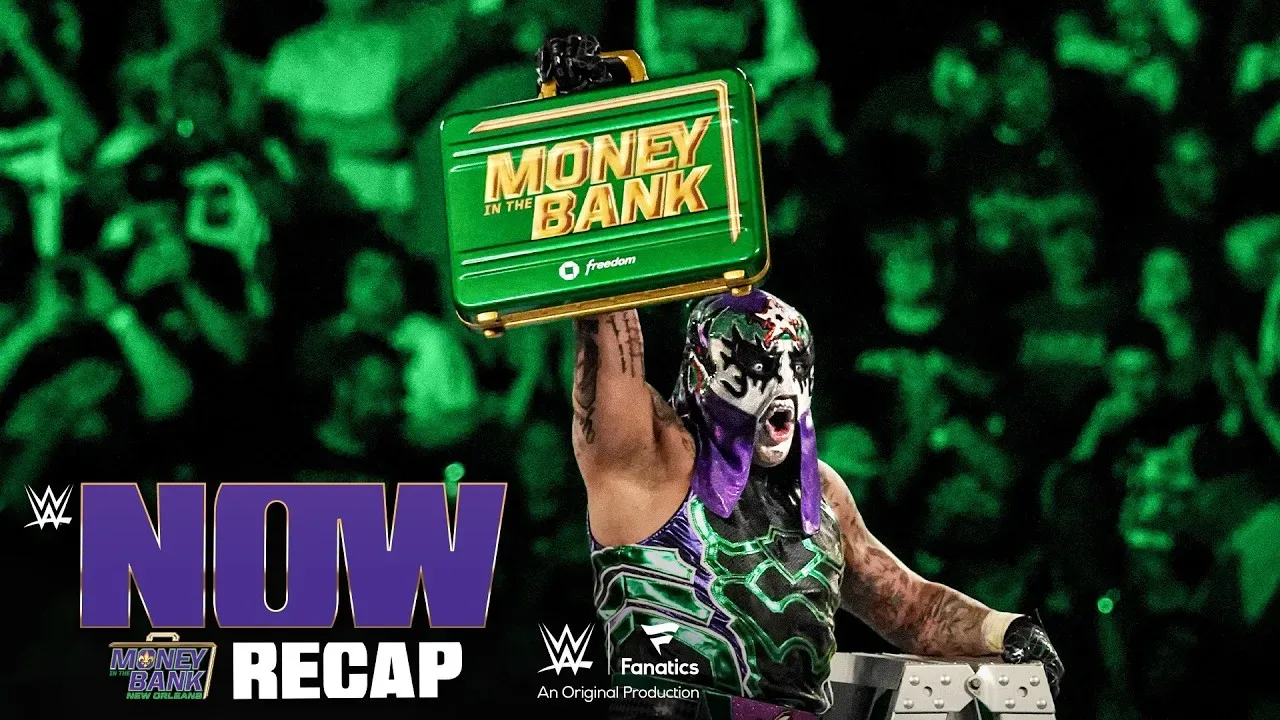
Penta’s WWE Money in the Bank victory came with a memorable visual attached to it. The masked star entered the men’s ladder match in the Joker-inspired gear that many fans recognized from an earlier chapter of his career, then left the event with the Money in the Bank briefcase after surviving a crowded and physically demanding main event.
In comments during WWE’s Money in the Bank recap programming, Penta explained that the gear was not a design created specifically for the Premium Live Event. Instead, he said he had attempted to wear the outfit in WWE previously, only for those plans not to move forward at the time.
“Actually, it was an accident because, you know, so I tried to use this gear before,” Penta said. “For some reason, I can’t. So they say, okay, maybe I save for Money In The Bank. Maybe. I don’t know when, but maybe I save this gear, and, bro, this is the result.”
The eventual result was one of the biggest wins of Penta’s WWE career. Wearing the distinctive Joker gear, he captured the men’s Money in the Bank contract in the main event of the titular event. Kevin Owens, CM Punk, Je’Von Evans, Bron Breakker and Trick Williams were also involved in the ladder match, but Penta was the competitor who ultimately secured the briefcase.
For more background on this topic, read Cinta De Oro Reflects On WWE’s Lucha Libre Approach And Pushes For Latino Opportunities.
Money in the Bank has long been one of WWE’s most consequential annual matches because the winner receives a championship opportunity that can be used at a time of their choosing. That prize immediately changes the position of the wrestler who holds it. For Penta, the win places him in the conversation around WWE’s champions while also providing a tangible strategic advantage over every titleholder in the company.
An Old Look on a New WWE Stage
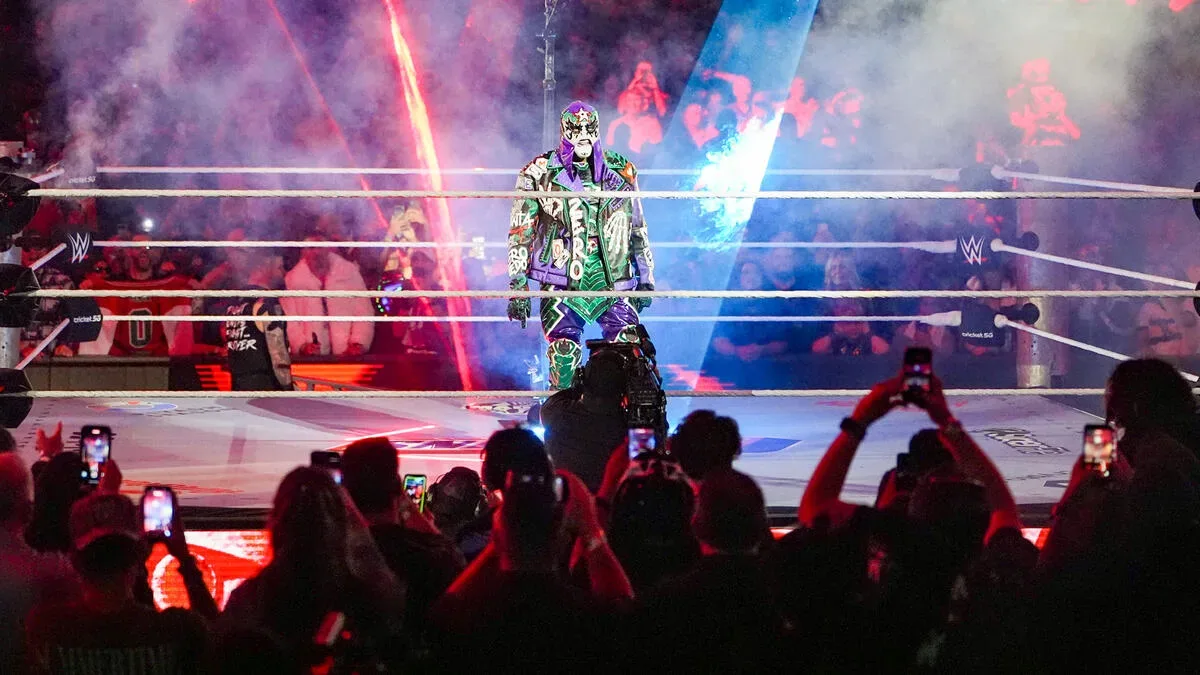
Penta had worn the Joker-themed presentation during his time in All Elite Wrestling, making its appearance at WWE Money in the Bank especially notable. Wrestling gear is often far more than attire, particularly for performers whose masks, colors and symbols are central to their identity. In Penta’s case, the look gave the match a connection to an established part of his visual history while being presented in a dramatically different setting.
His explanation also gives the gear a different context than fans may have initially assumed. The outfit was not necessarily a spontaneous choice made solely because Money in the Bank was approaching. Penta described trying to use it earlier in WWE, then having it saved for a later opportunity. The Money in the Bank ladder match became that opportunity, whether by design, timing or circumstance.
He did not elaborate on why the gear could not be used during the earlier attempt. Penta simply said that, “for some reason,” he was unable to wear it and that he was told it might be saved for Money in the Bank. There is no additional explanation regarding the decision, and the important point is that the attire eventually made its WWE debut at a moment that could hardly have been bigger.
That timing gave the gear added weight. Penta did not merely unveil an alternate look on a routine television match. He brought it out for a main-event ladder match with a career-altering prize on the line, then won that prize. As a result, the Joker gear is now directly associated with his first Money in the Bank triumph.
Penta Outlasts a Loaded Ladder Match
The men’s Money in the Bank field brought together six wrestlers with very different approaches and reputations. Owens and Punk entered with major-match experience and the kind of background that makes them immediate threats whenever a high-profile opportunity is available. Breakker brought explosive athleticism and intensity, while Williams and Evans represented competitors eager to establish themselves on one of WWE’s most important stages.
Penta’s presence added another distinct dimension to the contest. Ladder matches reward daring, urgency and resilience, but they also require a competitor to remain composed when the action becomes chaotic. The objective is simple in theory—climb a ladder and retrieve the suspended briefcase—but the match creates constant opportunities for opponents to halt that climb, remove the ladder or turn a split-second decision into a costly mistake.
With Owens, Punk, Evans, Breakker, Williams and Penta all chasing the same prize, there was no shortage of obstacles between Penta and the contract. Yet Penta emerged as the final winner, a finish that now gives him a path to pursue a WWE championship on his own terms.
The victory is especially significant because a Money in the Bank winner must balance patience with opportunity. Holding the briefcase can create pressure on champions, but deciding when to cash it in can be equally important. A cash-in can happen after a champion has been worn down by a match, during an unexpected moment, or in a more conventional championship setting. Penta now has those options available to him.
The Briefcase Changes the Championship Picture
Following the event, Penta delivered a warning to WWE’s champions. That message was a natural extension of his new status. The Money in the Bank contract is not simply a trophy from a ladder match; it is a continuing threat hanging over championship divisions until it is used.
Every champion must now consider Penta whenever they compete. That does not mean a cash-in is imminent, and Penta did not reveal a specific target or timetable in the comments about his gear. Still, the briefcase ensures that he can insert himself into the title picture at a moment of his choosing. The uncertainty is precisely what makes the contract so valuable.
For Penta, the Money in the Bank win also creates a platform for the character elements that have helped define his career. His masked presentation, signature mannerisms and bold gear choices have always made him immediately recognizable. The Joker attire is another example of that visual identity, and its association with a major WWE victory could make it a look fans remember for a long time.
There is also an understandable symmetry in the story. Penta said the outfit had been intended for WWE before Money in the Bank but was held for a later date. When it finally appeared, it did so during a match built around timing, risk and seizing a singular opening. Penta did exactly that, turning a delayed gear choice into part of the presentation for a landmark win.
A Defining Night for Penta
Wrestlers often have specific gear tied to defining matches, championship wins or pivotal moments in their careers. Penta’s Joker gear now has that kind of association within WWE. Regardless of the reason it was initially unavailable, its eventual use came at a time when the stakes were at their highest.
The look alone did not win the ladder match, of course. Penta still had to overcome Owens, Punk, Evans, Breakker and Williams and reach the briefcase before anyone else. But presentation matters in a major WWE main event, and the gear helped frame the victory as a distinctive Penta moment rather than simply another Money in the Bank result.
Now the focus shifts from how Penta looked at Money in the Bank to what he does with what he won there. His briefcase gives him leverage over WWE’s championship landscape, while his warning to the champions makes clear that he intends to use that leverage. The identity of his eventual target, the timing of a cash-in and the path he takes before that moment remain unanswered.
What is clear is that Penta’s delayed Joker gear debut ended in the best possible way for him. The outfit that had been set aside finally appeared under the bright lights of Money in the Bank, and by the end of the night, Penta was holding the briefcase. For a wrestler who said he had been waiting for the chance to use the gear, the wait produced a result that will be difficult to top.
In pictures

Darryl Polo
Darryl Polo is a passionate wrestling fan covering WWE, AEW, TNA and beyond. He loves great rivalries, breakout stars and the moments that keep fans talking long after the bell. How we work.